Trump's Iran ultimatum and the Vance-Netanyahu gap: a White House speaking with two voices
Hours after the US vice president publicly distanced the White House from the Israeli prime minister's handling of the Iran file, the US president promised a new round of strikes and floated regime-ending terms. The contradiction is now policy.
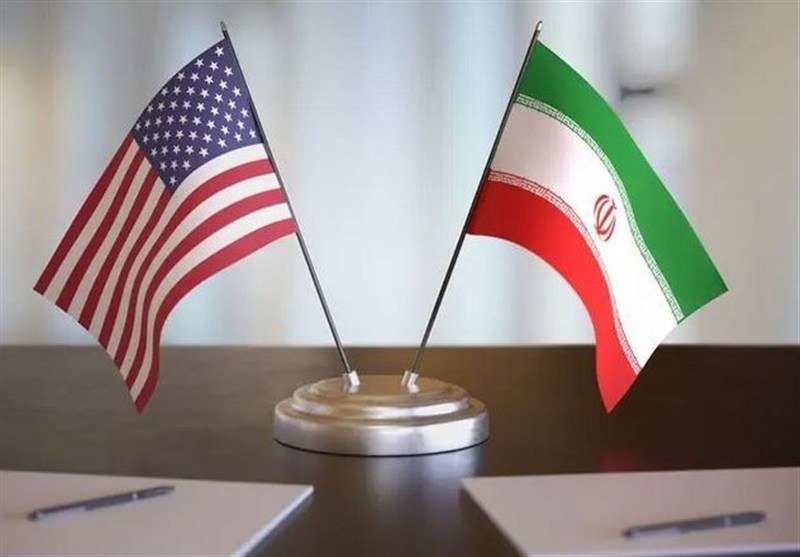
On the morning of 11 June 2026, two senior officials of the same administration took to American television to describe the United States' posture toward Iran, and described two different wars. Vice President J.D. Vance, asked on CBS whether Prime Minister Benjamin Netanyahu had mishandled the US-Israel coordination on Iran, conceded that the Israeli leader "certainly got some things wrong" while declining to elaborate on the closed-door conversations, according to a transcript of the exchange shared on Telegram by the channel @englishabuali at 13:19 UTC. Hours earlier, in remarks carried by @abualiexpress at 12:27 UTC and replayed by Iran's Fars News International at 12:26 UTC, President Donald Trump had promised to "strongly attack Iran again" that same evening, asserted that Iran's navy, air force, radar and air-defence systems had already been destroyed, and previewed the eventual US seizure of Kharj Island — the small, strategically sited outpost in the Persian Gulf that sits astride the approaches to the Strait of Hormuz. The two messages are not reconcilable as policy. They are the policy.
The contradiction matters because the Iran file is no longer a sub-routine of Middle East diplomacy. It is the principal theatre in which the United States is exercising force, the principal theatre in which Israel is asking Washington to widen its objectives, and the principal theatre in which Tehran is being asked to choose between capitulation and destruction. When the vice president tells an American audience that the prime minister got things wrong, and the same day's presidential remarks describe Iran's military as already broken and an island in the Gulf as a future target, the world reads a White House speaking with two voices, and adjusts.
Two scripts, one White House
Vance's comments, broadcast in the morning window of US prime time on 10 June and circulated widely on 11 June, were notable less for the substance than for the posture. The vice president did not repudiate Netanyahu. He did not say the prime minister had misled the administration, or that the United States had been dragged into a war it did not choose. He acknowledged error, signalled that the relationship is being managed rather than allowed to drift, and moved on. The phrase "got some things wrong" is the diplomatic equivalent of a yellow card: a warning that the referee's patience is finite, issued in public so the stadium can see it.
Trump's evening remarks, by contrast, were the rhetoric of a closing negotiation. The phrase "we will strongly attack Iran again tonight" is operational, not conditional. The reference to Kharj Island is a territorial claim dressed as a forecast. And the Fars-carried version of the same remarks, attributed to the president, frames the Iranian military as a depleted target: navy, air force, radar, air defence, all "destroyed," with only the final disposition of the regime left to settle. Read against Vance's restraint, the speech reads as the harder of the two messages being deliberately placed in the record — a price tag rather than an apology.
The Israeli and Iranian readings
Israeli commentary, where it has surfaced in the Telegram channels tracking these exchanges, has read Vance's interview as a managerial correction: the United States reminding its closest regional partner that the campaign tempo, and the campaign's end state, are set in Washington. That reading is consistent with how the Vance comments have been quoted by analysts in the hours since. It is also consistent with the Israeli media's longstanding pattern of treating any senior US remark about Netanyahu's judgment as a domestic signal to the prime minister's coalition partners, not a strategic rupture with Israel.
Tehran's reading, as filtered through Fars News International's coverage of Trump's remarks at 12:26 UTC, is the inverse. Fars carried the US president's threats in full and without comment, the standard Iranian state-media practice for American ultimatums: reproduce the maximalist text, let the audience absorb the scale of what is being demanded, and reserve response for the foreign minister's podium. The structural purpose of that coverage is to consolidate Iranian public opinion around the proposition that the United States is demanding surrender — a frame that, if sustained, makes any negotiated settlement harder for the Islamic Republic to sign without appearing to have folded.
The Kharj question
The most consequential single sentence in the day's reporting is the reference to Kharj Island. Kharj sits in the Gulf roughly east of the Qatari peninsula, and its value to any US or Israeli campaign is geographical: a forward position from which the Strait of Hormuz can be policed at will, and from which the southern Iranian coastline is within easy reach of naval and air power. "At some point we will take over Kharj Island" is therefore not a throwaway line. It is a description of an occupation, and a description of an occupation is a description of a war that does not end when Iran's air force is destroyed. It continues until the terms Trump is sketching — "the greatest deal in history," a "white flag of surrender" per @Middle_East_Spectator at 13:11 UTC — are either accepted or rendered moot by the seizure of the territory the US would need to enforce them.
The honest reading of the day's two messages is that the administration is running a deliberate split: Vance managing the alliance, Trump setting the ceiling on what Iran can be asked to concede. Whether that split is coordinated or merely tolerated inside the White House is a question the public record does not yet answer.
Stakes, and what remains contested
The immediate stakes are kinetic. Trump has promised strikes "tonight"; if delivered, they extend a campaign that has already cost Iran the bulk of its integrated air defence, according to the president's own description of the battlefield. The medium-term stakes are the architecture of the Gulf. A US-held Kharj would be the first American sovereign foothold on the southern side of the Strait of Hormuz since the 1970s, and would recast the naval balance of the region for a generation. The long-term stakes are the answer to a question Vance's interview implicitly raised: whether the United States intends to be the party that tells Israel where the line is, or the party that follows the line Israel draws.
What the available record does not settle is the basic question of coordination. The transcripts of Trump's remarks carried by @abualiexpress and Fars are consistent in their maximalism. Vance's CBS appearance, as quoted by @englishabuali, is consistent only with a White House that has decided to perform the act of correction in public. Whether the vice president's words were cleared in advance, or whether they were a freelancing expression of a view the president tolerates, is the kind of detail that will become clear in the days ahead, when the US press begins to ask the follow-up questions that Telegram transcripts do not answer. For now, the contradiction is the message, and both Iran and Israel are reading it carefully.
Desk note: Monexus is reading the 11 June exchanges as evidence that the US Iran file is being run on two tracks simultaneously — an allied-management track in the vice president's voice, and an escalation track in the president's. The next twenty-four hours will test whether the second track is a negotiating posture or a campaign plan.
Wire provenance
This editorial synthesis draws on the following public wire/social posts:
- https://t.me/englishabuali
- https://t.me/Middle_East_Spectator
- https://t.me/abualiexpress
- https://t.me/FarsNewsInt
Follow the event.
These dated source records provide context. They do not retrospectively verify this archive article.
Separate what the nuclear watchdog reported from what it could not determine after the June 2025 strikes.