Trump signals "total control" of Iranian oil, but Polymarket puts a Kharg seizure at 12%
President Trump says the U.S. will take "total control" of Iranian oil infrastructure including Kharg Island. Prediction markets are far more skeptical, pricing the odds of an actual seizure by month-end at 12%.
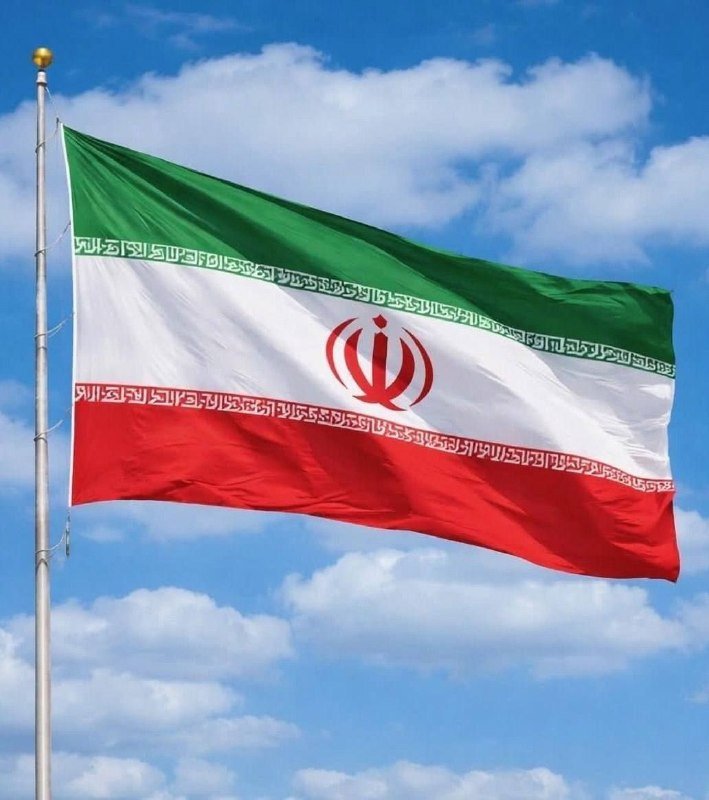
President Donald Trump said on 11 June 2026 that the United States would take "total control" of Iran's oil and gas markets, naming the Kharg Island export terminal and "other oil infrastructure points" as targets, according to a wire circulated by the Insider Paper Telegram channel at 12:29 UTC. The statement came hours after the White House convened a Situation Room meeting, reported by Axios and aggregated on X by Unusual Whales at 20:20 UTC on 10 June, to weigh the next move against Tehran. The rhetoric is maximalist. The operational record is thinner. A contract on the prediction platform Polymarket attached to the same event — "Kharg Island no longer under Iranian control by March 31" — was trading at a 12% implied probability of an actual seizure by the end of the month at 12:36 UTC on 11 June, per an X screenshot of the market page.
The gap between the statement and the price of an insurance contract against the statement is the story. Trump has now used the words "very hard" and "total control" inside twelve hours of each other, and the most liquid venue for monetising a real Kharg seizure still prices the outcome as roughly one-in-eight. Something in that gap — deterrence pricing, signal discipline inside the White House, or both — is the actual news.
What Trump said, and when
The two operative statements, in chronological order, are short and direct. At approximately 20:20 UTC on 10 June, Axios reported that Trump had held a Situation Room meeting that afternoon to discuss potential new strikes against Iran — a piece of reporting summarised on X by the Unusual Whales account within minutes. Roughly sixteen hours later, at 12:29 UTC on 11 June, Insider Paper distributed a Trump quote in which he said the U.S. "will be taking Kharg Island" alongside "other oil infrastructure points at some point." A second X-distributed wire, attributed to the Fotros Resistance channel on Telegram, carried an adjacent quote: "we'll be hitting Iran VERY HARD TONIGHT."
The pattern matches the administration's earlier Iran posture: a maximalist headline calibrated for a domestic political audience, followed by operational activity that the wire services tend to be slower to confirm. What the publicly available sources do not establish is the specific military or economic instrument Trump intends to use. "Total control" of a market is not a doctrinal category in U.S. foreign policy. Kharg Island is a physical facility; it is also a load-bearing node for Iranian state revenue, handling the overwhelming majority of the country's seaborne crude exports through the Persian Gulf.
The prediction market disagrees, modestly
The Polymarket contract is the cleanest available read on whether professional money thinks the rhetoric will become an operation. At 12:36 UTC on 11 June, the contract was pricing a 12% probability of Kharg Island no longer being under Iranian control by the end of the month. The market's question is more permissive than the headline suggests — it does not require a U.S. flag on the jetty, only that the terminal be outside Iranian operational control — but 12% is still roughly one-third of the implied probability that a U.S. strike package would meaningfully degrade the facility in a defined window.
Two structural reasons explain that gap. First, Kharg Island is not a soft target. It sits inside Iranian territorial waters, roughly 25 kilometres off the mainland coast, and is layered with air defence, fast-attack craft, and anti-ship missile batteries that have been hardened since the 1980s tanker war. Second, even a successful strike does not deliver "control." Occupation would require a sustained maritime and air presence, naval suppression of Iran's coastal defences in Bushehr and Bandar Abbas, and a political answer for what the U.S. does with a working crude terminal in a country it is not at war with on paper. A strike can crater the load-out jetties for months. It does not, by itself, hand Washington a revenue stream.
The counter-narrative: this is the negotiating posture
The strongest alternative read of the last 24 hours is that the language is leverage, not a plan. A "total control" framing, paired with a televised Situation Room meeting and a prediction market that refuses to follow, is consistent with a coercion campaign designed to push Iran back to a nuclear-file negotiation, or to deter Iranian-linked strikes on U.S. assets in Iraq, Syria, and the Gulf. In that reading, the Kharg Island line is the high end of a threat ladder the administration has climbed before — most recently in the spring of 2025, when similar rhetoric preceded a de-escalation package rather than a kinetic operation.
The argument against that read is that the prediction market is already discounting a 12% chance of a real seizure, and the U.S. has spent the better part of a decade signalling that escalation with Iran is a higher-cost proposition than escalation elsewhere. The argument for it is that the public wire traffic shows no senior Pentagon or CENTCOM briefing describing an actual operation, and Polymarket's most active Iran-related contracts have, historically, been a faster indicator of White House intent than cable news ticker tape.
Structural frame: dollar politics and the Gulf
What is being contested in this exchange is not the 1.6 million barrels per day that move through Kharg under normal conditions — recoverable, in extremis, through floating storage and limited Chinese and Indian offtake rerouting. What is being contested is the architecture of the dollar-denominated oil trade. The United States has, for the better part of fifty years, treated the Gulf as a managed commons: a place where the physical flow of hydrocarbons stays open and the settlement of those hydrocarbons stays inside the dollar system. An operation that physically seizes a node of that flow and attempts to administer it on a wartime footing would test both halves of that bargain at once.
Iran's leadership understands this framing, which is why Tehran's own Gulf posture has been built around asymmetric tools — fast boats, mines, anti-ship cruise missiles, and the threat of closure of the Strait of Hormuz — that impose costs on the flow itself rather than on a single piece of infrastructure. The U.S. threat is aimed at the node; Iran's response, if it comes, is likely to be aimed at the strait. That is the structural reason a Polymarket contract on a Kharg outcome is not, strictly, a contract on a Kharg outcome. It is a contract on whether the U.S. believes it can take a piece of the system without the system breaking.
Stakes over the next 30 days
If the operation happens, oil markets will price the disruption long before the first sortie. Even a degraded Kharg terminal removes Iran's most reliable revenue stream and forces Tehran to choose between negotiated restraint and a wider Gulf conflict. If the operation does not happen, the credibility cost lands on Washington: a president who used the phrase "total control" in a public statement, against a 12% market, is a president whose next threat will be priced even more sceptically. The third path — a limited strike, no occupation, Kharg damaged but still nominally Iranian — is the historical middle, and the one the prediction market currently favours. None of the three paths is free, and none of them resolves the underlying question of what "total control" of someone else's oil market is supposed to mean in international law.
Desk note: The wire traffic in this cluster is dominated by Telegram and X-screenshoted statements. We have published the Trump quotes as the channels carried them and flagged the Polymarket price as a 12% implied probability at a specific UTC timestamp, because the market data point is the most useful counter-weight to the rhetoric. Monexus has not independently verified whether a U.S. military operation is in motion, and the publicly available sources do not support that claim.
Wire provenance
This editorial synthesis draws on the following public wire/social posts:
- https://t.me/insiderpaper
- https://t.me/FotrosResistancee