Trump's Kharg Island warning puts a US-Iran oil seizure on the table — and exposes the hollowness of the ceasefire
A Truth Social post on 11 June 2026 threatens a renewed major US strike and the eventual taking of Iran's main export terminal. The 'ceasefire' that never was is now the operative story.
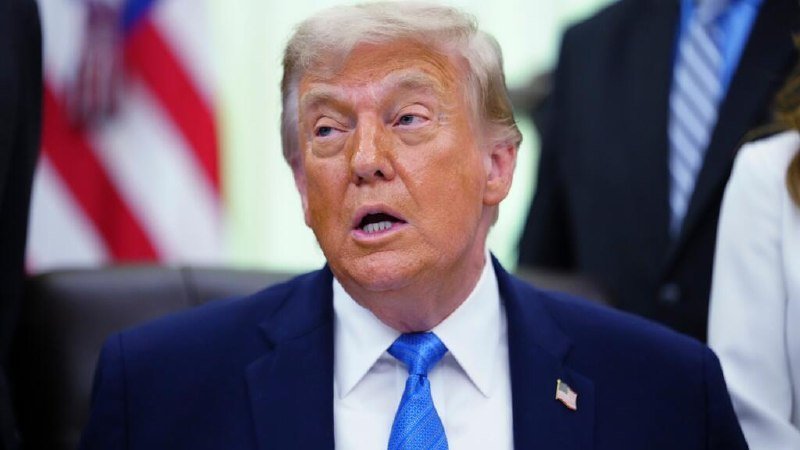
At 12:24 UTC on 11 June 2026, a single Truth Social post from President Donald Trump redrew the map of US-Iran escalation. The United States, he wrote, would be "hitting Iran VERY HARD TONIGHT," and "in the not too distant future" would be "taking Kharg Island, and other oil infrastructure points, and assume [sic] total control" of Iranian production. Within twenty minutes the post was being relayed, with minor variation, by a dozen aggregators from the Jerusalem Post to WarMonitors, Clash Report and OSINTdefender. By 12:59 UTC Deutsche Welle had filed a story carrying Trump's claim that the US would take "total control" of Iranian oil production. By 13:13 UTC the same outlet was framing the situation as a ceasefire "close to collapse."
The line that matters is the second one, not the first. Strikes are tactical; seizing the export terminal that handles the overwhelming majority of Iran's crude exports would be a war aim. The very public airing of that ambition, hours before another round of bombing, is the kind of move that ends negotiations rather than advances them — unless the goal was never a deal in the first place.
What was actually said
The Truth Social text, as transcribed by multiple channels and circulated from 12:24 UTC, runs in its essentials as follows: the United States will hit Iran "VERY HARD TONIGHT"; Iran's navy, air force, radar, anti-aircraft systems and most of its offensive capability are already "GONE"; and "at some point in the not too distant future" the US will take Kharg Island and other oil infrastructure points, and assume control of production. Earlier in the day, Trump told Fox News he would "bomb the shit out of Iran" the following night if the Islamic Republic did not sign an agreement to end the war. Deutsche Welle's 13:13 UTC update reports that recent US and Iranian strikes have rendered the existing ceasefire "meaningless" in Tehran's own framing.
Kharg Island is not a marginal target. The terminal in the northern Persian Gulf handles the vast majority of Iran's seaborne crude exports; damaging or seizing it would not just degrade the regime's war-fighting capacity but choke the central artery of its state revenue. That the threat is being made openly, in the same breath as a strike warning, is the news.
Why the ceasefire framing is already a fiction
The word "ceasefire" implies a bargained pause between two parties that have agreed, however grudgingly, to stop. The pattern on display since the morning of 11 June is the opposite. Tehran's own read, carried in the Deutsche Welle live blog, is that recent US and Iranian strikes have made the arrangement meaningless. Trump is openly pre-announcing a major strike and an eventual seizure of sovereign oil infrastructure. The bargaining is happening in public, on a social media platform, with the threat of escalation rather than a text of agreement doing the work.
This is the part that warrants skepticism even from readers who think the policy is sound. A ceasefire announced under those conditions was never a ceasefire. It was an intermission — a window in which the United States re-stocked magazines, repositioned forces, and waited for Tehran to bend. Now that the bend has not come, the intermission is ending. The wire framing of "fragile truce" is generous to the prior weeks: in practice the United States has been the side setting the tempo throughout.
The oil and the order behind it
A threat to take Kharg Island is not just a threat to Iran. It is a statement about the architecture of global energy. Whoever controls the terminal controls a meaningful share of marginal supply at a moment when spare capacity is concentrated in a small number of actors. The Strait of Hormuz sits within sight of the same coastline. A US administration openly musing about taking the terminal, while striking the country from which the strait takes its name, is a move that reorganises the map of who can be cut off from whom.
This is the part that the wire services have not fully reckoned with. The reporting on 11 June treats Trump's post as a rhetorical escalation in a near-term military story. It is also a structural statement: that the United States reserves the right to seize the export infrastructure of a sovereign state in order to redirect its output. Read against decades of US doctrine on freedom of navigation and the postwar energy order, the post is not a break with precedent so much as a more candid statement of it. The standard caveat has been that such seizures happen indirectly, through sanctions, secondary sanctions, and the dollar-clearing system. The novelty is in saying it out loud.
Iran's counter-position, such as it can be reconstructed from the live coverage, is that the ceasefire is dead and that further strikes will be met. The reporting does not yet record an official Iranian statement responding to the Kharg threat specifically, and the framing of "the Islamic Republic" signing an agreement appears to come from Trump, not from Tehran. That asymmetry is itself part of the story: the United States is the side defining both the deadline and the price.
What the next 72 hours are likely to bring
If the strike happens on the night of 11 June — and the post explicitly schedules it for tonight, US time — the binding question is not whether Iran retaliates but where. Targets in the Gulf, US bases in Iraq and the wider region, and Israeli rear areas are the standard menu. A direct Iranian move against Kharg Island itself, in the days after a US strike, is the scenario that would most clearly mark the collapse of the intermission into a wider war.
The second binding question is oil. Even a failed approach to Kharg, or a successful one followed by Iranian harassment of tanker traffic in the strait, will push prices. The structural fact is that spare capacity now sits in the country whose forces are doing the striking, and a successful seizure would put a meaningful share of OPEC-adjacent supply under direct American military-political control. The diplomatic scrambling of the next three days should be read through that lens, not through the rhetoric of "ending the war."
The honest accounting is that the sources disagree about almost everything except the bare facts of the post, the strike warning, and Tehran's view that the ceasefire is already over. The scale of the response, the duration of the operation, the specific fate of Kharg Island, and whether the war ends or widens are all still genuinely open. The single thing that is closed is the claim that the previous weeks amounted to a ceasefire. They did not. They were a countdown, and it has now reached the visible part of the fuse.
Desk note: Monexus is treating the 11 June Truth Social post as the operative primary document for this story, with Deutsche Welle's live coverage as the running wire reference and the Telegram OSINT channels as the propagation record. Where the channels paraphrase, this piece relies on the wire phrasing; where they add colour, the wire phrasing is preferred. The line between a US strike campaign and a US-administered oil seizure is now a real distinction in policy, and our coverage will keep them separate until the evidence forces them together.
Wire provenance
This editorial synthesis draws on the following public wire/social posts:
- https://t.me/Middle_East_Spectator
- https://t.me/The_Jerusalem_Post
- https://t.me/osintlive
- https://t.me/BellumActaNews
- https://t.me/ClashReport