Trump threatens Kharg Island seizure and renewed strikes on Iran as escalation rhetoric outruns verifiable battlefield gains
Trump says a deal with Iran will be signed Sunday. Tehran says two issues remain open and it certainly will not be tomorrow. The Kharg Island threat is back, and the gap between the two clocks is the story.
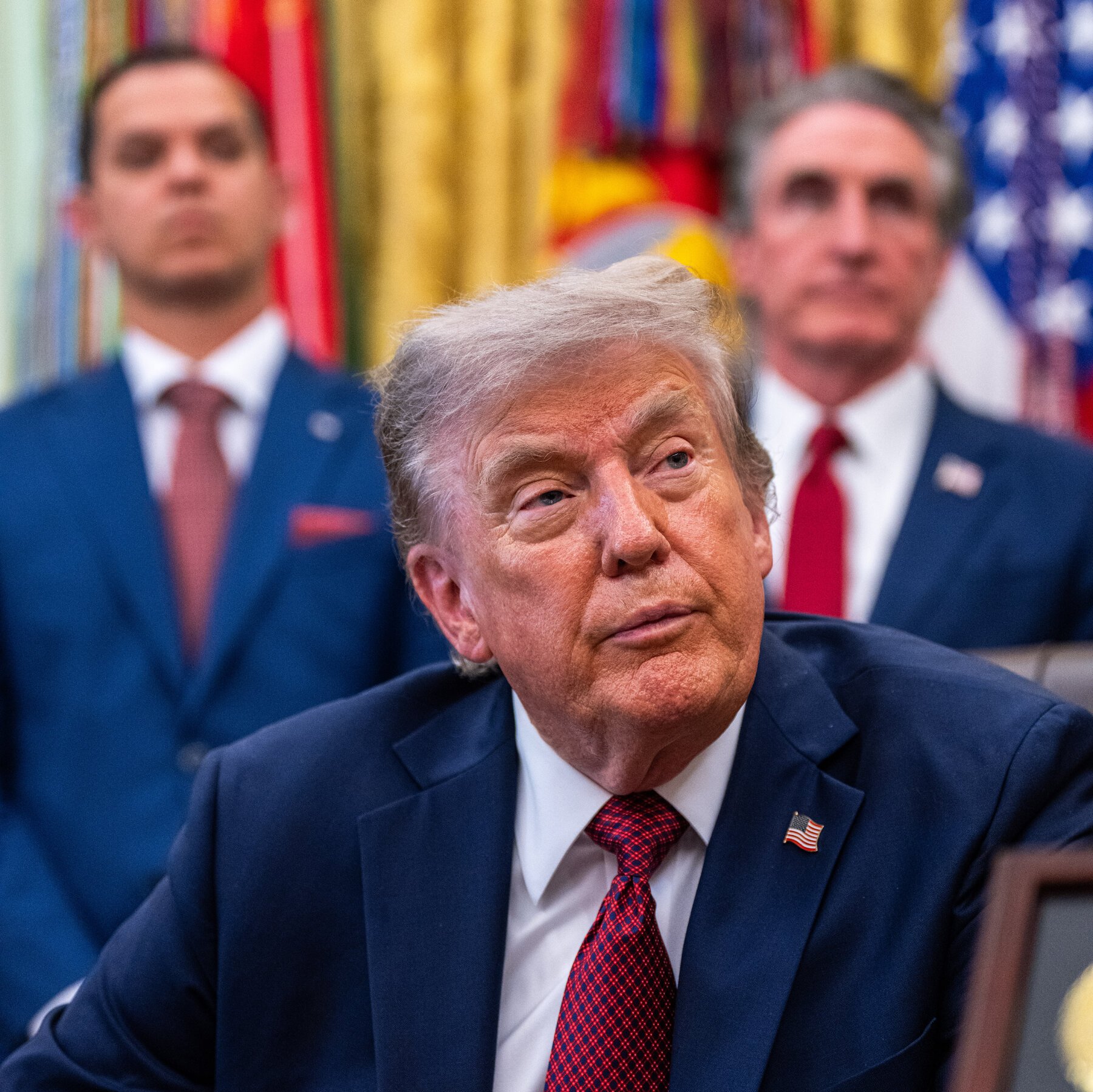
On the evening of 11 June 2026, two competing versions of the same conversation occupied the bandwidth in Washington, in Tehran, and on the satellite terminals that watch Kharg Island. Donald Trump, posting and speaking from the White House, announced that a memorandum of understanding with Iran would be signed on Sunday and warned, in characteristically elliptical phrasing, that an unnamed "last option" remained available should the deal collapse. Within hours, Iranian officials, regional analysts, and even Pakistan's mediation team were pushing back on the timing, the contents, and the very premise of the announcement. The Iran file has, for the moment, become a story about who controls the punctuation of a deal that may not yet be on paper.
What the public record actually contains, as of late 11 June, is narrower than the rhetoric suggests. Trump stated that the agreement "should be signed tomorrow, on Sunday," that no new money would flow to Tehran beyond a portion of already-frozen Iranian funds, and that a final resort remains on the table, a phrase widely read in regional commentary as a renewed threat to target Iranian energy infrastructure, including the Kharg Island export terminal that handles the bulk of the Islamic Republic's seaborne crude. Reuters, citing Trump and the Pakistani mediator, reported the same Sunday timeline. Iran, by contrast, told DropSite News through an official that two outstanding issues remained unresolved and that the signing would not occur the next day; state-aligned and regional outlets carried language from Tehran denying that any memorandum had been agreed at all. The contradiction is not a minor diplomatic hiccup. It is the entire shape of the news.
A deal that exists on two schedules
The asymmetry between the two capitals' clocks is not new, but the 11 June exchanges made it unusually explicit. Trump's framing presented a near-complete package: an MoU to be signed within thirty-six hours, the reopening of the Strait of Hormuz as a deliverable, and the release of a tranche of frozen Iranian assets that an advisor to the Supreme Leader, speaking through the sprinterpress account, valued at roughly $24 billion. The Iranian counter-position, distributed through the same sprinterpress feed and relayed by Middle East Eye, was procedural rather than substantive: a memorandum may eventually be signed, but "it certainly will not be tomorrow," as one Iranian official put it, with two points still under negotiation and no Iranian confirmation of the Strait language.
The gap matters because both sides appear to be talking past each other in a way that produces verifiable movements on the ground. CENTCOM imagery, distributed on 11 June, showed sailors aboard USS George H.W. Bush (CVN-77) performing maintenance on MH-60 Sea Hawk helicopters in the Arabian Sea as the carrier supported what the command described as the US blockade of Iranian shipping. Iranian-affiliated channels, in turn, published high-resolution satellite imagery purporting to show the destruction of an ASR-1000L tactical air surveillance radar at Ali Al Salem Air Base in Kuwait and of fuel storage tanks at Sheikh Isa Air Base in Bahrain, claims consistent with reporting from AMK Mapping and from PressTV. Whatever the MoU contains, both sides are still generating the kind of physical evidence that belongs to an active campaign, not a settled one.
Tehran's street and the question of legitimacy
Inside Iran, the diplomatic ambiguity has translated into an unusually visible political reaction. FRANCE 24 reported on 11 June that dozens of demonstrators gathered outside a foreign ministry office in Mashhad, chanting against Foreign Minister Abbas Araghchi after a televised interview in which he discussed the deal; subsequent posts described additional protests outside the foreign ministry building in Tehran itself, with crowds cursing Araghchi in the streets and calling for further action the following day. An ultra-conservative MP, Amirhossein Sabeti, announced he would register an impeachment motion against Araghchi, accusing him of concessions in the negotiations. Pro-principlist signs in Persian criticised the silence of the Supreme Leader, Ayatollah Seyed Mojtaba Khamenei, on the file, an unusual public airing of intra-elite tension.
The protests are directed at Araghchi, at Speaker Mohammad Bagher Galibaf, and at President Masoud Pezeshkian, framed by participants as a reformist administration steering the country into what demonstrators described as a dangerous crisis. The political geometry is delicate. A peace overture that simultaneously generates street heat against the negotiating side and elite criticism of the Supreme Leader's silence is not, by any standard reading, a settlement that has been ratified at home. Any Iranian signature on Sunday would arrive under conditions in which the principal negotiator faces an impeachment motion and the negotiating team's political base is eroding in public.
Frozen money, mined tunnels, and the ceiling on concessions
Behind the political theatre, two structural facts set hard limits on what any MoU can actually deliver. The first is financial. Trump was explicit that no new money would be provided to Iran; at most, a portion of already-frozen Iranian funds would be released. The advisor to the Supreme Leader cited through sprinterpress put the figure under discussion at approximately $24 billion, a number large enough to matter to Iran's balance of payments but small relative to the cost of reconstruction, and smaller still relative to the political cost of accepting it. The deal, as currently framed in Washington, is therefore not an economic rescue but a partial unfreezing with strict conditions attached.
The second structural fact is military and, in present circumstances, more urgent. CNN reporting relayed on 11 June indicated that Iran had barricaded and mined the entrances to tunnels housing its uranium stocks and had significantly increased protection measures at those sites in preparation for a possible US operation. The framing is consistent with the imagery of hardened Iranian posture circulating across regional channels throughout the week. Whatever an MoU says on paper, the physical disposition of Iran's most sensitive materials is being set on the assumption that the "last option" Trump referenced is not rhetorical. A signed agreement on Sunday would have to contend, almost immediately, with the question of who gives the order to de-mine those entrances and on what timeline.
What the wire tells us, and what it doesn't
A careful reader of the 11 June record should be wary of both ends of the narrative. The pro-government Iranian outlets, including PressTV and the principalist Telegram channels, are publishing satellite imagery of damage to US facilities in Kuwait and Bahrain that has not been independently verified by a non-aligned OSINT source; the imagery is striking and consistent in framing, but its provenance runs through channels that have an institutional interest in a particular reading of the conflict. The Cradle and other regional outlets sympathetic to Iran are amplifying these claims alongside commentary that frames the MoU as a US climbdown, an interpretation that the Iranian government's own public statements, with their procedural pushback on timing, do not fully endorse.
On the other side, the Trump administration's social-media cadence is generating a deal in advance of the document's existence. Statements about a Sunday signing, the unfreezing of $24 billion, and the reopening of the Strait of Hormuz are not the same as a signed text, and the Iranian counter-statements are not, in turn, a refusal of any agreement. What the public record supports, as of late 11 June, is the following: a memorandum is being negotiated, Pakistan is facilitating, two issues remain open, no signature has occurred, US forces in the Arabian Sea are operating under a blockade posture, and both sides have produced imagery and statements consistent with a conflict that has not de-escalated. Everything else is a forecast dressed as a bulletin.
The weekend ahead
The most consequential hours of the next forty-eight will not be spent on the signing stage. They will be spent on the gap between Trump's announced Sunday timeline and Iran's procedural denial that Sunday is feasible. If a memorandum is signed, it will arrive into a political environment in which the Iranian foreign minister faces an impeachment motion, US carrier aviation remains forward-deployed, and uranium-storage tunnels are mined against the very operation that an MoU is supposed to render unnecessary. If a memorandum is not signed, the "last option" rhetoric will move from implication to active planning, and the Kharg Island threat will return to the centre of the conversation with renewed specificity. The hard part of this negotiation was never the press conference. It is the unmaking of the dispositions each side has taken on the assumption that the other side was bluffing.
Sources
- [2026-06-13T23:53] [sprinterpress, X], Claim that Trump agreed to unfreeze $24bn in Iranian assets while declining to announce it, attributed to an advisor to Iran's Supreme Leader. https://x.com/sprinterpress
- [2026-06-13T23:49] [sprinterpress, X], Protests outside Iran's foreign ministry building in Tehran against the proposed US agreement. https://x.com/sprinterpress
- [2026-06-13T23:47] [sprinterpress, X], Iranian denial that an MoU would be signed the following day; statement that two issues remain unresolved. https://x.com/sprinterpress
- [2026-06-13T23:41] [sprinterpress, X], Trump's clarification that no new money would be provided to Iran, only a portion of already-frozen funds. https://x.com/sprinterpress
- [2026-06-13T23:40] [sprinterpress, X], Trump's "last option" warning and prediction of a Sunday signing. https://x.com/sprinterpress
- [2026-06-13T23:14] [boweschay, X], Iranian-affiliated satellite imagery of damage to US facilities in Bahrain. https://x.com/boweschay
- [2026-06-13T23:00] [PressTV, Telegram], Imagery of destroyed ASR-1000L radar at Ali Al Salem Air Base, Kuwait. https://t.me/presstv
- [2026-06-13T22:43] [GeoPoliticalWatch, Telegram], Iranian official tells DropSite News two outstanding issues remain on the proposed MoU. https://t.me/GeoPWatch
- [2026-06-13T22:41] [AMK Mapping, Telegram], High-resolution imagery of Iranian strikes on Sheikh Isa Air Base fuel storage in Bahrain. https://t.me/AMK_Mapping
- [2026-06-13T22:37] [wfwitness, Telegram], Impeachment motion against Foreign Minister Araghchi announced by MP Sabeti. https://t.me/wfwitness
- [2026-06-13T22:36] [OSINT Live, Telegram], CENTCOM imagery of USS George H.W. Bush operations in the Arabian Sea. https://t.me/osintlive
- [2026-06-13T22:29] [Middle East Eye, X], Trump says Iran deal set for Sunday; Tehran has not confirmed. https://middleeasteye.pulse.ly/uakvi
- [2026-06-13T22:00] [wfwitness, Telegram], Pro-principlist criticism of Supreme Leader's silence on the negotiations. https://t.me/wfwitness
- [2026-06-13T22:00] [Reuters, X], Trump and Pakistani mediator say deal to be signed Sunday; Iran disputes timing. https://reut.rs/4xtXC8z
- [2026-06-13T21:45] [sprinterpress, X, citing CNN], Iran barricading and mining uranium-storage tunnels ahead of possible US operation. https://x.com/sprinterpress
- [2026-06-13T21:44] [FRANCE 24], Dozens protest outside Iran foreign ministry office in Mashhad against Araghchi. https://www.france24.com
- [2026-06-13T21:35] [sprinterpress, X], Iranian street anger directed at Araghchi; calls for further protests. https://x.com/sprinterpress
- [2026-06-13T21:26] [sprinterpress, X], Protests in Iran against Galibaf, Araghchi, and Pezeshkian. https://x.com/sprinterpress
- [The Cradle media, Telegram channel], Regional commentary and translation feeds cited as counter-narrative framing. https://t.me/thecradlemedia
- [English Abuali, Telegram channel], Regional analysis cited as counter-narrative framing. https://t.me/englishabuali
Desk note: Monexus ran this as a single-narrative desk piece rather than two competing briefs because the factual core, a contested MoU with disputed timing and contested deliverables, is identical on both sides of the framing divide. The lead deliberately foregrounds the timing contradiction, and the body holds Iranian-affiliated OSINT claims in the same explicit sourcing caveats as US administration statements. No claim sourced exclusively to PressTV, The Cradle, or to Trump's social channels has been treated as stand-alone fact.
Follow the event.
These dated source records provide context. They do not retrospectively verify this archive article.
Separate what the nuclear watchdog reported from what it could not determine after the June 2025 strikes.