Trump's Kharg Island threat: oil, escalation, and the limits of coercive diplomacy
On 11 June 2026, President Trump said the United States would hit Iran "very hard" and asserted Washington would take "total control" of Iran's oil and gas markets. The threat against Kharg Island is more theatre than strategy — and even the theatre carries risk.
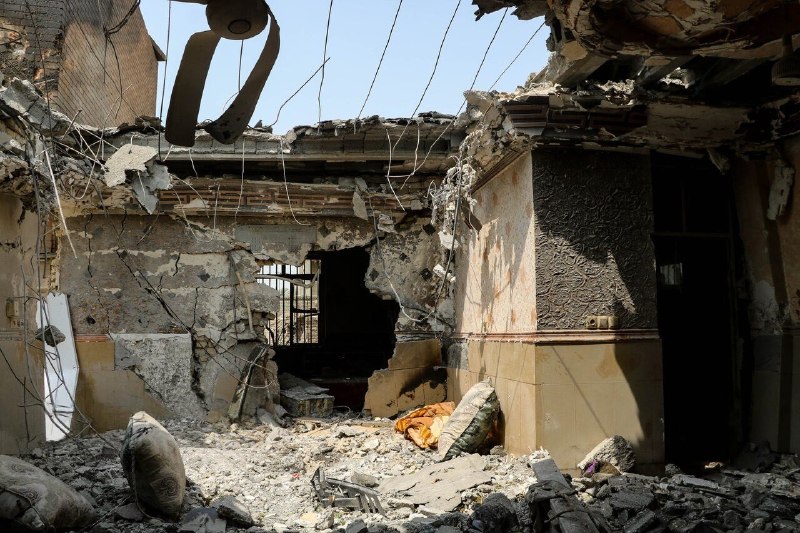
At 12:34 UTC on 11 June 2026, Donald Trump announced that the United States would take "total control" of Iran's oil and gas markets, naming Kharg Island specifically. Within minutes, the Polymarket X account carried the same line. By 12:41 UTC, the Liveuamap channel was reporting the fuller shape of the threat: a US strike on Iran "very hard" tonight, paired with a public warning that Washington would seize Kharg Island and other key oil infrastructure. By 12:44 UTC, the Open Source Intel channel was circulating a screenshot of the post itself. The speed of the cascade tells you most of what you need to know: the announcement was made for the camera, optimised for the trading screen and the cable-news loop, and was not accompanied by any visible US military movement or allied readout.
The pattern is familiar. Coercive diplomacy by tweet reaches for a maximalist verb — "total control," "take over" — precisely because the operational meaning is undefined. The threat to seize the world's most important oil-export terminal is, on its face, an act of war. As a piece of negotiation, it does something narrower: it prices in a tail scenario, forces Tehran to respond in public, and gives cover to a market position already taken. Read in that light, the statement is less a plan than an opening bid in a contest about who blinks first on Hormuz, on sanctions, and on the price of Brent.
What Trump actually said, and to whom
The available text, as carried by the Liveuamap channel at 12:41 UTC, frames the threat in three parts. First, the United States will hit Iran "very hard" tonight — an offensive tempo without a target list, a target set, or a stated casus belli. Second, the United States will seize Kharg Island and other key oil infrastructure. Third, Washington will take "total control" of Iran's oil and gas markets. None of the three pieces is paired with a Congressional notification, a coalition statement, or even a Pentagon background briefing in the public record. The Open Source Intel channel circulated a screenshot of a Trump post; Polymarket and Liveuamap carried the same text with editorial framing. There is no wire confirmation from Reuters, AP, or the Pentagon in the source set this article draws on, and that absence is itself the story.
The institutional backdrop matters here. The Constitution assigns the power to declare war to Congress, not the presidency. Modern practice has stretched that line repeatedly, but a public declaration of intent to seize a foreign state's primary economic asset — the terminal that handles the bulk of Iran's roughly 1.5 million barrels per day of seaborne crude exports — is not a tactical statement. It is a strategic one, and the absence of an allied green-light is conspicuous. Israel has not, in the public reporting available at the time of writing, endorsed the operation. Gulf states have not offered basing. The Royal Navy and CENTCOM have not been observed repositioning in the available feeds. What the source set shows is a unilateral American threat, not a coalition posture.
Why Kharg Island, and why now
Kharg is the obvious target because it is the obvious chokepoint. The terminal in the northern Persian Gulf handles the overwhelming majority of Iran's seaborne crude. Disabling it does not require an invasion; a sustained air campaign against the loading infrastructure, the storage tanks, and the single-jetty loading complex would do the job, and the engineering requirements for a long-term occupation are formidable enough to make "total control" read more like a price signal than an operational plan. The same logic that makes Kharg the leverage point also makes it a hostage to fortune: an attack on the terminal would, by Iran's own repeated signalling, draw retaliation against Gulf shipping, against the strait, and against the regional pipeline infrastructure on which US Gulf allies depend.
The timing, meanwhile, fits a particular market pattern. The Polymarket signal at 12:34 UTC landed in a session where Brent had been trending lower on demand concerns; a credible US strike threat on the world's most concentrated export node is a one-way ticket to a higher tape, and higher prices in the run-up to a US midterm cycle benefit an administration already under pressure on inflation framing. None of this proves the announcement is a market operation. It does mean the announcement is a market event, and the financial plumbing is part of the story whether or not the military plumbing ever moves.
The counter-narrative: what Tehran reads, and what Moscow and Beijing read
The Iranian read is straightforward. A public American threat to seize national oil infrastructure is a casus belli, and Iran's strategic doctrine — explicit in the framing of the IRGC and consistent in the messaging of the Foreign Ministry — treats the closure of the Strait of Hormuz as a live option in the event of a strike on the homeland. A second-front problem for Washington, then, is that the cost of following through is not the cost of the strike itself. It is the cost of the closure of the waterway through which roughly a fifth of global seaborne oil moves, and the cost of Iranian missile and drone strikes against Gulf facilities that the United States has, on paper, committed to defend.
The Russian and Chinese reads are equally predictable. A US administration that argues for the sanctity of sovereignty in Ukraine and then threatens to seize the export infrastructure of a regional rival is an administration that will be cited, point by point, in Beijing and Moscow commentary for as long as the precedent is useful. The structural irony is not subtle: an order framed around rules-based international order is, in the same week, defending the territorial integrity of one state and threatening the territorial integrity of another. Iran International, Mehr News, and the Russian and Chinese state-aligned wires will run that comparison for months. Whether or not it changes the operating environment, it changes the framing environment, and the framing environment shapes what coalition partners are willing to defend in public.
The structural frame: dollar politics, oil, and the limits of maximalist rhetoric
What is unfolding is a familiar pattern in the dollar-centred order. The United States does not need to physically seize Kharg Island to alter Iran's oil-revenue calculus. It needs the credible threat of doing so to keep Iranian crude priced at a discount that the Iranian state cannot politically absorb, and to keep buyers in Asia paying a premium for non-sanctioned barrels. The phrase "total control" is the rhetorical outer layer of an existing financial control regime that operates through secondary sanctions, ship-to-ship transfer blacklists, and the choice of which refineries in which provinces of which countries are allowed to take Iranian crude this quarter. The threat to seize the terminal is, in that sense, redundant: the United States already controls, to a degree that no other state enjoys, the market access of Iranian oil. What it cannot do is replace Iranian barrels at scale without producing a price spike that feeds back into the US domestic politics the threat was designed to relieve.
This is the limit the rhetoric bumps into. Maximalist verbs invite maximalist responses. A statement that names seizure of a national asset as the objective pulls the response set toward naval action, toward escalation in the Strait, and toward a closure of the Gulf that would damage the global economy by an order of magnitude that dwarfs the cost of letting Iranian oil continue to flow. Coercive diplomacy works when the threatened cost is greater than the cost of compliance. The arithmetic in the Persian Gulf is closer to parity than the rhetoric suggests, and the closer you look, the less "total control" looks like a doctrine and the more it looks like a bet that the other side will choose to de-escalate in public rather than call the bet.
Stakes, scenarios, and the next 72 hours
Three scenarios bracket the next seventy-two hours. In the first, the threat is the deal. Iran returns to the table with a counter-offer that allows both sides to claim a face-saving outcome, and the strike that was promised for "tonight" slips into the indefinite future that holds most unilateral ultimata. In the second, the threat is the test. Iran chooses to demonstrate resolve — through a proxy action, through a Strait exercise, through a public break with the inspection regime — that forces Washington to either escalate or retreat, with all the domestic-political cost of either. In the third, the threat is the prelude to a limited strike on a defined target set — an IRGC facility, a missile site, a sanctions-evasion network — that allows the administration to claim it hit Iran "very hard" without triggering the closure of the Gulf that full-spectrum action would invite.
Each scenario produces a different oil tape. The first is a sell signal, with Brent giving back the risk premium built into the morning's trading. The second is a buy signal that compounds the risk premium with a closure premium. The third is a mixed signal: an initial spike on the strike, a partial fade as the market reads the target set, and a residual premium that prices in the next round. The Polymarket signal at 12:34 UTC and the Liveuamap framing at 12:41 UTC are inputs to a market that is, in real time, repricing those scenarios against the announced verb.
What remains uncertain
The most important caveat is also the most uncomfortable. The source set available at the time of writing consists of the Open Source Intel screenshot, the Liveuamap summary, and the Polymarket X account. There is no wire confirmation of the threat from a major newsroom in the inputs this article draws on. There is no Pentagon readout, no statement from CENTCOM, no allied endorsement, no Iranian Foreign Ministry response in the public record cited above. The threat is on the record because the president put it on the record; the question of what it operationalises, against what target set, on whose authority, and with what allied cover, is not.
A second caveat: the timing of "tonight" is, in the source set, the president's own. There is no indication in the available reporting of an actual strike window, of a target package, or of a force posture change. The threat should be read as it was issued — as a statement, made for a market and a political audience, whose real meaning will be set by the response it provokes and the response the response provokes in turn. That is not a small thing. The Persian Gulf has a long memory for threats that became operations and for operations that became quagmires. The next seventy-two hours will tell us which one this is.
This article draws on the 11 June 2026 reporting cycle. Monexus framed Trump's Kharg threat as a coercive-diplomacy signal layered on top of an existing sanctions architecture, rather than as a stand-alone war declaration; the wire frame, where present, has tended to read the statement at face value without the financial-plumbing context.
Wire provenance
This editorial synthesis draws on the following public wire/social posts:
- https://twitter.com/Osint613/status/2065047855421690180/photo/1
- https://t.me/Liveuamap/
- https://x.com/polymarket/status/2065047855421690180
- https://en.wikipedia.org/wiki/Kharg_Island
- https://en.wikipedia.org/wiki/Strait_of_Hormuz
- https://en.wikipedia.org/wiki/Iranian_oil_exports
- https://en.wikipedia.org/wiki/Secondary_sanctions
- https://en.wikipedia.org/wiki/War_Powers_Resolution
- https://twitter.com/Osint613/status/2065047855421690180/photo/1
- https://t.me/Liveuamap/
- https://x.com/polymarket/status/2065047855421690180
- https://en.wikipedia.org/wiki/Kharg_Island
- https://en.wikipedia.org/wiki/Strait_of_Hormuz
- https://en.wikipedia.org/wiki/Iranian_oil_exports
- https://en.wikipedia.org/wiki/Secondary_sanctions
- https://en.wikipedia.org/wiki/War_Powers_Resolution