Trump's Kharg Island rhetoric and the limits of presidential bluster
The president says America could seize Iran's oil hub. The Pentagon spent months planning exactly that — then shelved the option. The gap between the rhetoric and the plan is the story.
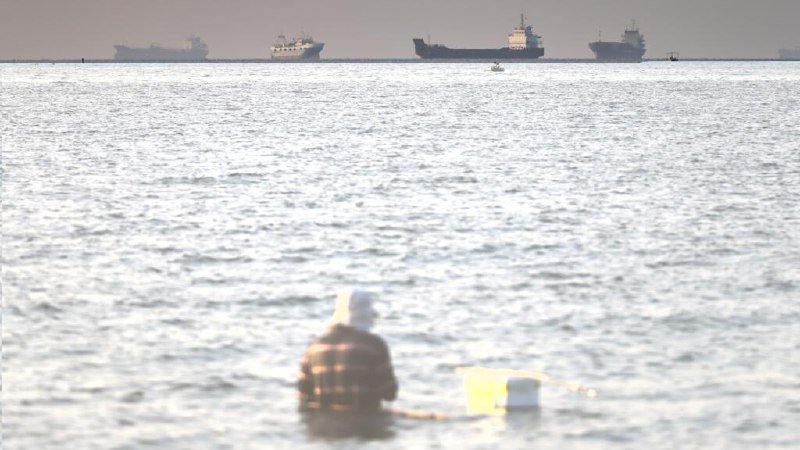
On 11 June 2026, the president of the United States told reporters that taking Kharg Island has "always been" his preference — and then immediately volunteered that he doubts "America has the stomach for it." The two sentences, delivered minutes apart, encapsulate a doctrine that has governed the second Trump administration's Iran file since the spring: maximalist rhetoric, minimalist execution, and an audience of one — the regime in Tehran — who is expected to read the gap between the two and price in the more dovish signal.
That reading is the official one. It is also, on the evidence now public, the optimistic one.
The plan on the shelf
Reporting circulated on 11 June by Clash Report and corroborated by Open Source Intel's CNN relay describes a military option that has been on the Pentagon's whiteboard for months. "Capturing Kharg Island has long been viewed by senior Trump administration officials as a last-resort 'endgame' option," the channel wrote at 14:25 UTC. "Military plans to seize the island were developed months ago but repeatedly set aside." The phrasing matters. This is not improvisation. It is a fully scoped contingency that has, on at least three occasions the reporting does not specify, been pulled back from the edge of the table.
Kharg is the right place to plan against. Roughly 90 percent of Iran's crude exports flow through the terminal in the northern Persian Gulf; the island itself is roughly 25 kilometres long and sits inside Iranian territorial waters, roughly 300 kilometres from the Iraqi coast. A successful seizure would amount to a stranglehold on the Islamic Republic's principal revenue artery and a fait accompli Tehran could not reverse without escalations that would, in turn, justify a much larger and more permanent US presence.
That the plan exists is not the headline. The headline is that it has been deferred — repeatedly — by an administration that is, in public, comfortable describing it.
What the rhetoric is actually for
Strip away the theatre and the president's comments map to a recognisable negotiating posture. "We can walk in there tomorrow. We could take soldiers — I don't want to have boots on the ground — but if I wanted to, we could put a small group of soldiers and take over the whole place," he said at 14:37 UTC, before pivoting, as he almost always does, to media: "Iran can't believe the press they get. … 'It's amazing how well we're doing in the papers. We're not doing so well.'"
The message is dual-use. To domestic audiences, it is strength. To Tehran, it is a re-statement of capability with a price tag attached: do the deal that is on the table — the nuclear file, the missile file, the regional file — and the option stays on the shelf. The second Trump administration has used this template with Caracas and, intermittently, with Pyongyang. It works when the counterpart believes that the alternative is real.
The Tehran problem is that Iran has now spent the same months the Pentagon spent planning, preparing for the option it hopes it never faces. "Iran has spent months preparing for a potential US attack on Kharg Island," Clash Report wrote at 14:24 UTC. "After US strikes in March, Iran reinforced the island with additional troops, air defences, and shoulder-fired surface-to-air missiles." Open Source Intel's CNN relay at 14:15 UTC added minefields to the inventory. The result is that the "small group of soldiers" the president described is now an objective that the Iranian Revolutionary Guard Corps has had time to harden.
The costs the briefing does not name
The two omissions in the public framing are the ones that matter most. The first is oil markets. A US seizure of Kharg would not remove Iranian oil from the market; it would, in the short run, remove the entire Strait of Hormuz transit lane from reliable operation. Roughly a fifth of seaborne crude moves through the strait; insurance markets reprice within hours, not days. The administration's own energy stability arguments become the principal casualty of the operation meant to enforce them.
The second is the regional cascade. A unilateral US occupation of Iranian sovereign territory — Kharg is Iranian, by every legal measure that matters — would not be received in Baghdad, Beirut, Doha or Riyadh as a contained operation. It would be received as a template. The argument that the United States has any interest in a more rules-based order in the Gulf becomes harder to make on the day that order is suspended by Washington itself.
These are the reasons the plan stays on the shelf. They are also the reasons the rhetoric keeps getting louder: the cost calculus has not changed in three months, but the diplomatic file — the one the administration is actually running — has not closed either.
What the gap tells us
The honest read is that the president is using the threat of Kharg the way the first administration used the threat of the JCPOA snapback: as a credible-until-tested instrument. Tehran is expected to fold at the negotiating table what it would not fold under bombardment. The risk is that Iran, having watched this playbook work in reverse in 2018 and not work in 2019, has decided that the table is the safer place to negotiate from — and is hardening the island precisely to push the cost of the alternative above the political tolerance the president himself named.
The phrase "America has the stomach for it" is doing more work than the bellicose sentences around it. It is, in effect, an admission that the plan exists in the form it does because the political coalition for executing it does not. Until that coalition changes — or until an Iranian provocation gives it a reason to — Kharg remains what it has been since March: a contingency file that everyone can read, a deterrent that everyone can price, and a reminder that the gap between what a president says about war and what he is willing to start is, in 2026, the actual battlefield.
This article draws only on the Telegram-sourced reporting cited below. The originating outlets — CNN, the wider US wire layer covering the March strikes and the present Kharg contingency — have not been independently verified in real time; readers should treat specifics on Iranian force posture and Pentagon planning as preliminary until primary sourcing is available.
Wire provenance
This editorial synthesis draws on the following public wire/social posts:
- https://t.me/ClashReport
- https://t.me/ClashReport
- https://t.me/ClashReport
- https://t.me/ClashReport
- https://t.me/ClashReport
- https://t.me/osintlive