Trump's Kharg rhetoric puts oil chokepoint back in play
Trump's 11 June post naming Iran's Kharg Island has done more than any communiqué to move oil markets and force Tehran's calculation. The chokepoint is rhetorical, and the rhetoric is now the policy.
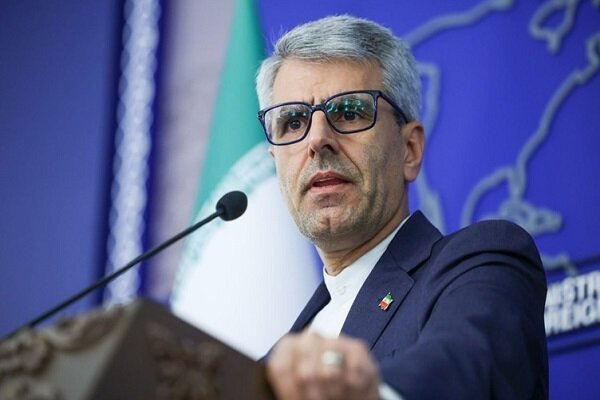
On 11 June 2026, Donald Trump posted a social-media message placing Iran's main Gulf export terminal, Kharg Island, at the centre of an escalating rhetorical standoff with Tehran. The post, circulated widely across Telegram channels covering the Iran file, did not announce a military operation. It named a target, framed it as a leverage point, and waited for the market and the regime to read the implications. That sequence is now the story.
Kharg Island handles the overwhelming majority of Iran's seaborne crude exports, and any sustained disruption to the terminal is a disruption to state revenue and to the regime's ability to fund its regional posture. Trump's rhetoric puts the chokepoint back in play at a moment when the official diplomatic track is moving slowly, when Iranian proxies are visibly emboldened, and when Gulf shipping is already pricing in tail risk. The lede of the wire coverage has tended to be diplomatic: negotiations, sanctions, the IAEA file. The more honest lede, given what is actually moving prices and behaviour, is the text of the post itself.
The text of the threat
The available public artefact, as carried by Telegram channels that monitor the Iran and Gulf files, is a short social-media message from Trump that singles out Kharg Island by name. There is no formal policy document attached, no Pentagon background briefing, no allied readout. The authority being claimed is rhetorical, and the audience is plural: Tehran, the oil market, the Republican base, and the diplomatic principals who will now have to decide whether the language is operational, performative, or both. Telegram channels including GeoPWatch, RNIntel, OsintLive and IntelSlava carried or referenced the post in the hours after it appeared, which is how it crossed into the tradable information environment.
The post's significance is not in any new fact about US capability. American planners have always had Kharg on a theoretical target list, alongside other Iranian oil infrastructure, missile sites, and command nodes. What the post does is compress the gap between capability and signalling, and signal is what moves the market in the hours before any policy memo is filed. Brent and Dubai-grade benchmarks reacted on the assumption that the rhetoric is intended to be acted on, or at minimum to be priced as if it might be.
Why Kharg, why now
Kharg Island matters because it is Iran's most concentrated point of economic vulnerability. A single terminal in the northern Gulf handles the bulk of the crude that generates the foreign currency Tehran uses to maintain its network of partners and proxies. Strikes on dispersed military or nuclear sites achieve tactical effect; sustained pressure on Kharg achieves fiscal effect. The regime's capacity to absorb either is different, and the calculation the post forces on Tehran is whether the cost of continuing its current course, including the proxy posture visible from Lebanon to the Red Sea, outweighs the cost of a concession that would calm the rhetoric.
The timing is not incidental. The IAEA board and European capitals are working through the technical file on Iran's enrichment activity, and that process is slow and leak-prone. Iran's regional proxies have been operating at an intensity that makes the diplomatic track harder to sustain publicly. Against that backdrop, a presidential post that names a single island as the leverage point is a way of telling Tehran, the Europeans, and the Gulf states that the administration's appetite for the slow process is finite, and that the alternative is a kinetic option whose contours are now legible.
The market has already read the post
What is most telling about this episode is that the markets have moved before any policy has. Freight and war-risk premia through the Strait of Hormuz repriced on the assumption that rhetoric at this specificity is no longer purely rhetorical. Iranian buyers and Asian refineries adjusted liftings and routes. The signal value of the post is greater than its operational value, and the signal has been received. This is the pattern that has held across the past two years of US-Iran tension: the tradable information moves on the text of a post, not on the text of a communiqué.
For Gulf states, the post introduces a familiar and unwelcome problem. The United States is publicly naming Iranian infrastructure that sits in a body of water the Gulf states themselves depend on for their own exports. The implication, even if unintended, is that the escalatory ladder may run through waters that ship Saudi, Emirati, Kuwaiti and Qatari crude. Quiet diplomacy is now doing the work of making sure that any actual operation, if one is contemplated, is calibrated against allied exposure as well as Iranian exposure.
What the next hours and days test
The next test is not whether Trump follows the post with action. The next test is whether the post produces the diplomatic movement it is designed to extract, or whether Tehran reads it as a bluff and proceeds as if it were not on the table. Iranian state media has, in past episodes, treated US presidential rhetoric as bargaining rather than as commitment, and priced its response accordingly. If Tehran concludes that this post is similarly priced in, the post fails as leverage and the administration either has to escalate, retrench, or let the rhetoric decay. Each of those outcomes has its own market and diplomatic footprint.
There is also the question of who is carrying the message inside Iran. The post has been picked up by Iranian-language outlets, by opposition channels based outside the country, and by figures inside the political system who are now forced to take a position. The post is not aimed at one audience. It is aimed at several, and the Iranian response will reveal which audience read it the way it was intended.
The rhetorical chokepoint
The story of the past 48 hours is not that the United States has changed its Iran policy. It is that the rhetoric doing the work of policy has been sharpened to a single named point on a map, and the oil market has already priced the consequence. From here, the question is not whether Kharg is a target, but whether naming it as one produces the movement Washington wants before any further escalation has to be carried out in fact rather than in posts.
Sources: https://t.me/GeoPWatch; https://t.me/rnintel; https://t.me/osintlive; https://t.me/intelslava.
Desk note: Wire coverage of Iran has tended to lead with the diplomatic process, framing Trump's Kharg remarks as colour around negotiations. Monexus is leading with the rhetoric itself, on the basis that the text of the post is the only verifiable public artefact in the available record and that the market has already moved on its signal value.