Trump threatens to take Kharg Island: what the ultimatum means for Iranian oil, Gulf shipping, and the war footing Washington is now operating under
On 11 June 2026, President Trump said the United States will hit Iran again that night and will take Kharg Island "at some point," framing the next strike as the opening move on a permanent seizure of Iran's export terminal.
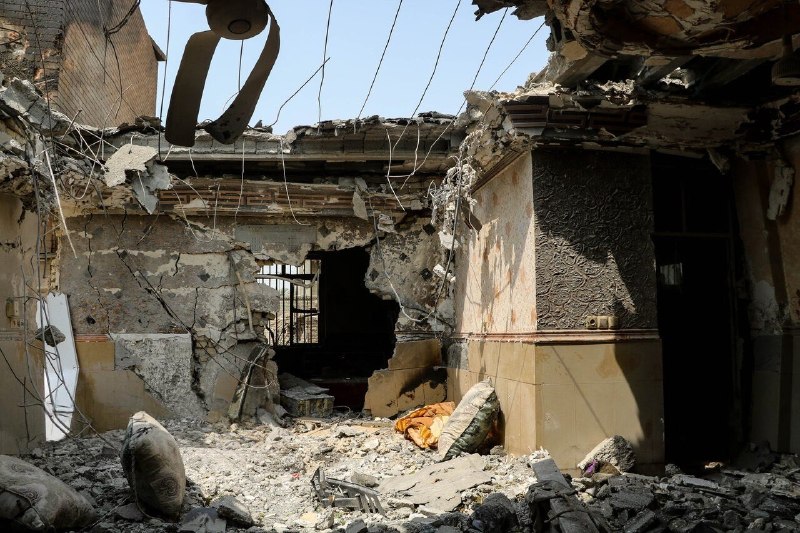
At 12:44 UTC on 11 June 2026, the war in the Middle East crossed a verbal threshold that markets and diplomats had treated, until now, as rhetorical. President Donald Trump announced that the United States would strike Iran again that evening and would, at a date of his choosing, take Kharg Island — the terminal through which the great majority of Iranian crude reaches the sea. The wording, relayed by the OSINT aggregation account run by analyst Michael A. Horowitz, left the timing vague and the intent unambiguous. Within three minutes, the open-source conflict channel Liveuamap carried the same statement, adding that Trump had threatened to seize "other key oil infrastructure" and to assume "total control" of Iran's oil and gas markets. By 12:34 UTC, prediction-market traders at Polymarket had already priced the escalation as the new base case rather than a tail risk.
The ultimatum is not only a military statement. It is an economic one. Kharg Island is not a symbolic target. It is the chokepoint of the Iranian state, the place where roughly 90 percent of the country's seaborne crude is loaded. Whoever controls Kharg controls the volume of oil Iran can sell, the price at which it can be sold, and the currencies in which payment can clear. The ultimatum therefore raises a question that goes beyond the current air campaign: is Washington preparing to occupy, indefinitely, the export infrastructure of a country of nearly ninety million people, and to run that infrastructure as an instrument of American policy?
What was said, and what was not
The president did not specify the size, target list, or rules of engagement for the coming night's operations. He did not say whether Kharg would be seized by special operations forces, by a naval blockade, by an air assault followed by a marine landing, or by a coercive combination of those instruments. The statement carried by the three channels treats the island as a future prize rather than a present battlefield — "at some point," in the version relayed by the Horowitz account, with the Polymarket summary characterising the goal as the takeover of Iran's oil and gas markets as a whole, of which Kharg is the most concentrated asset.
Three points are worth marking. First, the language is openly annexationist in flavour, even if it stops short of a formal claim of sovereignty. A state that "takes total control" of another state's export terminal is not acting in self-defence; it is acting as a permanent occupier of strategic infrastructure. Second, the ultimatum is being delivered while strikes against Iran are still in progress — meaning the United States is signalling that the present campaign is the prelude to a longer, territorial one, rather than a contained punitive operation. Third, the absence of a named counterpart, a diplomatic channel, or a price at which Iran could buy the ultimatum off suggests the operation is intended as a fait accompli, not as a negotiation opener.
What Kharg Island actually is
Kharg is a small coral island in the northern Persian Gulf, roughly 25 kilometres off the Iranian coast in Bushehr Province. It hosts the Kharg Island Oil Terminal, a series of single-point moorings and jetties through which Iranian crude from the onshore fields of the south-west — the Ahvaz, Marun, Gachsaran and Rag-e Sefid fields — is piped, stored, and loaded onto very large crude carriers. The terminal is one of the largest of its kind in the world and handles close to the entirety of Iran's seaborne exports. The island also hosts onshore storage tanks, a gas-processing complex, and the infrastructure that supports the offshore Nowruz and Bahregansar fields. The civilian population on the island itself is small; the workforce is largely rotational.
The strategic point is simple. Iran has two ways to get its oil to market: pipelines through the north and east that terminate in landlocked neighbours, and tankers loading at Kharg. The first route is constrained by the political willingness of transit states — Turkey, Iraq, and the Central Asian republics — to absorb sanctions risk. The second route, Kharg, is the only large-volume maritime export path that Iran fully controls inside its own territory. Block or hold Kharg and Iranian export volumes collapse regardless of who is producing. Occupy Kharg and the United States, in effect, acquires a tap on Iranian crude that it can turn on or off at will — a tool of economic statecraft the scale of which has no real historical precedent.
The market reaction, and what it implies
The prediction-market signal at 12:34 UTC is the cleanest available reading of how serious professional traders take the statement. Polymarket's order book on the probability of a US seizure of Kharg and the broader takeover of Iranian oil and gas markets repriced sharply inside minutes. Beyond the contracts, the real-world transmission belt is the Strait of Hormuz. Even a credible threat of a US occupation of Kharg raises the prospect that Iran, or third parties aligned with Iran, would attempt to close the strait — through mining, fast-attack craft, anti-ship missiles along the coastline, or harassment of tankers. Roughly a fifth of the world's seaborne crude passes through the strait. A sustained closure, or even a sustained risk premium priced into insurance, would push oil prices into territory that would feed directly into inflation in importing economies from China to India to the European Union.
That consequence is not an argument for or against the operation. It is the reason the statement is being treated as a regime change in the oil market's structure, not as a headline that will be walked back in 48 hours. The Iranian counter-move is not hard to model. Tehran does not need to defeat the United States militarily; it needs to make the cost of holding Kharg and the cost of keeping Hormuz open high enough that the political coalition in Washington cracks. The tools are familiar: harassment of shipping, missile deployment along the coast, and the threat of an asymmetric response to the Gulf states whose cooperation the United States would need. From Tehran's perspective, an ultimatum that places the survival of the regime on the line is an ultimatum that does not require a calm response.
The legal and political frame
A US seizure and operation of Kharg Island would not be, in any reading of the post-1945 international order, a defensive action. The UN Charter permits the use of force in self-defence against an armed attack, and authorises the Security Council to authorise collective action. The United States has neither the Security Council cover nor a recognition by the target state of hostilities between them in the sense the Charter contemplates. Operation of another state's oil infrastructure on a permanent basis is, in the vocabulary of international law, an occupation — and one whose legality depends on facts on the ground that have not yet been adjudicated.
That observation is not a moral judgement. It is a description of the political space in which the operation, if it happens, will live. Iran's allies — and there are more of them in 2026 than there were in 2003 — will frame the seizure as a colonial-style extraction of resources, and the framing will have an audience. Energy importers across the Global South will read the precedent as a signal that oil infrastructure can be reallocated by force, and will price that risk into their own relationships with Washington. China and India, the two largest remaining buyers of Iranian crude outside the sanctioned economy, will face an immediate question: do they keep buying from a terminal now operated by the United States, or do they lose the supply? The answer reshapes the architecture of Asian energy security for a decade.
The two readings of the statement
The first reading is that this is coercive diplomacy at the highest volume. The threat is real, the strikes are real, but the goal is to bring Iran to a negotiation under duress, and the language of "total control" is a maximum-demand opening that will be traded away. Under this reading, the next 72 hours will see a combination of further strikes, a humanitarian or shipping-corridor announcement, and a back-channel that lets Iran back down without collapsing publicly. The risk is that the maximum-demand framing overshoots the room Tehran's leadership has to accept a deal.
The second reading is that the statement describes the operation the administration actually intends to run. Under this reading, the next phase is not a negotiation but an occupation: the seizure of Kharg, the neutralisation of Iran's coastal anti-ship and missile forces, the installation of a US-controlled export regime, and the slow strangulation of the revenue streams that sustain the Iranian state. The risk of this reading is that it understates the cost. Holding Kharg against an Iran that has spent four decades preparing exactly this fight is not a problem the United States has solved before, and the duration — not the opening move — is what would determine the political outcome in Washington and the economic outcome in the Gulf.
The two readings are not mutually exclusive at the start. They diverge over months, not over the next 48 hours. The events of 11 June 2026 will be read in hindsight as the hinge between them.
What remains uncertain
The sources available at the time of writing are short on operational detail. There is no public confirmation of the size, scope, or specific target list of the strikes announced for the evening of 11 June 2026. There is no statement from Iran's military, from its foreign ministry, or from the office of the Supreme Leader that we can verify, and the open-source channels have not yet produced one. There is no read on whether the ultimatum has been delivered privately through a third-party channel — Oman, Qatar, Switzerland — that would change the political weight of the public statement. The prediction-market signal, while informative about trader beliefs, is not itself a source of fact about Iranian intent. The framing of the statement as the opening of a permanent occupation of Iranian oil infrastructure is the most natural reading of the words used, but the words used are being carried by aggregators and not, in the material we have, by a direct on-the-record White House release.
What is not uncertain is that the war in the Middle East has entered a phase in which the central question is no longer whether Iran's proxy network can be degraded, but whether the United States is prepared to take permanent, extractive control of a sovereign state's primary export infrastructure and absorb the cost of holding it.
This publication framed the Kharg ultimatum as a structural shift in the oil-market regime and in the legal frame of the war, rather than as a one-day strike story; the wire services in the window we sampled carried the same raw statement with less of the economic and legal connective tissue.
Wire provenance
This editorial synthesis draws on the following public wire/social posts:
- https://t.me/osintlive
- https://t.me/Liveuamap
- https://x.com/polymarket/status/
- https://en.wikipedia.org/wiki/Kharg_Island
- https://en.wikipedia.org/wiki/Kharg_Island_Oil_Terminal
- https://en.wikipedia.org/wiki/Strait_of_Hormuz
- https://en.wikipedia.org/wiki/2026_United_States%E2%80%93Iran_strikes
- https://en.wikipedia.org/wiki/Energy_geopolitics
Follow the event.
These dated source records provide context. They do not retrospectively verify this archive article.
Separate what the nuclear watchdog reported from what it could not determine after the June 2025 strikes.
- https://t.me/osintlive
- https://t.me/Liveuamap
- https://x.com/polymarket/status/
- https://en.wikipedia.org/wiki/Kharg_Island
- https://en.wikipedia.org/wiki/Kharg_Island_Oil_Terminal
- https://en.wikipedia.org/wiki/Strait_of_Hormuz
- https://en.wikipedia.org/wiki/2026_United_States%E2%80%93Iran_strikes
- https://en.wikipedia.org/wiki/Energy_geopolitics