Trump's Kharg ultimatum: a presidential broadcast, not a strategy
A flurry of midday statements from the US president reads less like an operational roadmap than a televised monologue, and the gap between the rhetoric and the military record is now the story.
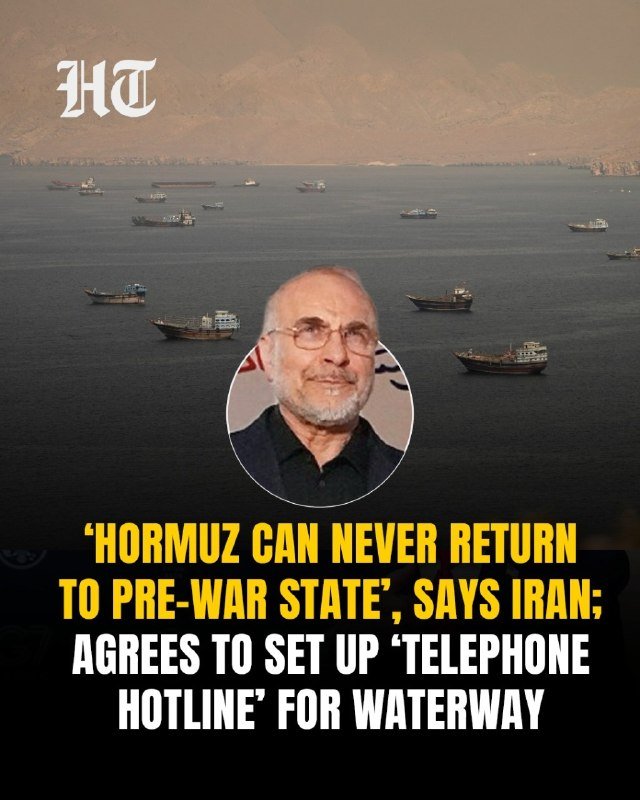
At 12:26 UTC on 11 June 2026, Fars News carried a direct quote attributed to Donald Trump: "The United States will deliver very hard blows to Iran tonight; Iran's navy, air force, radar systems, anti-aircraft defense and other defense capabilities have been destroyed." By 12:27, Bellum Acta News was relaying a parallel claim that US forces would begin "an all-out aerial campaign tonight in Iran" and that the US Marines would "seize Kharg Island & other Iranian coast." Two minutes later, Insider Paper reported the president as saying the US "will be taking Kharg Island." By 12:52, Clash Report had distilled the message into its barest form: US aircraft, the president said, are flying over Tehran and the country is unaware.
Strip away the timestamps and this looks like a war plan. Read them in order and it looks like something else: a presidential broadcast, delivered into a media ecosystem built to amplify it, with the operational details arriving as rumour rather than confirmation.
The Kharg question
Kharg Island sits roughly 25 kilometres off the Iranian coast in the Persian Gulf and handles the overwhelming majority of Iran's seaborne crude exports. It is the most consequential single piece of oil infrastructure in the country, and it is also among the most heavily defended. Any sustained operation to seize it would require not an air campaign but an amphibious one, with mine-sweeping, air superiority over the Strait of Hormuz, suppression of coastal anti-ship batteries, and a logistical chain capable of holding the island against retaliation. None of that is announced in a four-minute news cycle. The version of events on the wire at 12:30 UTC — that the US "will deal a very powerful blow to Iran tonight," per Euronews — is consistent with an airstrike. The version of events on the wire at 12:52 — that aircraft are already over Tehran — is consistent with a different kind of statement entirely.
Two speeches, one timeline
The pattern is familiar from the past eighteen months: a televised escalation, a market jolt, and a 72-hour walk-back. The difference this time is the target. Kharg Island is not a missile facility deep in central Iran that can be plausibly struck and then declared "degraded." It is a piece of infrastructure the global oil market watches by the hour. Saying, on camera, that the United States will take it, and saying it in the same breath as claims that Iran's air force has already been destroyed, raises the question of who in the chain of command has signed on to which version.
What the wires actually say
Read the underlying reporting carefully and the certainty drains out of the statements. Bellum Acta's framing of a Marine seizure is presented as a presidential statement, not as a Pentagon confirmation. Insider Paper's "will be taking" is a future-tense claim about an island that, at 12:29 UTC, US Central Command had not been quoted as targeting. The Fars quote is the most concrete — destroyed navy, destroyed air force, destroyed radar — and it is also the one channel where the Iranian state has a direct editorial interest in the exact wording reaching its own audience. The "unknown aircraft over Tehran" claim, attributed to the same president by Clash Report, sits in a different category altogether: it is the kind of statement that cannot be operationally verified in real time and is designed not to be.
The information war inside the war
This is the part the wire cycle is missing. A president who announces the destruction of a national air force on a Wednesday afternoon and the seizure of its principal oil terminal within the same news cycle is not running an air war. He is running an information war, in which the audience for the statement includes the Iranian public, the OPEC+ foreign ministers, the Israeli war cabinet, and the US bond market. Each of those audiences reads the statement differently. The Iranian public hears an existential threat. The oil market hears a price shock. The Israeli war cabinet hears a binding commitment. The US bond market hears a question about the continuity of supply through the Strait of Hormuz. None of those readings are reconciled by the statement itself, and that is the point: the statement is the product, not the predicate.
The stakes, plainly
If the strikes described actually land in the form announced, the consequences extend well beyond Iran. Roughly a fifth of seaborne crude moves through the Strait of Hormuz; a sustained operation against Kharg would, in the first hours, spike crude and reroute insurance premiums across the Gulf. Iranian retaliation does not require an air force. Mines, missile batteries along the coast, and shore-based anti-ship missiles remain the layered deterrent that has, for four decades, made the calculus around Kharg what it is. The unanswered question is whether the statements on the wire at 12:26–12:52 UTC describe an operation, a posture, or a press conference. The sources do not say. They do not, in fact, agree on the tense.
What remains uncertain
There is no Pentagon confirmation in the items above, no Central Command briefing, no allied readout from Jerusalem or Riyadh. The statements are presidential, and presidential statements, as the past two decades of Middle East coverage have repeatedly shown, are not military orders. They are signals calibrated for specific audiences, and the cost of misreading them is paid in lives and barrels. The honest summary at 12:55 UTC is this: a US president has used the word "tonight" repeatedly, has named a target no previous administration has publicly committed to seize, and has done so in a media environment that rewards the most aggressive reading of his words and punishes the most cautious. The most aggressive reading, right now, is the only one on the wire.
This publication's framing note: Monexus is treating the 12:26–12:52 UTC statements as primary-source material for the rhetoric of US policy toward Iran, not as a confirmed military programme of action. Where presidential statements and the operational record diverge, the divergence is the story.
Wire provenance
This editorial synthesis draws on the following public wire/social posts:
- https://t.me/FarsNewsInt
- https://t.me/BellumActaNews
- https://t.me/insiderpaper
- https://t.me/euronews
- https://t.me/abualiexpress
- https://t.me/ClashReport