Trump's nightly ultimatum to Tehran is a strategy without a destination
The White House has framed a sustained bombing campaign as coercion. Markets and regional governments are reading it as something else: the absence of an off-ramp.
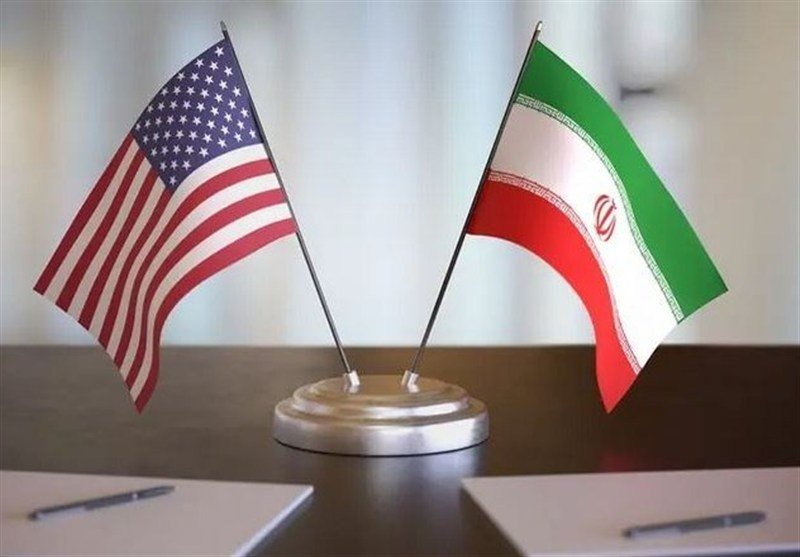
On 11 June 2026, the U.S. president declared that American aircraft would strike Iran "every night" until a deal is reached, a threat amplified in real time across Telegram channels monitoring the exchange and corroborated by Tehran-based outlets reporting parallel Iranian warnings of further escalation. The claim is not a negotiating posture. It is the negotiation. The logic is that enough punishment, applied on a predictable clock, will produce a phone call from Tehran. There is no evidence in the public record that Tehran is preparing to make that call.
What is happening, more plainly, is that the world's most powerful state is signalling that escalation is the strategy — and that the off-ramp lives entirely in the mind of a counterpart that has spent four decades institutionalising the capacity to absorb pressure. The frame matters. A coercion campaign that is openly announced in advance is not a surprise. It is a deadline. Deadlines are only as useful as the will to enforce them, and the will to enforce them is only as durable as the next news cycle.
A deadline with no destination
The reporting, as compiled across channels aligned with the Iran-watching ecosystem and regional outlets, is consistent on the surface. Washington intends to keep striking nightly. Tehran intends to retaliate if struck. The asymmetry is not military — both sides know the U.S. holds a conventional edge and Iran holds a missile and proxy-surrogate edge — it is strategic. One side is optimising for an end-state, the other is optimising for an end-state's absence.
A senior Iranian official quoted in regional press on 11 June 2026 framed the counter-position with unusual bluntness: any further attack would trigger a wider conflict. That phrasing is boilerplate in Tehran, but it is not empty. Iran has, in recent years, demonstrated an ability to impose costs through partners across Lebanon, Iraq and Yemen that the U.S. defence planning literature has spent considerable pages trying to model. The signalling value of a public ultimatum, then, is partly to reassure domestic audiences in both capitals that the president in the White House is the author of the timeline, and not the recipient of it.
What the wire is missing
Western wire coverage of the exchange, where it has kept pace with the Telegram trade, has tended to treat the threat as a tactic. This is the wrong unit of analysis. A tactic is something a negotiator uses to improve the price of a deal. There is no price on the table. There is no deal text circulating. There is no counterpart visibly running a parallel channel. The campaign as announced has the structure of a punishment, not a bargaining move, and punishment without a settlement architecture produces damage on both sides — but in unequal amounts, and on unequal timelines.
The structural context is oil. The same regional reporting that carried the ultimatum also flagged Washington's stated interest in "key oil infrastructure" — phrasing that should be read with care. The phrase can mean Iranian production and export terminals, the kind of assets that, if degraded, would tighten global supply and elevate prices. It can mean third-country infrastructure through which Iranian crude is exported under sanctions-evasion schemes. It can mean infrastructure that the United States would like to oversee rather than destroy. The ambiguity is doing work: it preserves deniability while keeping every relevant price-setter in the Gulf, the Strait of Hormuz, and the trading floors of Singapore and London unable to underwrite their own forward book.
The market frame
A nightly bombing cadence is, in market terms, a perma-bid for energy volatility. Even if physical damage is contained, the announcement itself raises the option value of a worst-case scenario. Refiners price that option. Insurers price it. The same coverage that treated the ultimatum as a political event has been quieter about the second-order consequence: that the policy is, in effect, a tax on every downstream consumer of energy in the world, levied through the probability distribution rather than the spot price.
There is a counter-read. A sustained campaign, the argument goes, will degrade Iran's revenue base and political will to the point that negotiation becomes inevitable. That argument has a respectable intellectual lineage. It also has an empirical record, and the record from the post-2018 sanctions period, from the assassination of Qasem Soleimani, and from the April 2024 exchange, is that Iran's leadership has absorbed punishment before and emerged with a tighter grip, not a looser one. The argument is not that escalation never works. It is that escalation against an adversary that has planned for it tends to harden the adversary, and to harden the political constituency around the adversary, faster than it changes policy.
Stakes and the off-ramp question
The honest framing, six months into a year that has already produced more kinetic exchange between Washington and Tehran than any year in living memory, is that there is no off-ramp visible in the materials the public can read. The president has made a threat. The Iranian government has rejected the threat. Both sides have communicated their positions through intermediaries and through sympathetic outlets. Neither has communicated to the other a settlement that the other has incentives to accept.
A threat without a destination is not a strategy. It is a direction. Directions have a way of becoming destinations by accident.
This publication framed the ultimatum as an open-ended campaign rather than a coercive tactic, on the grounds that no settlement architecture is visible in the public reporting. The wire's read, where it has kept pace, has tended to treat escalation as a function of the deal — this publication reads the deal as a function of the escalation, with the function still undefined.
Wire provenance
This editorial synthesis draws on the following public wire/social posts:
- https://t.me/WarMonitors