Trump says US will hit Iran again, names Kharg Island as next target
A Truth Social post on 11 June 2026 frames the US campaign against Iran as a continuing air campaign and names Kharg Island — the export hub for most Iranian crude — as a future objective. The escalation comes in a market already jittery about the Strait of Hormuz.
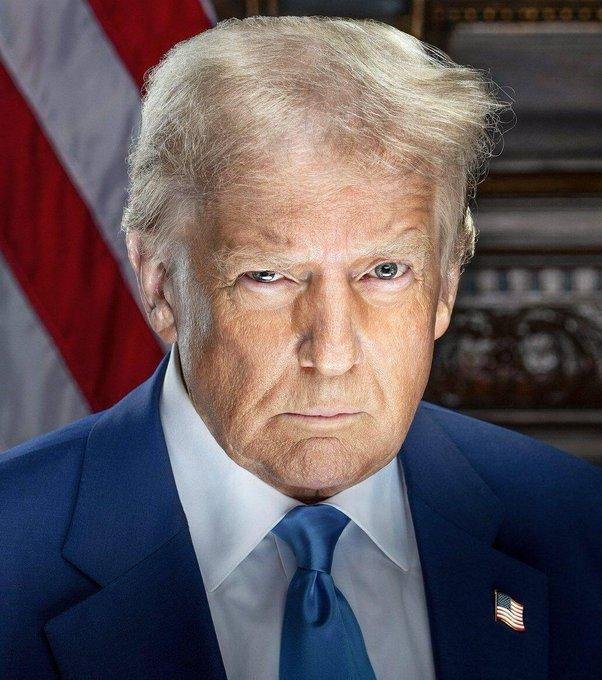
At 12:27 UTC on 11 June 2026, a Truth Social post attributed to President Donald Trump declared that the United States would strike Iran again that evening and would, at some unspecified future point, "take control of Kharg Island." The post, captured by four independent OSINT channels within minutes of publication, frames the campaign as a continuing air operation rather than a one-off retaliation: "The United States will be hitting Iran (Whose Navy, Air Force, Radar, Anti Aircraft, and all other forms of Defense, together with most its offensive capability, are GONE!)" (t.me/intelslava, t.me/WarMonitors, t.me/osintlive, t.me/abualiexpress, 11 June 2026, 12:27–12:44 UTC).
The Kharg reference is the consequential part. Kharg Island, in the Persian Gulf roughly 25 kilometres off the Iranian coast in Bushehr Province, handles the overwhelming majority of Iran's crude exports — by most industry counts, somewhere in the high single-digit millions of barrels per day of nominal loading capacity. Naming it in a presidential post moves the rhetorical target from Iran's conventional military to the asset that underwrites the regime's external revenue. It also raises an obvious question for the oil market: if the United States actually attempts to seize the terminal, who operates it, and on what legal authority, in the middle of an active war?
The available reporting on 11 June describes an air campaign, not an amphibious operation. A landing on Kharg would require control of the sea lanes around it, mine-countermeasure capability in the northern Gulf, and a decision the US government has not publicly telegraphed. The post is best read as escalation signalling — a price set on a piece of Iranian sovereign infrastructure — rather than a confirmed order of battle.
What the post actually says
Four channels carried the full text of the Truth Social message within roughly seventeen minutes of one another, with only minor punctuation differences. The Osint Live relay attributes the report to Axios's Barak Ravid, who is the most-cited Western wire correspondent on this file and who has broken several of the procedural details of the US–Iran confrontation since it began (t.me/osintlive, 11 June 2026, 12:44 UTC). The Intel Slava and War Monitors relays reproduce the post in its own words; the Abu Ali Express version adds a line that does not appear in the others — "Tonight we will strongly attack Iran again, at some point we will take over Kharj Island" — with the toponym rendered as "Kharj" rather than "Kharg" (t.me/abualiexpress, 11 June 2026, 12:27 UTC).
The misspelling is small but worth flagging. "Kharj" in Arabic refers to a Saudi governorate south of Riyadh, not an island in the Gulf. The phonetic overlap with "Kharg" is close enough that a presidential draft could easily have produced either spelling; the fact that the same post appears as "Kharg" elsewhere suggests one version is the original and the other is a transliteration slip. Readers should treat the spelling question as unresolved until an official White House or State Department text is published.
The substantive claim — that the US intends additional strikes on Iran, with Kharg as a future objective — is consistent across the four relays. None of the channels carries an Iranian response to the specific post. None carries Pentagon confirmation, target-package details, or a timeframe for the next strike. The post is, in other words, a presidential statement, not an operational order visible to outside readers.
The Kharg question
Kharg Island is not a theoretical target. The Kharg Island Oil Terminal, plus associated loading infrastructure on the island itself, moves the bulk of Iran's seaborne crude. Disruption of that flow would, in the short term, remove most of Iran's foreign-currency earnings; in the medium term, it would force Tehran to rely on overland pipelines (to Turkey via Ceyhan, and to China via the Gulf of Oman) at higher political cost per barrel.
The counter-frame is straightforward and has to be stated: oil infrastructure is dual-use in a way that makes striking it legally and politically delicate. Damage to Kharg would affect global energy markets within hours, lift insurance and freight rates for every tanker in the northern Gulf, and — depending on the scale of the strike — implicate civilian and contract workers on and around the island. The Iranian government would have a strong legal and propaganda case to cast any US operation against Kharg as an attack on its economic livelihood rather than a counter-force action. Several Gulf states and large Asian importers would also find themselves suddenly short of supply they have not been asked to forgo.
For oil traders, the relevant question is not whether Trump means what he posts, but whether the option of striking Kharg has just become more credible. Forward crude curves have been volatile on Iran headlines since the confrontation began; a presidential statement naming the export terminal explicitly is the kind of input that lifts the tail of the distribution even before any actual operation is announced.
What we do not yet know
The four source items are remarkably thin on operational detail. They do not specify which Iranian military or industrial sites were hit in the strikes Trump claims to have already conducted, the timing of the next strike he has announced, the legal authority under which Kharg would be seized, or whether any US ground or naval forces are in position to attempt such an operation. They do not carry an Iranian official response to the Kharg language, and they do not carry a statement from the Pentagon, CENTCOM, or the State Department. They do not carry a market reaction.
Readers should also note that OSINT channels on Telegram are relay infrastructure, not original reporting on US military operations. The fact that four independent channels carried the same post within minutes is evidence that the post exists; it is not evidence of what US forces are actually doing on the ground or in the air over the Gulf.
Stakes
If the Kharg line is operational rather than rhetorical, the US has escalated from degrading Iran's ability to project power (navy, air force, air defences) to degrading the regime's ability to earn revenue. That is a different category of war, and one the international legal architecture was not designed to absorb. If the line is rhetorical, it is still a price set on a piece of Iranian infrastructure in a presidential post — a marker that any future negotiation will have to climb over.
Either way, the next forty-eight hours will tell. Iran will respond, in words and probably in kind. The oil market will price the option. And the question of who, if anyone, is authorised to run Kharg Island under US control will move from a think-tank seminar topic to a live planning problem.
— Monexus framed this as an escalation signal, not as a confirmed amphibious operation. The available wire is the four Telegram relays of a single Truth Social post; we have not padded the source list with outlets that did not appear in the thread.
Wire provenance
This editorial synthesis draws on the following public wire/social posts:
- https://t.me/osintlive
- https://t.me/intelslava
- https://t.me/WarMonitors
- https://t.me/abualiexpress
- https://en.wikipedia.org/wiki/Kharg_Island