When a podcaster reads the war for you: the Tucker Carlson frame on Iran, and what it costs the rest of us
Two short clips from Tucker Carlson, circulated on 11 June 2026, frame the war in Iran as a Netanyahu project with no American input. The framing is doing real work — and it deserves scrutiny, not retweets.
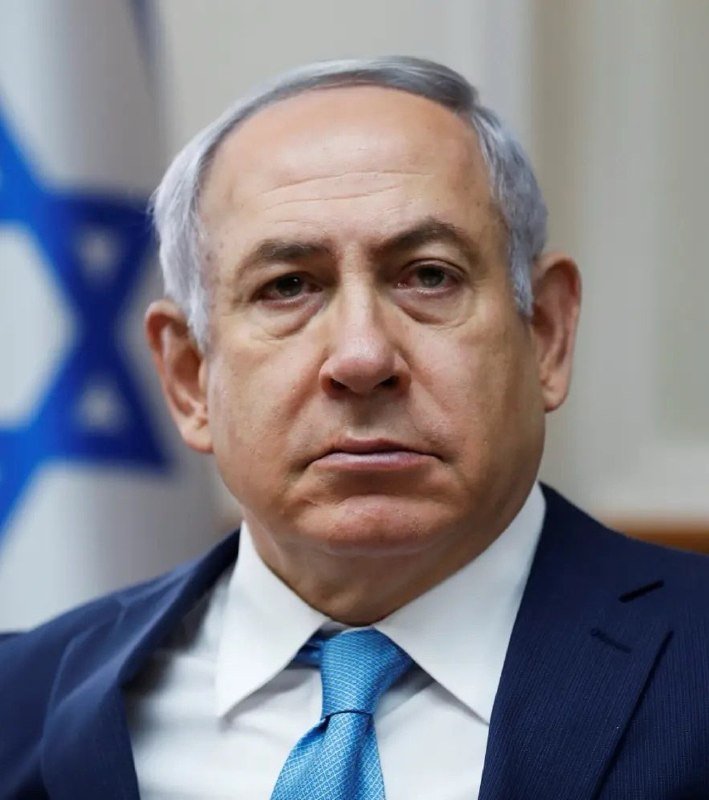
Two short video clips, surfacing on 11 June 2026 at 05:44 UTC and again at 06:40 UTC via the Telegram channel Clash Report and its sibling Open Source Intel, are doing the work that editorials used to do. In the first, the host tells his audience that "the war in Iran has taught us that actually on the big questions, the people you elect aren't even in charge. Someone else is. In this case, Benjamin Netanyahu." In the second, he argues that "like it or not, Iran are uniquely standing up for Palestinians and the people of Lebanon. The rest of the world is watching this in horror and no one else is doing anything about it."
The clips are short. The frame is not. Read together, they offer the audience a complete moral economy of the Iran war: a captured American democracy, an Israeli prime minister running the show, and an Iran that — whatever else one thinks of it — has become the lonely defender of a besieged population. It is a tidy package. It also happens to flatten almost everything that is actually being argued, on all sides, by people who live inside this region and report on it for a living.
What the frame gets right
The first clip's central claim — that on the major decisions of the Middle East, elected officials are not the ones calling the shots — is not crazy on its face. The relationship between Washington and Jerusalem has produced, for decades, a steady stream of reporting about the gap between what US presidents say in public and what Israeli governments say in private. The leak-and-spin choreography around Iran policy, in particular, has been documented across multiple administrations. So has the persistent US reluctance to publicly condition military aid. Carlson is pointing at a real asymmetry. The fact that the framing comes from a podcast, rather than a newspaper editorial, does not by itself make it false.
The second clip's claim — that Iran has positioned itself, in this war, as the armed backer of Palestinian and Lebanese civilians who have few other champions — is, on its narrowest reading, a description of a posture, not an endorsement. Iran funds and arms Hezbollah and has backed Palestinian factions for years. That posture, however one judges it morally, exists. Saying so is not, in itself, a war crime. It is a statement about alignment. The trouble begins with the next sentence, where the descriptor is left to do the heavy lifting without any of the conditions that an editor, in a previous decade, would have demanded.
What the frame strips out
The first frame strips out the Iranian state. The argument that "someone else" is in charge — naming Netanyahu and stopping there — implies that the war is being run from Jerusalem into a passive Iran, with Washington as a sleepwalker. That is not the war being reported from the region. The Iranian regime has made its own strategic choices about nuclear escalation, about proxy coordination, about opening new fronts. Its leadership is, on the evidence, an actor with its own doctrine and its own risk calculus — not a recipient of Israeli decisions. To name only Netanyahu is to write Iran out of its own war, which is the same move the worst war coverage has always made about the people who actually live in the country being bombed.
The second frame strips out everything inconvenient about the Iranian state — its domestic repression, the treatment of its own minorities, the regional pattern of arming non-state actors who answer to no civilian constituency, and the cost paid by the Palestinian and Lebanese civilians whose cause is being "uniquely" championed from Tehran. To call that championing unique is to ignore the Arab states, the Gulf monarchies, the Organisation of Islamic Cooperation, the African Union, the Latin American left, and the long list of governments that have broken with Israel on this war on their own terms and from their own constituencies. The frame is not a description of reality. It is a polemical compression of reality into a shape the host can market.
What the frame does to the audience
Here is the more serious point. A frame of this kind, circulated by a host with Carlson's reach, does not just describe the war. It pre-decides it for the audience that receives it. Once the war is "Netanyahu's war, run against a passive American democracy, with Iran as the only honest actor in the region," then every other piece of reporting on the conflict has to fight uphill to be heard. The Palestinian civilian who does not fit the Iranian-protector frame becomes an inconvenience. The Israeli hostage becomes a talking point. The Lebanese village destroyed by a missile whose origin the host has not specified becomes scenery. The war is, in effect, owned by the narrator.
This is the media problem the next decade is going to spend a great deal of time failing to solve. The narrator does not need a masthead, an editor, a corrections desk, or a source-ledger. The narrator needs a camera, a circle of true believers, and a Telegram channel willing to circulate. The work that wire reporting, OSINT analysts, and regional correspondents still do painstakingly — naming the missile, the launch site, the casualty count, the hospital — has to travel at the speed of craft. The frame travels at the speed of outrage. They do not compete on equal terms.
What a reader should do with it
Take the frame seriously enough to test it, and lightly enough not to be carried by it. Ask, of any one-line claim about who is in charge, who uniquely defends whom, and who is uniquely passive: where is the evidence, who is missing from the sentence, and what would change my mind. If a frame can absorb a counter-example without breaking, it is a claim. If a counter-example would dissolve the frame, it is propaganda. By that test, both Carlson clips dissolve on contact with the regional record. That is the test worth applying — not to this host alone, but to every host now competing to be the one who tells the audience what the war means before the war is over.
Desk note: Monexus treats the Carlson clips as an artefact of the media environment around the Iran war — circulated unedited via Telegram channels on 11 June 2026 — and not as a primary source on the war itself. Where the clips assert who is "in charge" of US policy, or who is "uniquely" defending Palestinian and Lebanese civilians, we report the assertion and then test it against the documented record. The frame is the story; the war, on this desk, is reported from the ground.
Wire provenance
This editorial synthesis draws on the following public wire/social posts:
- https://t.me/osintlive
- https://t.me/osintlive
- https://t.me/ClashReport
- https://t.me/ClashReport
Follow the event.
These dated source records provide context. They do not retrospectively verify this archive article.
Separate what the nuclear watchdog reported from what it could not determine after the June 2025 strikes.