Between the Bomb and the Signature: A Week That Brought the US and Iran Closer to a Deal — and Closer to a Mistake
Twelve hours inside the loudest week yet of the US–Iran confrontation — airstrikes held, signatures promised, and an Indian-flagged tanker dragged into the periphery of a war that has not officially ended.
By 19:52 UTC on 11 June 2026, the news cycle had completed a loop that, twenty-four hours earlier, no one in the foreign-policy commentariat would have predicted. Donald Trump announced that he was cancelling strikes against Iran, declaring that the "final points" of a peace deal had been approved, as reported by The Indian Express wire at 19:52 UTC. Hours earlier, the same US president had told reporters aboard Air Force One that strikes would continue through the night. The intervening twelve hours are the story of this week — and the story the next forty-eight hours will be measured against.
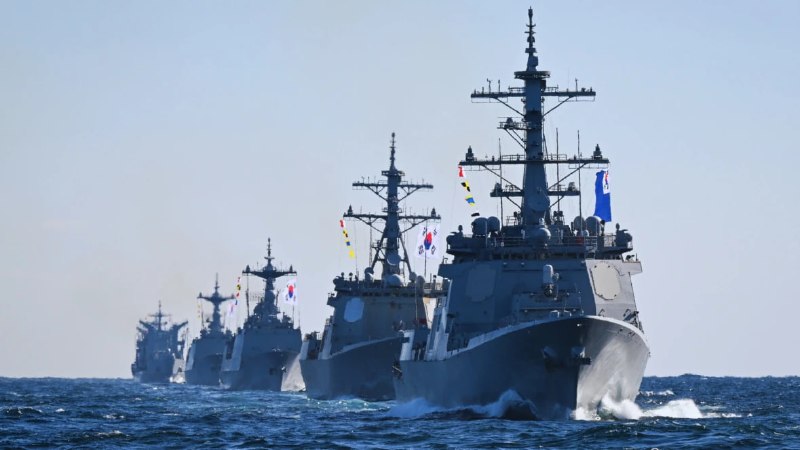
The pattern is familiar from earlier chapters of the Trump era: a maximalist threat, an escalation curve, a sudden reversal, and an announcement of imminent, history-making agreement. What is different in June 2026 is the geography, the cast, and the time horizon. The US and Iran have been trading blows across the Gulf, the Levant, and the Arabian Sea for the better part of a month. A multinational naval task force is in motion. A missile — origin contested, payload undeniable — has been recovered from the hull of a commercial tanker. And a sitting US president has publicly told a foreign nation that it can have "the greatest deal in history" if it formally declares Washington the greater power.
The question is not whether this ends at the negotiating table. The terms on the table, the leverage on each side, and the third parties who have been pulled into the line of fire all suggest the answer is yes, at least in form. The question is what "a deal" means in this corner of the world at this moment — and what kind of peace a document signed in haste actually produces.
The day the strikes did not happen
At 15:17 UTC on 11 June, an account widely followed for real-time US strike reporting posted that the President had said he would continue bombing Iran that night. By 19:52 UTC, the same news environment carried the inverse: strikes were off, the "final points" of a deal were approved, and signing was imminent. The compression of those two announcements into a single business day is itself the news. It tells the reader that a kinetic action was on the rails, that it was loaded, and that it was pulled back at the last minute by a political decision rather than a tactical one.
The Indian Express reporting on the cancellation framed the development in diplomatic language — a peace deal, approved final points, a near-term signing. Reporting relayed by the Abu Ali Express channel at 19:37 UTC quoted the President more bluntly: "We are expected to sign soon, and the documents are already in an almost final stage. It should be finished very quickly." Taken together, the morning's strike posture and the evening's signature posture cannot both be true. One had to give. The evening won.
A second fact should be read alongside the diplomatic news. At 18:24 UTC, an X post captured a public statement in which the President told Iran it could get "the greatest deal in history" if it surrenders and publicly declares the United States the greater power. The phrasing matters. A deal contingent on a public confession of inferiority is not, in any traditional diplomatic register, a deal between sovereign equals. It is closer to a peace imposed on terms that the weaker party must ratify with its own mouth. Whether Iran's leadership reads it that way is the variable that the next week will resolve.
The third party that did not choose to be in the room
The other piece of news that landed on 11 June had nothing to do with the Oval Office. At 19:52 UTC, The Indian Express reported that the Indian Navy had removed an unexploded missile warhead from a Kochi-bound oil tanker. The vessel was commercial. The flag was Indian. The cargo was petroleum. The warhead, by definition, did not belong there.
The details are sparse and the source single. But the structural reading is clear: a missile — whose type, origin, and intended target remain unconfirmed in public reporting — reached a civilian Indian-registered merchant ship in waters that the Indian Navy considers its area of responsibility. That is not an abstraction. It is a vessel flying a sovereign flag, with an Indian port of destination, struck by a weapon that is the property of one of the warring parties or one of their proxies.
For New Delhi, this is a problem of a different order than a diplomatic press release. India is not a party to the US–Iran confrontation. It is, however, the largest buyer of Iranian crude outside the Chinese sphere, the operator of a navy that traverses the Gulf and the Arabian Sea daily, and a regional state that cannot afford to be drawn into a war between two customers whose energy choices it depends on. The recovery of the warhead is the first piece of physical evidence that the confrontation has crossed from declared strikes into the maritime commons in which India operates. There is no public reporting, in the items available to this publication, on compensation, on identification of the missile, or on whether Iran or the United States has been asked for an explanation. What is public is that an Indian naval ordnance-disposal team handled a warhead that should not have been in their waters.
The rhetoric of maximalism, the logic of exhaustion
Both governments, in their public language, are speaking the rhetoric of maximalism. The US side frames the conflict as a test of will that Iran is losing. The Iranian side, in regional coverage that this publication has reviewed in earlier weeks, has framed it as a test of sovereignty that cannot be negotiated away. Neither frame is wrong in its own terms. Both, however, are reaching a limit.
The American limit is a familiar one. The President's public statements on 11 June made the trade-off explicit: a "greatest deal in history" in exchange for a public acknowledgement of US primacy. That formulation presupposes a negotiating partner willing to make the acknowledgement. Iran's leadership has, across decades, proved willing to make tactical concessions — the 2015 Joint Comprehensive Plan of Action, the temporary inspections arrangements, the prisoner swaps — but has proved unwilling to perform ideological submission. The last time an American administration demanded a public confession, in different form, the negotiating partner walked away and the next administration inherited a harder problem.
The Iranian limit is structural. Tehran is operating under sanctions that constrain its oil exports, that limit its access to international banking, and that have produced documented pressure on the rial. The deal on the table, if the wire reports hold, would ease some of that pressure. It would also ratify, in writing, the proposition that Iran's foreign policy is contingent on US permission. The Islamic Republic's domestic legitimacy rests, in part, on the proposition that it is not. That is not a negotiating position that can be priced away with cash.
So the announcement on 11 June of "final points approved" is best read not as the end of the road, but as the end of the opening. It closes the phase in which both sides could posture without consequence. It opens the phase in which signatures have weight, in which the text matters, and in which a backbench revolt in either capital can break the agreement that a head of state has announced.
The structural frame: why this moment is not 2015
The temptation, in Western commentary, is to compare any US–Iran deal to the 2015 nuclear agreement. The comparison is misleading. The 2015 deal was a multilateral instrument — the P5+1, with European and Russian co-signatories, embedded in a UN Security Council framework. Whatever its critics said about its durability, its signing produced a coalition of guarantors with an interest in its survival.
The 2026 picture, as far as public reporting reveals, is bilateral. There is no third-party guarantor. There is no multilateral inspection regime referenced in the wire items. There is no mention of the European Union, Russia, or China in the role of co-architect. The deal, such as it is, is a direct exchange between two governments whose institutions do not trust each other, whose domestic constituencies will resist any concession, and whose previous bilateral arrangements have been torn up by the same administration now promising a new one.
This is the structural risk the announcement papers over. A bilateral deal between a US administration with a history of withdrawing from bilateral deals and an Iranian system that has, in the past, observed agreements longer than the administrations that signed them, is only as durable as the next election cycle, the next IRGC leadership change, or the next missile incident at sea. The Indian-flagged tanker episode is a reminder that the environment around the deal is not under the control of either signatory. A single misidentified vessel, a single mistaken launch, a single act by a proxy that one side cannot publicly disown, can break a text faster than it can be written.
What the next forty-eight hours will tell us
Three things will be visible quickly. First, the text. The phrase "final points approved" implies that the document is largely written. If a draft is released, or if its major provisions are read into the record by officials from either capital, the market — and the regional state system — will price the substance, not the announcement. Second, the maritime environment. The Indian Navy's recovery of a warhead from a commercial vessel will be followed, in the next reporting cycle, by either an identification of the weapon's origin or by a diplomatic exchange that names it. Either outcome tightens the frame around the deal. Third, the Iranian public posture. Tehran's state-aligned media has, across the confrontation, framed the conflict as a defence of sovereignty. A deal that requires a public acknowledgement of US primacy cannot be sold to the Iranian street in those terms. The leadership's messaging in the days after 11 June will indicate whether the deal is being prepared for a domestic audience or imposed on one.
What remains uncertain, in the materials available to this publication, is also worth naming. The source items do not specify what the United States is asking Iran to surrender beyond the rhetorical demand for a public declaration of US primacy. The source items do not specify the duration of any agreement, the inspection regime, or the sanctions architecture. The source items do not name the intermediaries — if any — who carried the final points between the two governments. The source items do not name the missile recovered by the Indian Navy. Each of those blanks is a variable that the next reporting cycle will fill or fail to fill.
What the items do specify is the shape of the moment. A sitting US president, in the same news cycle, said he would bomb Iran through the night and then announced that the war's end was a signature away. An Indian-flagged merchant ship carried an unexploded warhead into Indian waters. And the public asking price of the deal, on the American side, is a confession. The probability that a deal of some form is signed in the next days is high. The probability that the deal, as signed, is the same as the deal as it operates in six months is low. Between those two probabilities is the policy work of the next month — and the lived reality, for civilians on both sides of the Gulf and for the crews of vessels like the one the Indian Navy just pulled a warhead from, of a peace that is signed before it is made.
Desk note: Monexus framed this piece around the twelve-hour reversal from strike announcement to signature announcement, with the Indian-flagged tanker episode as a structural reminder that the deal's environment is larger than its signatories. The wire cycle carried both stories within minutes of each other; the editorial choice was to treat the tanker not as a sidebar but as a parallel fact — the war's spillover, on the same day as the war's putative end.
Wire provenance
This editorial synthesis draws on the following public wire/social posts:
- https://t.me/abualiexpress
Follow the event.
These dated source records provide context. They do not retrospectively verify this archive article.
Separate what the nuclear watchdog reported from what it could not determine after the June 2025 strikes.