The deal that wasn't a war: parsing Trump's 'all wrapped up' claim on Iran
On 11 June 2026, Donald Trump told reporters a US-Iran agreement was 'all wrapped up' and that planned strikes had been called off. The headlines raced; the text of any deal did not. This publication reads the gap between announcement and instrument.
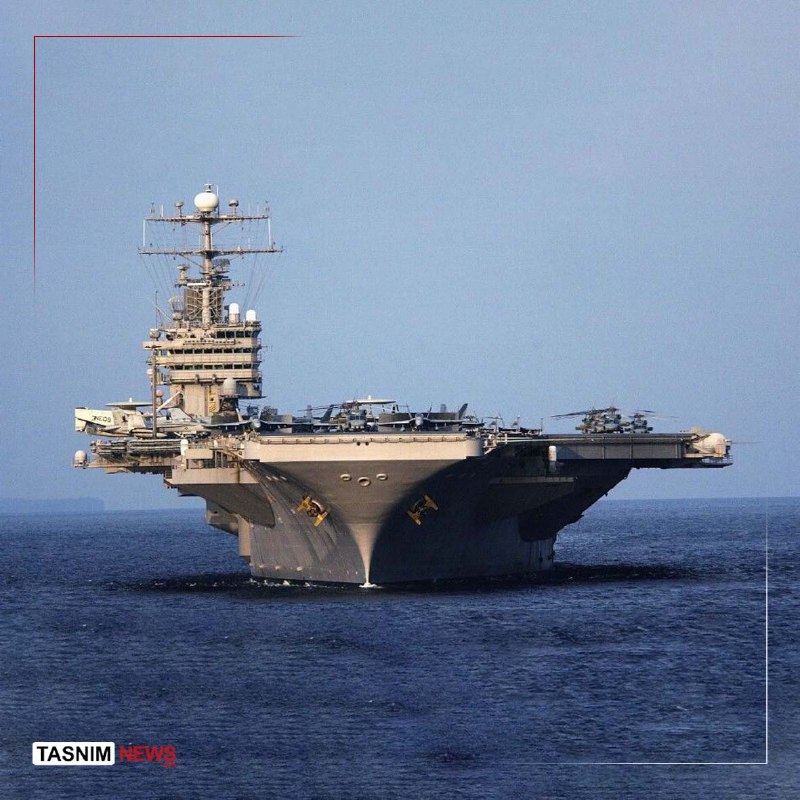
On 11 June 2026, in two appearances separated by roughly three hours, US President Donald Trump told reporters that Washington and Tehran were within days of signing an agreement to end the war, and that planned American strikes on the Islamic Republic had been called off. The first claim, logged at 17:45 UTC by Cointelegraph via Telegram, framed a naval blockade as the lever still in place pending a final deal. The second, logged at 20:25 UTC, carried the more memorable line — that the deal was "all wrapped up." An earlier Telegram item from the channel Status-6 (War & Military News), timestamped 20:22 UTC the same day, said the agreement would include a premium, a detail unattributed in the headline wire. The set of three items, taken together, looks less like a diplomatic breakthrough than the opening of a familiar information cycle: presidential assertion, market reaction, no instrument yet released.
This publication's reading is that the most consequential fact on 11 June is not the existence of a deal, which has not been produced, but the choreography around its absence. The president has named a destination; the architecture of that destination — sanctions relief sequencing, uranium disposition, blockade mechanics, the treatment of Hezbollah, the fate of the IRGC's regional posture — has not been put on paper in any form the public has seen. Until that text appears, the word "deal" describes a posture, not a contract.
The day's two sentences, and what each was doing
The morning line — "planned US strikes on Iran have been canceled, with a naval blockade remaining in place pending a final agreement" — was a war-and-peace claim. It told markets and allies that the military track was off the table for the moment, and that economic coercion, in the form of a maritime cordon, remained the live instrument. The evening line — that a US-Iran deal was "all wrapped up" — was a market-moving claim, and a domestic-political one. It told traders to price in a normalisation path, told an audience already fatigued by six months of escalation that an off-ramp was real, and told Tehran that the American president had, in effect, taken ownership of the outcome.
Both claims can be simultaneously true in their narrowest form and still leave the central question unanswered. Strikes can be paused without being cancelled. A deal can be "wrapped up" in the speaker's framing and still be unsigned, unverified, and conditional on last-mile items that may or may not be reachable. Telegram relays, particularly from Cointelegraph's news desk, compress the president's words rather than verify them. The Status-6 item, which adds the word "premium" to the agreement, suggests a financial sweetener that no Western wire on the day has independently confirmed.
The blockade as the real lever
The single most underweighted phrase in the 11 June reporting is the word "blockade." It is doing more work than "wrapping up." A naval blockade is a coercive instrument with a long legal lineage — it is a declared war measure under international law when imposed in time of armed conflict, and an act of economic warfare in peacetime — and it is the only item in the day's public reporting that is unambiguously operational. If a US naval cordon is in fact holding the Strait of Hormuz, or holding Iranian oil exports at some choke point, the practical pressure on Tehran does not depend on the signing ceremony in Washington.
That has two consequences worth naming. First, the leverage sits with whoever commands the cordon. If the US Navy is the visible enforcer, Washington retains the ability to tighten or loosen at will, and "agreement" is best read as a description of the moment at which Tehran is prepared to sign rather than a structural shift in the balance. Second, a blockade is brittle. It depends on the continued willingness of third-flagged tankers, insurers, and energy buyers to comply with US instructions, and on the absence of an incident at sea that forces a kinetic response. The longer it runs, the more it costs — politically for the administration that imposed it, economically for the buyers it pressures, and reputationally for a sanctions architecture that has lost the diplomatic cover of multilateral endorsement.
The non-paper problem
Three hours after the morning claim, the Cointelegraph wire had not produced a draft text, a list of agreed items, a sanctions waiver schedule, or a named counterpart. The Telegram reporting is consistent with what comes out of the White House press operation in moments of intended announcement: the headline travels; the substance is "to be released." That pattern is familiar from prior presidential communications on Iran, on North Korea, and on the Abraham Accords — there is a built-in audience for the line itself, and a built-in patience for the absence of the document.
The risk in that pattern is that the President's words become the asset being traded. Energy desks, shipping desks, and the wider risk-on/off community will price the line. If the document is then narrower than the language, or if a final item is contested, the market has to re-price the gap. That re-pricing has a way of landing on the country that was promised the deal more than on the country that announced it.
What the Iranian side would have to concede — and what it would have to receive
For an agreement of the kind the President is describing to be durable, three items would need to be in the text in some form. The first is the disposition of Iran's enriched-uranium stockpile, which has been the central object of every negotiation since 2015. The second is the architecture of sanctions relief, including the order in which measures are lifted and the mechanism for snapback if compliance fails. The third is the treatment of Iran's regional network — Hezbollah, the Houthi axis, the Iraqi Shia militias, and the Syrian corridor that has been degraded but not dismantled since 2024. None of those three is a single-page problem. Each has been, in past rounds, the item that brought talks to the edge of collapse.
The "premium" referenced in the Status-6 item, if accurate, suggests the kind of one-off financial transfer that has surfaced in speculative reporting over the past year — a release of frozen central bank assets held in third countries, or a structured oil-for-goods arrangement, or both. Each of those is a known instrument in sanctions-evasion practice, and each has been litigated in the European and Asian banking systems in ways that would be visible to anyone tracking the underlying flows. The fact that the word appears only in a single Telegram headline, without a Treasury readout or a central-bank confirmation, should be treated as a flag, not a finding.
The counter-narrative worth keeping in view
The most plausible alternative read of the day is that no agreement is close, and that the President's language is part of an effort to slow the move toward a strike that the operational timetable, the political coalition, and the energy market have made expensive. From this angle, "all wrapped up" is the sentence that keeps the war party in the administration waiting for a final text they may not get, and gives the diplomatic track another week of life it would not otherwise have. The blockade does the quiet work; the announcement does the loud work; the actual negotiation continues, as these negotiations have for a generation, in working groups and back channels that do not produce headlines.
A second, less generous read is that the announcement is principally a market signal, designed to move oil and to communicate to Tehran and to the Gulf monarchies that the United States is preparing to step back from the escalatory path. If that is the read, the document matters less than the price action, and the blockade matters less than the headline. That is a coherent theory of the case, and it is the theory the markets will price first.
Stakes, and what to watch for next
If the trajectory holds and a text is produced in the coming days, the most consequential line in it will be the sequencing of sanctions relief. Iran's economy has spent roughly six months under a tightening squeeze; the question of which measures lift first, in which order, and on what verification timeline will determine whether the agreement functions as a real de-escalation or as a pause that resets for a second round. The second most consequential line will be the disposition of enriched uranium, which has been the technical and political centre of gravity for every round since the Joint Plan of Action. The third will be whether the text is bilateral, trilateral, or framed as part of a JCPOA-adjacent architecture that pulls in the Europeans and, by extension, the Russians and Chinese.
If the trajectory does not hold — if the text does not appear, or appears in a form that one side immediately rejects — the blockade is the line that does not need a press conference. It holds, and the cost continues to accumulate, and the president will, with a high degree of historical regularity, describe the situation with a different adjective.
The honest summary on 11 June is that the day produced two sentences and a still photograph. The sentences moved markets. The photograph showed a flag. Neither the text of an agreement, nor the name of a counterpart, nor the schedule for sanctions relief, nor the location of the signing, has yet been placed on the public record. Until they are, the gap between "all wrapped up" and the actual document is where the story, and the risk, lives.
This publication treats presidential assertions on Iran as claims, not as facts, until the text of any agreement is produced. We will publish a follow-up read once a draft, an annex, or a Treasury or central-bank readout is on the public record.
Wire provenance
This editorial synthesis draws on the following public wire/social posts:
- https://t.me/cointelegraph
- https://t.me/osintlive
- https://t.me/cointelegraph
Follow the event.
These dated source records provide context. They do not retrospectively verify this archive article.
Separate what the nuclear watchdog reported from what it could not determine after the June 2025 strikes.