Diplomacy Without a Deal: Inside the 72 Hours That Reset US-Iran Nuclear Talks
Three contradictory signals in 72 hours — Iranian denials, a collapsed ceasefire, and a one-in-three market price on a deal — have left US-Iran nuclear diplomacy suspended between theatre and substance.
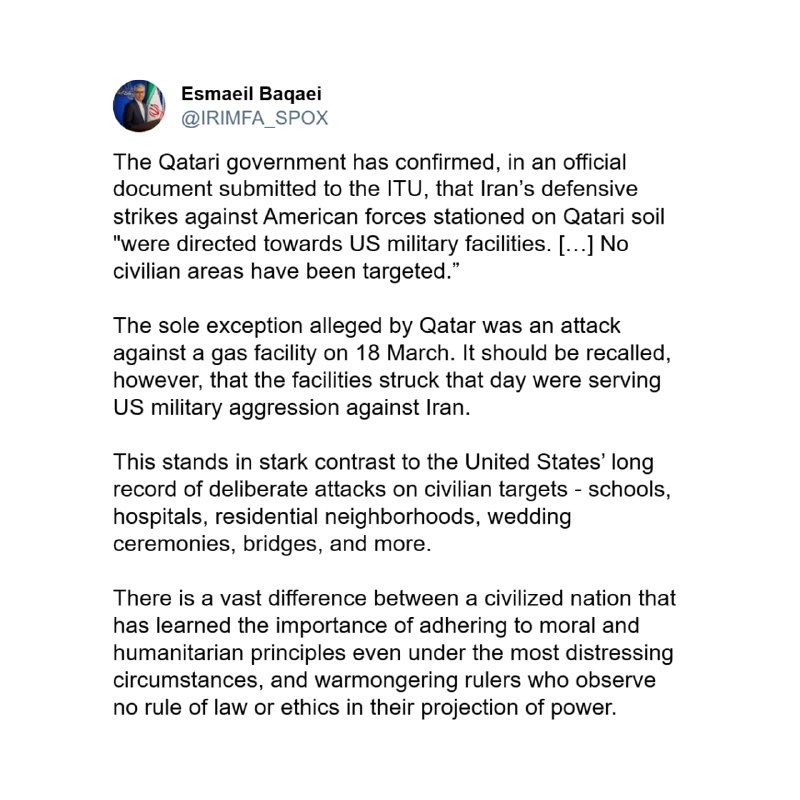
On the evening of 11 June 2026, Iranian officials rejected as "just speculation" reports of a breakthrough in negotiations with the United States, opening a fresh and unusually public gap between Washington and Tehran over the state of nuclear diplomacy. The denial, reported by the TSN Ukraine newswire at 23:14 UTC, came hours after a separate post at 16:17 UTC from the @unusual_whales account asserting that Iran had declared an existing US-brokered ceasefire "meaningless," and roughly seven hours before the prediction market Polymarket published a 33% implied probability of a US-Iran nuclear deal being reached by the close of June. Read in isolation, any one of those three items is a routine day in a slow-moving file. Read together, they describe a diplomatic track that has stopped pretending to converge, and is now visibly pricing its own failure.
The pattern matters beyond the Gulf. For more than a decade, the Iran nuclear file has functioned as the most consequential barometer of whether the United States and the Islamic Republic can manage disagreement short of war. The signals now leaking out of three distinct channels — official Iranian state-adjacent commentary, a financial-markets signal traded by speculative money, and an open-source account tracking Middle East security — suggest the diplomatic machinery is no longer aligned with the public framing that diplomacy is "on track." What remains is a question of whether the next move belongs to negotiators in Muscat, Vienna, or Doha, or to the militaries that have been moving hardware into the Gulf for months.
The official line, and what was actually denied
The Iranian denial carried at 23:14 UTC on 11 June was framed in the language of a state actor pushing back against a leak it did not control. Officials characterised reports of a breakthrough as "just speculation," a formulation that does not deny the existence of talks — talks have, after all, been continuous in some form since the collapse of the 2018 Joint Comprehensive Plan of Action withdrawal — but rejects the characterisation that they have arrived at a specific point. In diplomatic terms, the denial is calibrated: it preserves the channel while closing the door on a domestic political audience that has been primed by years of hardline messaging to read any agreement as a betrayal.
The substance of the alleged breakthrough was not disclosed in the 11 June reporting. That is itself the story. In a normal negotiating cycle, the parties leak enough to create a permissive political environment for a final deal. When the most concrete thing emerging from a session is a denial of progress, the read-through is that whatever was discussed, if anything, did not survive contact with political authorities in either capital. The TSN report did not name which Iranian officials spoke; that anonymity is typical of Iranian state communications on nuclear diplomacy, where the Foreign Ministry, the office of the Supreme Leader, and the negotiating team led by Deputy Foreign Minister Ali Bagheri Kani each maintain separate lanes of public commentary, and only the latter is empowered to confirm a deal.
The ceasefire that is not holding
Earlier the same day, at 16:17 UTC, the @unusual_whales account — a widely followed open-source account that aggregates security and market signals — posted that Iran had declared the US-brokered ceasefire "meaningless." The account is not a primary source in the traditional sense, but the framing it reports is consistent with a pattern visible since at least spring 2026: Iranian officials and state-aligned commentators have increasingly characterised US-led de-escalation arrangements as one-sided instruments that constrain Tehran's retaliatory options without imposing equivalent costs on Israel or on Iranian-backed groups in Iraq, Syria, and Lebanon. The word "meaningless" is a strong choice, and a deliberately public one.
What is striking is the simultaneity. Within the same 24-hour window, Iranian officials were simultaneously (a) denying a negotiating breakthrough and (b) signalling that the existing ceasefire architecture is no longer operative in Iranian eyes. Read together, those moves describe a strategic posture in which Tehran is hedging: it does not want to be the party that walks away from the table, but it also does not want to be bound by an arrangement it no longer finds useful. This is the classic posture of a state preparing to act, not a state preparing to sign.
What the market is saying
The third signal, posted by @polymarket at 18:25 UTC, is the most candid. The prediction market priced a US-Iran nuclear deal by 30 June 2026 at 33%. That is not a denial — it is the market assigning roughly one-in-three odds that a deal will be reached within nineteen days of the post. Polymarket, a US-regulated event-contract venue, aggregates the bets of a global pool of speculative participants; its price is a useful, if coarse, signal of what informed money thinks is plausible.
A 33% number is neither high nor low. It is consistent with a market that believes a deal is possible, that it is not imminent, and that the probability has materially worsened over recent weeks. A deal that was 50/50 at the start of June would be priced lower if the public posturing on 11 June is what traders believe — and a market that thinks a deal is more likely than not would price higher. The number tells readers that the participants putting real money on the line do not consider the Iranian denial to be pure posturing, nor do they consider the existing ceasefire architecture to be functional. They are pricing risk.
What is actually being negotiated
The official Iranian position, as communicated through state-aligned outlets, is well understood. Tehran insists on its right to enrich uranium for peaceful purposes, frames the International Atomic Energy Agency's inspection regime as an instrument of Western intelligence rather than verification, and treats the reimposition of UN sanctions in 2026 — a step the E3 (the UK, France, and Germany) moved toward earlier in the year — as illegitimate. On the substance, Iranian officials have signalled willingness to discuss constraints on enrichment purity, the size of the stockpile of 60%-enriched material, and the sequencing of sanctions relief.
The US position, as conveyed in the most recent round of reporting, centres on three demands: a permanent end to 90%-enriched weapons-grade material, the shuttering of advanced centrifuge cascades, and a credible verification regime that survives a future US administration. The verification piece is the hardest. It is the lesson of the 2015 JCPOA — the Joint Comprehensive Plan of Action — whose technical compliance by Tehran did not protect the agreement from a unilateral US withdrawal in 2018. Any new deal has to assume that the next US president, of either party, will treat the agreement as disposable unless it is structured to make withdrawal prohibitively expensive. That is a tall order for negotiators working against a 19-day window.
The structural frame
This is not a story about two governments failing to communicate. It is a story about the limits of a specific kind of deal-making. The track that produced the JCPOA assumed a stable US foreign-policy consensus on non-proliferation, a manageable Israeli security interest, and a Gulf security architecture in which Iran's regional role could be ring-fenced from the nuclear file. None of those three preconditions is currently in place. The US domestic consensus on Iran is fractured. Israel treats the file as a primary, not secondary, national-security question, and has conducted multiple operations inside Iran since 2024. The Gulf states that once bankrolled the sanctions regime are now in active rapprochement with Tehran, which makes the old pressure coalition harder to assemble.
The pattern — a hegemonic order ceding ground to a successor arrangement — is the one that explains the timing of this collapse. The US can still impose meaningful costs on Iran's economy, but it can no longer credibly guarantee that those costs will be paired with the security assurances Iran wants in return. Iran can still enrich, but it can no longer assume that the political cover for a strike on its facilities is automatic. The negotiation is happening in the space between these two diminished certainties, and the public messaging on 11 June reflects that.
What is contested, and what is not
The reporting on 11 June is internally consistent across the three sources but does not resolve the most important question: whether talks are continuing at a working level, paused, or effectively over. Iranian officials denied a breakthrough, which is not the same as denying that talks are ongoing. The @unusual_whales post characterised the existing ceasefire as "meaningless," which is not the same as saying there is no communication. The Polymarket price implies one-in-three odds of a deal, which is not the same as a forecast of no deal. Each source is honest about a different layer of the problem, and none of them is positioned to deliver a definitive read.
What is not contested is that the public posture of both governments has hardened in the last 72 hours. The Iranian denial, the Iranian commentary on the ceasefire, and the market's repricing all point in the same direction. The shape of the next move — whether it is a sanctions designation, an IAEA referral, a retaliatory strike on a US or Israeli target via an Iraqi or Yemeni proxy, or a quiet resumption of working-level talks in Muscat — is not visible in the current source set. This publication will track the next official communication from the Iranian Foreign Ministry and the US State Department as the more reliable signals of where the file is heading.
Stakes
If a deal is reached, the most immediate beneficiaries are the European energy importers that have spent eighteen months pricing in a premium for a wider war, the global LNG market, and the Iranian rial, which has stabilised in 2026 only because of informal Gulf capital inflows that would evaporate if the file reopens violently. The most immediate losers are the Iranian hardline factions that built political capital on the premise that no deal was possible, and the Israeli security establishment that has concluded a deal is structurally unfavourable to its position.
If a deal is not reached, the most likely follow-on is escalation. The hardliners in Tehran gain a domestic political windfall from the failure. The Israeli security cabinet gains a public mandate for action that it has, in various statements, indicated it is prepared to take. The US domestic Iran consensus collapses in the run-up to midterms, hardening the position of whichever faction is louder. The market is pricing one of these two paths. The Iranian public messaging on 11 June is signalling which path Tehran currently prefers, and it is not the diplomatic one.
Desk note: this article was built from three open-source signals — a state-adjacent denial, a market price, and a security-tracking account — rather than from a single wire. Wire reporting on Iran often defers to the language of official spokespeople; in this case, the most informative material was upstream of the wires, and the analysis reflects that.
Wire provenance
This editorial synthesis draws on the following public wire/social posts:
- https://t.me/TSN_ua
Follow the event.
These dated source records provide context. They do not retrospectively verify this archive article.
Separate what the nuclear watchdog reported from what it could not determine after the June 2025 strikes.