Bomb first, hydrate later: the cost of striking Iran without a peace
US strikes on Iran have reportedly cut drinking water to 20,000 people. The market still prices a 67% chance of a peace deal by year-end. The disconnect is the story.
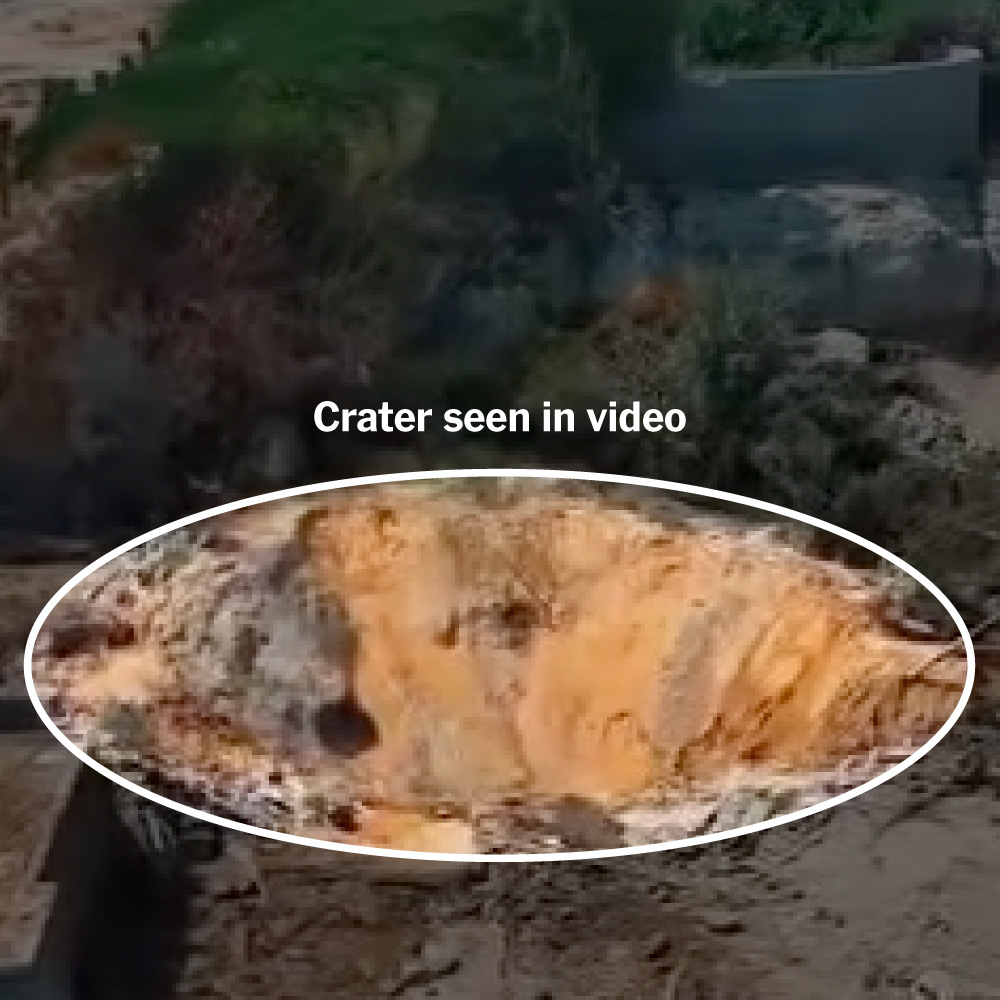
Twenty thousand people in southern Iran are reportedly drinking from whatever they can find. On 10 June 2026, the Financial Times reported — and Iranian officials confirmed — that US strikes had hit reservoir tanks supplying the region, severing running water in extreme heat. The New York Times, cited by PressTV, framed the incident as one that "could constitute a war crime under international law." Twenty-four hours later, at 07:00 UTC on 11 June, Reuters reported fresh US strikes on Iranian targets. The bombs keep falling while the wells run dry.
Pretend for a moment that the United States and the Islamic Republic are not at war. Pretend the announcements from Washington about "negotiated denuclearisation" are sincere. Then ask a simple question: in which universe does a country pursuing a ceasefire deliberately bomb a drinking-water facility in the middle of a heatwave? The market has an answer. Polymarket puts the chance of a US–Iran ceasefire this month at 33%, and a permanent peace deal this year at 67%. Either the trading public is pricing in a great deal of humanitarian risk, or someone is selling a story that the bombs do not corroborate.
The escalation that does not announce itself
Escalation is rarely the explosion. It is the thousand small decisions that make the next explosion possible. The 11 June strikes come on the heels of the 10 June water-infrastructure hit, which come on the heels of weeks of intermittent bombardment, which come on the heels of an ostensible negotiating track that officials in Washington and Muscat insist is still alive. Each step is described, in press briefings, as "calibrated" or "proportionate" — adjectives that have been stretched past recognition. A reservoir tank is not a centrifuge. Cutting water to a civilian population in summer is not a precision tool of statecraft; it is collective pressure, applied at the tap.
What the wires are not saying plainly
Western coverage of this phase of the confrontation leans on the language of officials: that strikes are "defensive," that diplomacy continues, that the Iranian regime is the responsible party for any breakdown. That framing has a job to do. It defers the question of proportionality to the party that chose the targets. It also allows markets — Indian equities sold off on the war news and on hot US CPI, per Reuters — to treat the strikes as a price input rather than a humanitarian one. The 20,000 people without water are a line item in someone else's risk model.
Iranian state media, predictably, takes the opposite frame: every strike is evidence of American barbarism, every civilian casualty a war crime. That framing has a job to do too. It consolidates domestic opinion behind the state and gives Tehran moral cover to retaliate in kind. Both narratives are partial. Both are deployed. Neither tells a reader what to do with the image of a child in 48-degree heat, queueing at a tanker truck that may or may not arrive.
The structural point, in plain prose
When the incumbent global power claims to be enforcing a rules-based order while targeting the civilian water supply of a country it is also negotiating with, the order in question has lost its claim to universality. This is not a matter of regime sympathy. It is a matter of how a hegemonic system legitimises its violence. The dominant story tells its audience that strikes are surgical and diplomacy is sincere. The counter-story tells its audience that strikes are the diplomacy. Both can be partially right, and both can be deployed by actors who have an interest in one of them being believed. The job of a sceptical press is to hold both at once, in the same frame, and to refuse the comfort of either.
Stakes, and what is being traded
If the trajectory continues, the winners are short: defence contractors, oil traders who positioned for a spike, and political constituencies that profit from a posture of strength. The losers are the people in southern Iran without water, the Iranian civilian population broadly, the credibility of any US-led diplomatic architecture, and the broader claim that the post-1945 normative order constrains great-power behaviour. Over a one-year horizon, a 67% market-implied probability of a peace deal is not a forecast of peace; it is a forecast that someone, somewhere, will sign something before year-end. The distinction matters. A signed document is not the same thing as a war ending. Vietnam had a Paris peace agreement. Korea still has an armistice.
What remains genuinely uncertain is whether the negotiating track the Trump administration has publicly described exists in any operational form, or whether it is a posture maintained for financial and electoral reasons while the kinetic campaign continues. The sources do not settle this. The market, for its part, has priced both outcomes and is happy to be wrong in either direction. The 20,000 people without water do not have that luxury. They are paying, in the only currency that cannot be hedged, for a strategy whose endgame is someone else's to name.
This piece is opinion. The byline is the staff writer; the analysis is Monexus's, the sourcing is the wire's, and the framing is ours.
Wire provenance
This editorial synthesis draws on the following public wire/social posts:
- http://reut.rs/4v8O0P6
- http://reut.rs/4v4vNlC
- https://t.me/presstv
Follow the event.
These dated source records provide context. They do not retrospectively verify this archive article.
Separate what the nuclear watchdog reported from what it could not determine after the June 2025 strikes.