Washington's Tanker Calculus in the Gulf of Oman: Enforcement or Escalation?
Two Iranian tankers diverted in the Gulf of Oman expose the gap between Washington's sanctions enforcement and Tehran's negotiating position, with China holding the deciding vote.
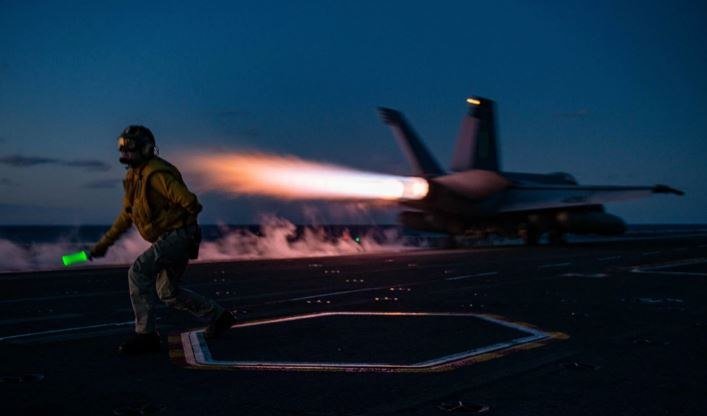
At 06:12 UTC on 11 June 2026, the United Kingdom Maritime Trade Operations centre lifted advisory 017/2026 for the Gulf of Oman, replacing a four-day caution with a routine note that merchant traffic could proceed normally. The downgrade was procedural. The politics behind it were not. Two Iranian-flagged tankers bound for the People's Republic of China had just been intercepted, boarded, and diverted by US Coast Guard and US Navy units operating under sanctions-enforcement authorities that no flag state in the region recognises as legitimate at sea. One vessel, the Pacific Quartz, was escorted into a port in the Gulf after a hull search; the second, the Caspian Star, was tracked for nine hours before releasing its cargo manifest under what a CENTCOM release called "cooperative disposition." UKMTO logged both incidents as armed-boardings-in-progress before clearing the corridor.
The arithmetic that drove the boarding is the same arithmetic driving every similar episode this year: roughly 1.6 million barrels per day of Iranian crude now flow to Chinese refiners, most of it transiting a corridor that narrows to 21 nautical miles off Omani and Pakistani waters. That volume is the margin between Tehran's fiscal survival and a balance-of-payments crisis. It is also the reason Washington is willing to push the legal envelope in waters where it does not claim jurisdiction, and why every interdiction since March has been treated by Iranian negotiators as a bargaining chip rather than a casus belli.
The new pattern at sea
What separates 2026 from previous sanctions cycles is the speed and disclosure of the operations. The March boarding of the Atlas Voyager, flagged in the Marshall Islands and chartered by an opaque Geneva-based intermediary, was confirmed by the Treasury's OFAC within 72 hours. The May diversion of the Mermid, a very large crude carrier operating under a Comoros flag of convenience, produced a satellite imagery dataset published by Planet Labs that showed two Arleigh Burke-class destroyers positioned within weapons range of the vessel for the duration of the transit. Both operations were described by Pentagon spokesperson Major General Patrick Ryder as "routine enforcement of US law on the high seas." Iranian state media characterised them, with equal brevity, as piracy.
The legal claim runs through US Treasury authorities to sanction any vessel that has knowingly transported Iranian crude, regardless of flag. The international maritime claim is that a coastal state's jurisdiction extends 12 nautical miles from baseline, with contiguous-zone rights to a further 12, and that anything beyond is freedom of navigation under UNCLOS. The United States is not a party to UNCLOS, which complicates the rhetorical posture but not the operational one. Iran's own coast guard operates under reciprocal logic in the Strait of Hormuz, and Chinese-flagged tankers have been turned back on similar grounds in 2024 and 2025.
Tehran's read on the boarding
The Iranian negotiating position, as conveyed to the IAEA technical delegation in Vienna and amplified through Tasnim and Fars, treats each interdiction as evidence that the United States is preparing a "snap" inspection regime covering the full Hormuz-Oman corridor. The fear is structural rather than legal. If three or four boardings per quarter become the floor, Chinese refiners will demand that Iranian cargoes be transhipped through intermediary flags and obscured ownership chains. The premium on that opacity will erode Tehran's netback per barrel by an estimated $4 to $7, depending on shipping insurance and port-call costs. At current export volumes, that is roughly $2.3 billion per year of fiscal pressure, against an Iranian budget that already runs a deficit exceeding 8 percent of GDP.
The Iranian counter-move has been procedural rather than kinetic. The Foreign Ministry has filed three diplomatic notes with the IMO in London since April, each requesting that the organisation formally opine on the legality of US sanctions enforcement against third-flag vessels. The notes are designed for slow adjudication, not resolution. They buy time.
The China variable
Beijing's posture is the variable that determines whether the tanker calculus produces a settlement or a confrontation. Chinese refiners have not cancelled any Iranian cargoes in 2026, and Beijing has not endorsed the US interdictions in any public statement. The official line from the Ministry of Foreign Affairs, repeated on 9 June, calls the operations "extraterritorial overreach" and "a threat to energy security in the Global South." The operative line is quieter: Chinese shipowners have begun asking Iranian counterparts for escrow arrangements and third-party cargo verification that effectively re-price the risk without breaking the contracts.
That bifurcation is the gap Washington is trying to widen. The CENTCOM posture assumes that if the legal and commercial cost of carrying Iranian crude rises above the discount Tehran offers, the trade shrinks voluntarily before any shooting starts. The Iranian posture assumes that if Beijing can be persuaded to absorb the cost diplomatically, the trade continues regardless. Both calculations are internally consistent. Neither is stable.
What the next ninety days look like
The most likely scenario is procedural escalation: more interdictions, more IMO filings, more third-flag registrations, and a quiet Chinese intermediation that prevents any single incident from becoming a test of fire-control authority. The most dangerous scenario is a misread of a track, a miscommunication between an Iranian Revolutionary Guard Corps Navy frigate and a US destroyer operating in the same box, or a tanker master who refuses the boarding order and forces a tow. The CENTCOM transcript of the Pacific Quartz action shows that compliance was achieved when the master was informed, in English and then Farsi, that his vessel would be tracked to port by air and surface assets until the cargo manifest was surrendered. That worked because the calculus was asymmetric. The next time, it may not be.
The Fox News interview cited by Fars on 13 June, in which a US official claimed a "very good and strong agreement" with Iran, sits uneasily against this operational record. Either the agreement is real and the next boarding has been negotiated in advance, or the agreement is rhetoric and the next boarding will land on the desk of a president who has to decide, in real time, whether to push a tanker into port by force. The next quarter will tell us which. A date worth watching: 18 July, when the IAEA Board of Governors convenes and the Iranian dossier reopens for technical review.
Sources
- https://t.me/wfwitness
- https://t.me/osintlive
- https://t.me/GeoPWatch
- https://t.me/rnintel
- https://t.me/FarsNewsInt (post dated 13 June 2026, "American official claimed: We have reached a strong agreement with Iran")
Desk note: Monexus treats the CENTCOM and UKMTO read as primary operational reporting, not editorial framing, and the legal question of extraterritorial sanctions enforcement is flagged here as contested rather than settled. Where wire coverage tends to treat each interdiction as an isolated enforcement event, the structural read is that they form a coherent campaign of commercial deterrence, with the campaign's risk embedded in its own escalation logic.