A US strike on a tanker off Oman, and the seam it tore open
Two Indian crew are dead after a US strike on the tanker MT Jalveer off Oman's coast. The incident is a stress test for the corridor politics of the Strait of Hormuz and for India's careful neutrality.
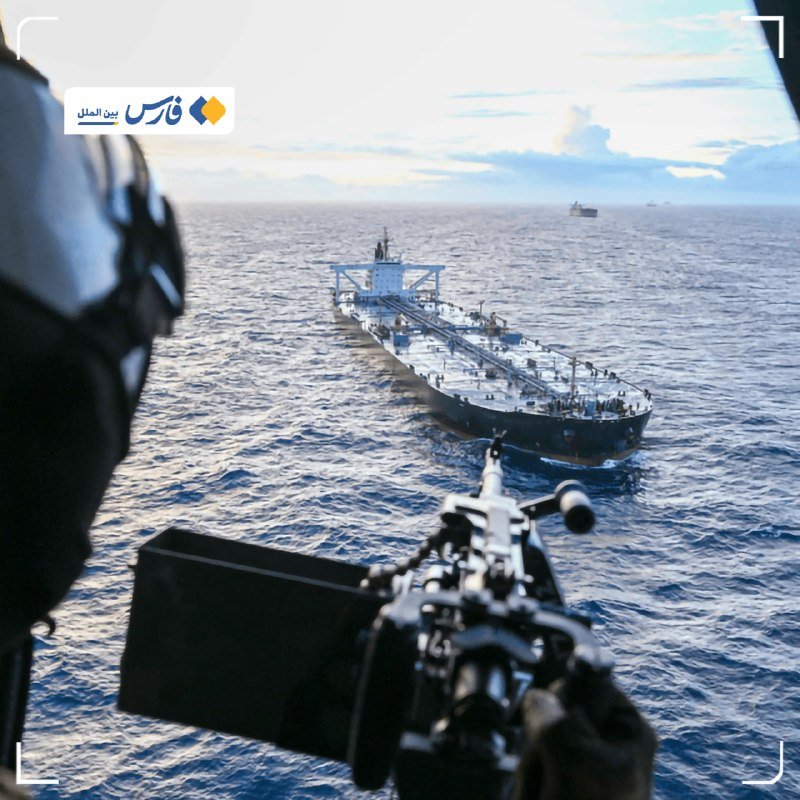
At 07:07 UTC on 11 June 2026, two Indian sailors were confirmed dead after a US strike on the Indian-crewed tanker MT Jalveer, struck earlier in the day off the port of Shinas on Oman's northern coast, according to multiple wire channels and a statement relayed by the Indian Embassy in Muscat.
The ship's identity, its flag, and the nationality of its crew are no small details. MT Jalveer is an Indian-manned vessel. Oman is a US security partner and a quiet mediator in the Gulf, but its waters are also the seaward flank of the Strait of Hormuz, the chokepoint through which a fifth of the world's traded oil moves. A US strike that kills Indian crew on a tanker in Oman's exclusive economic zone is not a tactical footnote. It is a stress test — of the corridor, of the bilateral, and of a piece of careful architecture New Delhi has spent two decades building.
What we know, hour by hour
The first wire hits landed at 06:52 UTC, when the Indian Express channel carried a brief: two Indian sailors reported missing after a US attack on a tanker off the Omani coast, later confirmed killed. By 06:53 UTC, the @wfwitness feed was reporting the attack on MT Jalveer, with Indian crew on board. By 06:57 UTC, the same feed added that the Indian Embassy in Muscat had said it was aware of an "incident" involving Indian nationals. By 07:07 UTC, the @rnintel channel was confirming the strike and the Indian crew.
The Indian Express line, treated as the most authoritative of the three, is unambiguous: the strike was US, the vessel was the MT Jalveer, the two missing sailors were Indian, and they did not survive. None of the wires in the present thread specify the weapon used, the exact coordinates, or whether the tanker was the intended target or struck in a follow-on action against a nearby vessel. The sources do not specify.
The seam the incident exposes
US Central Command has, since 2023, run a maritime interdiction campaign in the Gulf of Oman and the western Arabian Sea aimed at vessels it says are moving Iranian oil in violation of sanctions. The campaign is justified, in Washington's framing, by a long-running dispute over Iran's shadow fleet and by periodic seizures of tankers by Iran-aligned groups. Oman hosts a small US military footprint and is, by long custom, the Gulf state most willing to mediate between Washington and Tehran.
The problem is what happens when an interdiction goes kinetic, when the crew of the targeted vessel is Indian, and when the host state's waters are the venue. India is not a US treaty ally in the NATO sense, but it has grown steadily closer to Washington — the iCET framework, the Logistics Exchange MoU, the steady drumbeat of port calls and 2+2 dialogues. It is also a buyer of Russian crude, a buyer of Iranian crude at a discount before the recent tightening, and a naval power with its own long coastline on the same sea. New Delhi has, in effect, been holding two positions at once: a deepening strategic alignment with the US, and a refusal to be drawn into a sanctions regime whose extraterritorial reach it considers illegitimate.
Two dead Indian sailors complicate that balance. They do not break it, but they pull it taut.
The counter-read, fairly stated
The strongest counter-narrative to the dominant framing is also the simplest. The MT Jalveer may not have been the intended target at all. Maritime interdictions in congested waters are messy. A strike on a vessel nearby, a misidentified contact, a drone with a broad target package — any of these is plausible. If the US was pursuing a sanctioned Iranian cargo, the Indian crew of an unrelated tanker should not have been in the splash zone. That is the question the Indian government, almost certainly, will be asking Washington in the next 72 hours.
There is a less comfortable counter-read too. The campaign that produced this strike is, in its own logic, a continuation of a long American project of policing the Gulf's sea lanes by force. That project is older than the Iran file: it runs from the Tanker War of the 1980s, through the 1987 reflagging of Kuwaiti tankers, through the post-2019 seizures and the post-2023 interdictions. It has, on the whole, kept oil flowing. It has also, on the whole, treated the crews of third-party vessels as a cost of doing business. Two Indian dead is the kind of cost that, in past decades, was absorbed in quiet. In 2026, with India's strategic weight growing and its public more attuned to the movement of its own nationals, absorption will be harder.
What this sits inside
A hegemonic transition is not an event; it is an accumulation. The pattern here is the steady collision between an incumbent maritime order that has policed the Gulf under US direction since the 1980s, and a successor arrangement in which India, the Gulf states, and even China have larger and louder stakes in the corridor. The US still projects the most firepower in these waters. It is no longer the only actor whose interests matter.
What is genuinely uncertain is whether this strike is read in New Delhi as a one-off, handled through quiet diplomacy, or as evidence that the US campaign in the Gulf is not a campaign New Delhi can quietly acquiesce in. The former is the historical default. The latter is the structural read. Both are plausible from where the present thread sits.
The desk framed this as a corridor-politics story with an Indian human cost, not as a US-versus-Iran story. The wire channels rushed the casualty count before the targeting question; we held that question open.
Wire provenance
This editorial synthesis draws on the following public wire/social posts:
- https://t.me/wfwitness
- https://t.me/rnintel