Sixteen cities, one message: what the US strike wave on Iran actually says
A single day of US bombing across at least sixteen Iranian towns and cities, publicly announced in advance by Defense Secretary Hegseth, has turned the diplomacy around the Strait of Hormuz into a question of who blinks first.
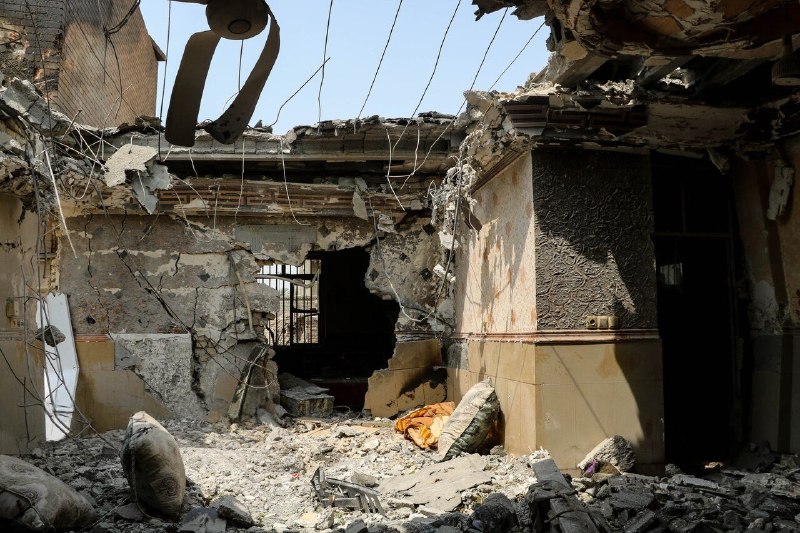
At roughly 02:40 UTC on 11 June 2026, US Defense Secretary Pete Hegseth confirmed that American aircraft would hit "key facilities" inside Iran later the same day. By 02:09 UTC an open-source cartography channel, AMK Mapping, was already circulating a map plotting at least sixteen Iranian towns and cities struck in the opening wave. The pre-announcement of a bombing campaign against a country Washington is simultaneously negotiating with is, on its face, an unusual sequence — and a clarifying one. It tells the reader, in plain text, that the military instrument and the diplomatic instrument are now being run in the same room.
What the past 24 hours actually amount to is a coercive negotiation wearing combat boots. The US has both escalated and signalled, hit infrastructure and left space for a deal, moved forces into the Gulf and talked up a permanent peace. The contradiction is the policy. To understand where this goes, three threads need to be pulled apart: the strikes themselves, the market's read of them, and the political economy of an announcement made before the first bomb fell.
The shape of the strike wave
The cartography posted to Telegram at 02:09 UTC on 11 June by AMK Mapping identifies at least sixteen distinct Iranian towns and cities hit in the first hours of the campaign. The same package of reporting, surfacing on X around 19:41 UTC on 10 June via unusual_whales, carried a Financial Times-sourced claim that Iran was reporting roughly 20,000 people left without running water after US strikes damaged reservoir tanks. The figures are not yet independently verified, and the casualty and infrastructure toll remains a moving picture. The pattern that is verifiable, from the cartography and the Reuters confirmation, is geographic spread — not a single facility in a single province, but a nationwide grid of targets timed to a single day.
The political effect of that pattern is different from the military effect. A strike on one or two nuclear or missile sites is a targeted message. A wave of sixteen, including at least one piece of civilian water infrastructure, is a systemic message. It says: the cost of holding out is paid in ordinary services, ordinary towns, ordinary water. That is a doctrinal choice, and it carries the same warning the air campaigns of 1991 and 2003 carried — that the United States retains the ability to compress the difference between regime-level targets and society-level damage in a single sortie cycle.
Iran's response, in the reporting available at publication, has been to publish the humanitarian cost. The 20,000-without-water figure, attributed to Iranian officials and circulated by the Financial Times, is a counter-narrative aimed at the same audience the strikes are aimed at: the Iranian street, the Gulf monarchies watching the precedent, and the Western domestic constituencies whose threshold for civilian harm is the variable that has moved most in twenty years of Middle East warfare.
Markets and the language of probability
While the bombs were still being plotted on Telegram, two prediction markets run by Polymarket were doing their own work. At 21:41 UTC on 10 June, the market on a US-Iran ceasefire agreement this month sat at 33 percent. At 17:21 UTC the same day, a separate market on a permanent US-Iran peace deal by year-end sat at 67 percent. The two numbers read as a single sentence: traders see a near-term pause as roughly coin-flip, but a longer settlement as the more probable outcome.
The implication is that the market does not read 11 June as a war-decision. It reads 11 June as a price-decision. The US is paying a military premium now to lower the diplomatic price later. Whether the premium was worth paying depends on whether the Iranian side concludes, in the days that follow, that the cost of continued enrichment and proxy activity has crossed a threshold that talks at lower levels could not cross. That is a question about Tehran's internal politics, not Washington's. The Carter Doctrine's original premise — that the United States will use force to keep the Gulf's oil flowing on terms it can accept — has been refurbished, but the customer is the same.
The Polymarket spread also explains why Hegseth could announce strikes publicly the night before. The markets did not price the announcement as a step toward general war. They priced it as a known-good input to a negotiation whose terminal state is still more likely to be a deal than an open-ended campaign. In a different market environment — one in which the ceasefire line were trading at 10 or 15 percent — the same announcement would have moved oil and gold violently. It did not, in the inputs available to this publication. That is itself a piece of evidence about how the war is being read by the people with the most to lose if the read is wrong.
The structural frame: coercion with a deadline
What the past 24 hours show, in plain language, is a return to a coercive bargaining style that the United States used most openly in the early 1990s and has, in the Middle East, periodically returned to since. The sequence is familiar. Forces mass in the Gulf. Public messaging raises the cost of non-compliance. A short, sharp strike wave is then followed by an opening — sometimes real, sometimes theatrical — for a deal on terms that the bombing was always meant to underwrite. The innovation this time is the public announcement, in the Defense Secretary's own voice, that strikes are coming. That removes the surprise variable from the military instrument and substitutes for it a scheduling variable: a deadline made literal by the calendar.
The second structural feature is the simultaneous use of force and of negotiation. The US is talking to Iran at the same table it is bombing. The historical analogue is less the 2003 invasion of Iraq — which was conducted against a country the US was not negotiating with — than the 1998 Desert Fox campaign, which was conducted while a UN inspection track was still nominally open, or the 1986 US bombing of Libya, which followed a track of state sponsorship accusations that the Reagan administration had been building for years. In each case the diplomatic and military instruments were sequenced, not alternated. They are being paralleled in 2026, and the paralleling is the news.
The third structural feature is the civilian-infrastructure tail. The water-tank strike, if confirmed at the scale Iran reports, sits inside a long-standing debate about what counts as a permissible target in counter-value as opposed to counter-force campaigns. Western targeting doctrine officially treats dual-use civilian-military infrastructure as targetable, with proportionality assessments. Iranian state reporting will treat the same strike as a deliberate signalling choice aimed at the population. Both readings are coherent. The 20,000-without-water figure, if it holds under independent verification, will be the durable fact the next round of reporting organises itself around.
Counter-claim and the limits of public sourcing
Two cautionary notes belong next to the strikes. The first is sourcing. The cartography of sixteen cities comes from an open-source Telegram channel, AMK Mapping, whose method is the aggregation of geolocated posts and strike reports. It is useful as a real-time index, not as a definitive ledger. The 20,000-without-water figure is Iranian-government reporting, mediated by the Financial Times, and the FT's own standard is to attribute such figures carefully. The casualty totals, the exact target set, and the damage to specific nuclear or missile facilities have not, in the public material available to this publication at the time of writing, been independently confirmed.
The second is the silence from Tehran's regional partners. The reporting available does not include a Hezbollah statement, a Houthi statement, or an Iraqi militia response. That silence is itself a piece of evidence, but it is evidence of posture, not of capability. The next 48 hours will determine whether the strike wave triggers the regional cascade that the Polymarket ceasefire number is implicitly pricing against, or whether Iran's response is — as in past cycles — calibrated to keep the escalation inside a band the negotiations can still absorb.
Stakes: who wins and who pays
If the 67 percent Polymarket number is the right read, the next four to six weeks produce a deal that trades a verification regime on Iran's nuclear and missile programme for relief on sanctions and a managed regional posture. In that outcome, the United States secures a non-proliferation gain and an oil-stability gain; Iran secures economic relief and regime durability; the Gulf monarchies secure a precedent that the United States still, when it chooses, projects force on their behalf. The cost is paid in the sixteen towns on AMK's map, in the 20,000 people the Iranian government says are without water, and in the diplomatic capital Iran spends accepting a constraint it would not otherwise have accepted.
If the 33 percent number is the right read, the strike wave is the opening move of a longer campaign, the ceasefire is not reached this month, and the regional cascade that the prediction market is currently pricing out becomes the dominant story by July. In that case, the Polymarket peace-by-year-end line will follow the ceasefire line down, and the reporting available in late June will look very different from the reporting available now.
The honest answer at 02:40 UTC on 11 June 2026 is that both outcomes are still on the table, and that the Defense Secretary's public announcement of the strike, hours before it landed, is the kind of decision that is designed to push the higher-probability outcome toward the deal. The next 48 hours of Iranian signalling will tell the reader whether it worked.
What remains contested
Three things are not yet knowable from the public record. First, the precise target set inside the sixteen cities, and how much of it was dual-use civilian infrastructure as opposed to security sites. Second, the casualty count, which Iranian state media will inflate and which Western wires have not yet been able to confirm. Third, the response posture of Iran's regional partners — Hezbollah, the Houthi movement, the Iraqi Shia militias — none of which had issued a public statement on the strikes in the material available to this publication at publication time. The shape of the next week will turn on all three. Until they resolve, the map is a better summary of what happened than any of the words around it.
This publication framed the strike wave as a coercive bargaining move with a market-priced terminal state, rather than as a stand-alone act of war — a reading the Polymarket spread on ceasefire versus permanent deal supports but does not, on its own, confirm.
Wire provenance
This editorial synthesis draws on the following public wire/social posts:
- http://reut.rs/4xl2g8L
- https://t.me/AMK_Mapping