Vance, on the record: Netanyahu got some things wrong
On a CBS interview aired 11 June 2026, Vice President J.D. Vance publicly faulted Prime Minister Netanyahu's handling of the US file on Iran — a rare on-the-record rebuke that, even hedged, lands at a delicate moment.
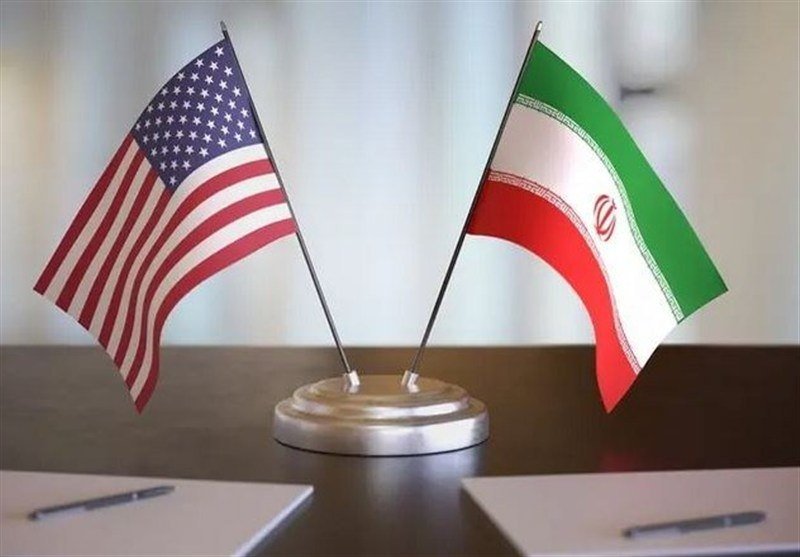
On 11 June 2026, in a CBS interview carried in clips by Telegram channels including Clash Report and abualiexpress, US Vice President J.D. Vance said on the record that Prime Minister Benjamin Netanyahu "undoubtedly made some mistakes" in the way he managed the US relationship on the Iran file — and then walked the comment partway back. It is the kind of remark that, in normal times, would register as a private grievance aired too publicly. These are not normal times.
The exchange matters because the framing — not the substance — is the story. An American vice president does not normally call out an Israeli prime minister by name, on American network television, on the most sensitive bilateral file of the year, unless he is prepared for the sentence to be read as policy. Vance, to his credit, did not pretend otherwise. He added the diplomatic cushion that the two governments would "keep on working together," and reminded viewers that Netanyahu "governs a country that has obviously been a very close partner of the United States." But the sentence is now in the record, and the record is what Israeli and Arab diplomatic shops will read on Friday morning.
What Vance actually said
The CBS interviewer asked whether Netanyahu had made mistakes in how he dealt with the United States on Iran. Vance's response, as carried by Clash Report and abualiexpress, ran in three movements. First, the admission: Netanyahu "undoubtedly" and "certainly" got some things wrong. Second, the appeal to private diplomacy: "those conversations are sometimes better left private." Third, the reassurance: "even when we've been close partners, sometimes we have interests that are perfectly" aligned, and "we're going to keep on working together."
The architecture of the answer is deliberate. It concedes, retreats, then locks the door. The concession is what Israeli and Gulf media will print on the front page. The retreat is what the White House will quote when it needs to dampen the row. The locked door — "we're going to keep on working together" — is what the bond traders and oil desks will read as the operative line.
Why this is being said out loud, now
Two things have changed since the start of the year. First, the Iran file has become a domestic American issue in a way it had not been since the JCPOA debates. Any visible daylight between the US and Israel on Iran is now consumed in real time by US congressional politics, by AIPAC-aligned and J Street-aligned voices alike, and by an administration that is fighting to keep the diplomatic track alive. Second, the Israeli coalition is more politically brittle than at any point in the last decade, and Netanyahu's room to absorb public criticism from a friend is narrower than it was in 2024 or 2025.
That is the context in which Vance's sentence lands. It is not a break with Israel. It is, at most, a calibration — a way of signalling to the Israeli opposition, to the White House's own base, and to Tehran's negotiators that the US will not give Netanyahu a blank cheque on the sequencing, the messaging, or the timing of any escalation around the Iranian nuclear file.
The counter-read
There is a plausible alternative reading. Netanyahu's office has spent months complaining, in private and in friendly media, that the US has been slow on arms deliveries, slow on red lines, and slow to define what an Iranian breakout would actually trigger. From that vantage, Vance's remark is not a rebuke but a release valve — an admission that the relationship is friction-heavy at the working level but that the headline remains partnership. The two readings are not mutually exclusive. Most likely both are true, and both are now in the public domain, which is precisely the point.
The structural pattern here is familiar. A close alliance, stretched by a single high-stakes file, develops a habit of airing disagreements through carefully constructed on-the-record remarks — never quite a break, never quite a clean statement of unity. The reader who wants a clean answer is reading the wrong alliance.
What is still uncertain
The sources do not specify which Israeli decision, on which date, Vance had in mind. The CBS clips carried by the Telegram channels do not include the full episode, and the administration has not, as of 11 June 2026, published a transcript. It is also unclear whether the remark was coordinated in advance with the Israeli embassy in Washington or surfaced without warning — the kind of detail that will leak in the next 48 hours, one way or the other. Until then, the sentence stands as a calibrated warning, not a thesis.
Desk note: Monexus carries the Vance exchange in the same restrained register used for routine bilateral friction — neither a rupture nor a non-event. The wire clips distributed via Telegram channels Clash Report and abualiexpress on 11 June 2026 are the working primary source; readers seeking the full CBS segment should consult CBS directly when the network publishes the full transcript.
Wire provenance
This editorial synthesis draws on the following public wire/social posts:
- https://t.me/ClashReport
- https://t.me/abualiexpress
Follow the event.
These dated source records provide context. They do not retrospectively verify this archive article.
Separate what the nuclear watchdog reported from what it could not determine after the June 2025 strikes.