Forty-eight flags, one ball: the World Cup arrives on a fault line of its own making
On the eve of the largest World Cup in history, FIFA's Gianni Infantino is defending the price of entry while the sport's governors quietly rewrite the rules of the dead ball — and 48 teams, not 32, are being told this is the people's tournament.
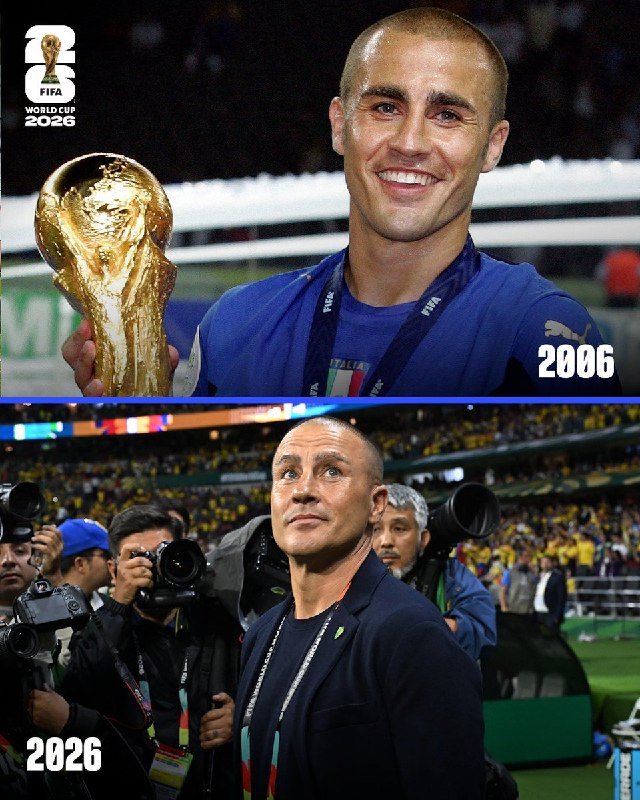
The 2026 FIFA World Cup begins this week as the largest in the competition's history, a 48-team tournament spread across three host countries, with kickoff now measured in hours rather than days. On 11 June 2026 (UTC) the machinery is in motion: the visa queues are open, the corporate hospitality blocks are sold through, and the on-field product — the actual football — is being remade in real time by a rule change nobody saw coming six months ago.
This is a tournament arriving under a quiet set of stresses. FIFA president Gianni Infantino spent the eve of the event defending the federation's handling of visas and the cost of tickets to fans, a defence that acknowledges the public friction without conceding the substance of it. Simultaneously, a last-minute amendment to the rules around corner kicks — the dead ball — signals that the sport's governors themselves expect the set-piece era to define the summer. Forty-eight teams, one ball, and a governing body that appears to be refereeing its own competition before a ball is kicked.
The expanded field and the price of the bigger tent
A 48-team World Cup is, on its face, a concession to the sport's global constituency. CBS Sports' team-by-team guide, published 10 June 2026 at 16:17 UTC, lays out a stated reason to support each of the 48 nations, an exercise that only makes sense if the field itself is treated as a selling point. The optics matter: more flags, more markets, more broadcast rights inventory to monetise. The arithmetic matters more. FIFA's commercial model rests on the per-match value of a tournament fixture, and a group stage that runs from 64 matches to 72 matches is, in blunt financial terms, 12.5% more inventory.
Infantino's 11 June 2026 (05:10 UTC) defence of the federation's visa handling and ticket pricing, as carried by Reuters, is the public-facing half of that arithmetic. The argument is that the tournament is, structurally, more accessible than its predecessors: more teams, more host cities, more games staged inside the continental United States, Canada, and Mexico. The unstated counter-argument, embedded in the volume of fan complaints that prompted the defence in the first place, is that the per-fan cost of attending a 48-team tournament has risen faster than the per-fan probability of seeing a consequential match.
The set-piece era and FIFA's quiet rule change
The more revealing story sits lower down the fixture list. A 10 June 2026 CBS Sports analysis makes the case that international football has entered a set-piece era, with corner kicks and free-kicks delivering a disproportionate share of the goals in the qualifying cycle and in club football's most recent European season. The premise is not new — analysts have been flagging the trend for two years — but FIFA's response is. According to CBS Sports, the federation has, in the final months before the tournament, amended the law of the game to limit defensive crowding in the penalty area at corners. The implication is that the governors believe dead-ball situations have become too efficient for the spectacle they want to sell.
That is, on the merits, a defensible position. Set-piece goals cluster; open-play goals drift. A tournament that turns into a sequence of set-piece conversions is a tournament that compresses unpredictability, and unpredictability is the broadcast product. The counter-position is more uncomfortable: the rule change is being read by some of the game's former players, cited in the CBS Sports piece, as evidence that the international game is being tailored, in real time, to the preferences of an audience that consumes football increasingly as highlight-reel content rather than as a 90-minute contest. Both readings can be true.
Coverage, framing, and the BBC's daily tease
Coverage of the World Cup's eve is doing what tournament coverage always does: parsing the field, mining the rosters, gamifying the wait. The BBC's 11 June 2026 (05:45 UTC) "Who am I?" quiz on its World Cup star series is a small, telling artefact of the format. The framing is participatory rather than analytical. The implicit message is that the consumer's job, in the weeks ahead, is to learn the names — the 48-team field is dense enough that most of the squad lists will be unfamiliar even to committed fans — and to acquire the talking points before the games begin.
This is not a criticism. It is a description of how a tournament of this scale gets metabolised. The risk in the format is that the participatory framing crowds out the analytical one — that the consumer learns the mascot and the kit and not the structural fact that the federation running the show is also the federation selling the show.
What to watch over the next 30 days
Three fault lines are worth tracking. First, the visa and ticket economy: whether Infantino's defence holds, or whether the bottleneck stories — fans turned away at the border, hospitality packages resold at multiples of face value, secondary markets dictating who actually attends — harden into a political liability for the host federations. Second, the set-piece effect: whether the corner-kick rule change produces the open-play uptick FIFA is betting on, or whether elite set-piece coaches simply re-engineer their routines inside the new rules. Third, the 48-team field itself: whether the expanded group stage produces the upset density the format promises, or whether the structural advantage of the traditional powers reasserts itself in the knockout rounds.
The honest answer, on the eve of kickoff, is that nobody knows. The sources do not specify which way any of these breaks. What the sources do show, taken together, is a tournament being staged at a scale the sport has never attempted, governed by a federation that is actively rewriting the rules of its own product, and sold to a global audience that has been trained, over a decade of highlight-reel consumption, to mistake scale for spectacle.
This Monexus piece is built from wire reporting by Reuters and CBS Sports plus BBC Sport's tournament coverage; we have foregrounded the structural questions — cost of entry, the corner-kick rule change, the politics of the expanded field — that the daily wire tends to treat as background colour.
Wire provenance
This editorial synthesis draws on the following public wire/social posts:
- http://reut.rs/4uxvH5d