World Cup 2026 kicks off a media arms race as FIFA rolls out its awards slate
Hours before the first ball is moved, FIFA has formalised its individual awards for the 2026 World Cup while broadcasters scramble to repackage a 48-team, three-host-nation tournament for a fragmented attention economy.
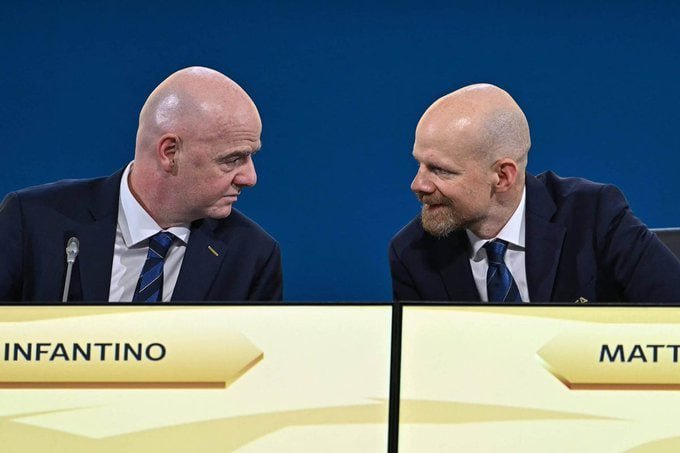
At 12:05 UTC on 11 June 2026, FIFA confirmed the structure of the individual awards that will be handed out across the duration of the 2026 World Cup — the first edition of the tournament to be staged across three host nations and the first to feature 48 teams. Eleven minutes later, the sport-business aggregator Transfermarkt published the day's full match schedule. By the time the first whistle blew, BBC Sport had already launched a redesigned mobile experience built specifically around the tournament, framing the event in marketing copy as "bigger than ever."
The sequencing — awards first, fixtures second, platform rebuilds running underneath both — captures the real story of a World Cup that begins less as a sporting competition than as a content-rights negotiation with goals. The on-pitch product is unprecedented: 104 matches instead of 64, played across the United States, Canada and Mexico, with the final scheduled for 19 July 2026. Off the pitch, the calculus is at least as large. FIFA has spent the past two years selling broadcast and digital rights into an attention economy that bears little resemblance to the one that monetised the 2022 tournament in Qatar.
What FIFA has actually formalised
The awards slate announced at 12:05 UTC on 11 June is the visible half of a much longer commercial build. FIFA's individual awards at recent tournaments have stretched well beyond the traditional Golden Ball and Golden Boot: a Golden Glove for the best goalkeeper, a Best Young Player award, and a FIFA Fair Play trophy have all become standard. The 2026 edition extends that pattern by attaching the awards calendar to a tournament that runs for nearly five weeks of continuous group play, giving sponsors and broadcasters recurring inflection points rather than a single climax.
For rights holders, that rhythm is the point. A 48-team, three-nation format produces matches almost every day, and FIFA's incentive is to monetise each of them as a discrete content event. The awards architecture — formally unveiled on the eve of kick-off — gives broadcasters narrative pegs on which to hang highlights packages, podcast cycles, and short-form social cuts. None of this is accidental. The schedule release circulated by Transfermarkt at 12:16 UTC is, in operational terms, a list of inventory slots that UEFA never had to fill.
The platform war underneath the tournament
The third piece of the day's news is the one most likely to be misread as a marketing footnote. BBC Sport announced on 11 June the launch of a redesigned app for the 2026 World Cup, with the public-facing pitch — that the tournament is "bigger than ever" — sitting alongside a quieter structural argument: that the audience for elite men's football is now primarily mobile, primarily short-form, and primarily on-device. The BBC is not the only broadcaster making that calculation. Rights to the 2026 tournament are split across multiple packages in the United States, Europe and Latin America, and the commercial logic of every one of those packages depends on a delivery layer that resembles Netflix or TikTok more than it resembles the linear broadcast of 2018.
This is the pattern worth naming. The growth in the World Cup's on-screen inventory — more matches, more nations, more venues — has been matched, almost dollar for dollar, by a fragmentation of the platforms on which those matches are watched. FIFA's 2014 deal cycle, the 2018 cycle, and the 2022 cycle all presumed a primary screen and a primary broadcaster per territory. The 2026 cycle cannot make that assumption, and the BBC's app is the publicly funded end of a much larger commercial scramble by private platforms to claim the same viewer.
The counter-read: does scale actually help anyone?
The case against expansion is older than the 2026 edition, and it has not been resolved. A 48-team World Cup dilutes the qualifying path: more entrants, easier routes, weaker group-stage football. The commercial counter-argument is that every additional match is a sellable unit, and that the political case for expansion — bringing the Caribbean, central Africa, and the Pacific Islands into the same gate-receipt ecosystem as the traditional powers — is worth the sporting cost. FIFA has chosen scale. The awards slate and the schedule, both published within fifteen minutes of each other on 11 June, are the institutional artefacts of that choice.
There is also a quieter counter-read. Broadcasters are buying the rights to a tournament whose audience behaviour is migrating away from the live, linear viewing that traditional rights packages reward. FIFA's expansion gives them more inventory; the audience's migration gives them less certainty about how that inventory will be consumed. The BBC's app is, in that sense, a defensive product — a way to keep the licence-fee payer inside a BBC-branded environment while the underlying attention economy pushes them toward social-first discovery. The BBC is not alone in this defensive posture, and the 2026 cycle will test whether the defences hold.
What the next thirty days will actually show
The structural frame is straightforward. FIFA has built a tournament whose commercial logic rewards density — more matches, more awards moments, more narrative beats per week — and whose delivery layer has fragmented under its feet. Both of those conditions are likely to persist beyond 2026. The 2030 edition, already awarded to a three-continental hosting arrangement spanning Morocco, Portugal and Spain, will inherit the same inventory model and the same platform problem.
The immediate stakes are concrete. Rights holders are betting that the 2026 World Cup will be the last tournament of the linear era — the final one in which a primary broadcaster per territory can claim the cultural event as a whole. The audience, increasingly, will decide whether that bet pays. The BBC's app launch, the FIFA awards slate, and the 104-match schedule, all published in a single hour on 11 June 2026, are the opening positions in a negotiation that will run well past the 19 July final.
Desk note: Monexus treated the trio of 11 June releases — FIFA's awards confirmation, Transfermarkt's schedule, and the BBC Sport app launch — as a single commercial event rather than three separate news items, because the structural story sits in the alignment.
Wire provenance
This editorial synthesis draws on the following public wire/social posts:
- https://t.me/s/transfermarkt
- https://t.me/s/transfermarkt