Tehran's Hormuz Doctrine: How Araghchi's 'Memorandum' Deal Reshapes the Gulf's Maritime Order
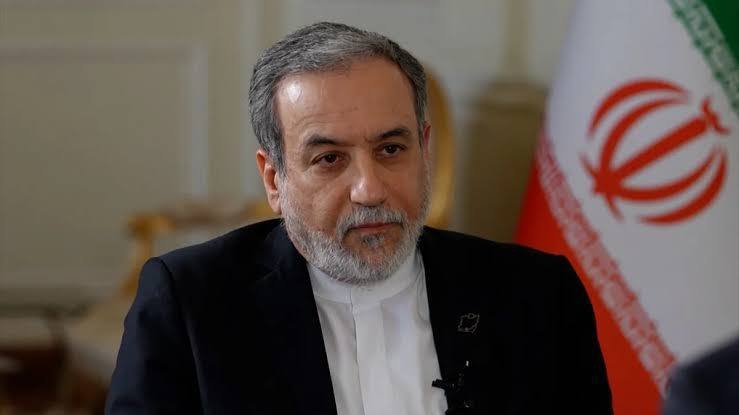
On the evening of 12 June 2026, Iran's foreign minister Abbas Araghchi laid out, in a series of on-camera statements circulated by Telegram channels including DDGeopolitics, the architecture of what he called a coming "memorandum" with the United States — a deal in which Iranian assets held abroad would be released, a new legal regime for the Strait of Hormuz would be written, and compliance would be guaranteed by the structure of the deal itself rather than by trust. The timing matters: the Strait still carries roughly a fifth of seaborne oil, and any revision of who writes its rules is a revision of who can interrupt global supply.
What Araghchi described, taken in full, is not a confidence-building measure. It is a unilateral doctrine dressed as a bilateral compromise — and it deserves to be read on its own terms, without the reflexive Western framing that treats any Iranian claim to maritime authority as theatrical.
The three pillars Araghchi set out
The first pillar is asset release. "Once the memorandum is signed, our assets will be released — and none of our assets can be frozen again," Araghchi said, per DDGeopolitics's circulation of his remarks. The phrasing is precise: the ask is not just for the return of previously frozen balances, but for a forward-looking legal commitment against future seizures. In a sanctions architecture that has become a routine instrument of US policy, that demand — permanent immunity from re-freezing — is structurally novel.
The second pillar is a rewrite of the Hormuz rulebook. Araghchi argued that "the entire strait lies within the territorial waters of Iran and Oman — no international waters lie between them," and proposed that "a legal regime must be established, in accordance with international law." He added that "levying tolls is not accepted" — a pointed signal to Gulf neighbours and to Western navies that any future framework will not, on Tehran's terms, look like a Suez- or Panama-style concession system. The Strait, in this framing, belongs to its littoral states; outside powers participate as guests, not principals.
The third pillar is a built-in enforcement mechanism. "If the agreements of the first stage are not honored, we will not proceed to the second stage," Araghchi said. "That in itself creates a guarantee." The deal, in other words, is phased — and the second phase is conditional on delivery. This is the part of the package most likely to be misread in Western commentary, which tends to assume that any conditionality is a failure of nerve rather than a feature of the design.
What the deal is, and what it isn't
The mainstream Western wire framing of any US-Iran deal is a familiar one: a transactional exchange in which Iran trades nuclear constraint for sanctions relief, with maritime issues handled separately, if at all. Araghchi's presentation collapses those categories. The asset question, the Hormuz regime, and the nuclear file are being bound into a single memorandum — with compliance on one track gating progress on the others.
The most plausible alternative read is that this is a negotiating posture rather than a settled position, and that the territorial-waters claim, in particular, will soften once draft texts begin to circulate. Oman, the indispensable counterparty on the southern shore, has not, on the record available in these source items, endorsed or rejected Araghchi's framing. A doctrine that requires Omani concurrence is, in practice, a doctrine that will be negotiated into something narrower.
A second, harder read is that Tehran is testing whether Washington will, in writing, accept an Iranian veto over future sanctions. If it does, the precedent extends well beyond this deal — to any future round of financial pressure, on any Iranian entity, for any reason. The frozen-asset clause is the load-bearing wall of the whole arrangement.
The structural frame, in plain language
For four decades, US policy toward the Gulf has rested on a quiet assumption: that the maritime commons can be policed by a single extra-regional navy, that chokepoint traffic is interruptible at will, and that Iranian sovereignty over its own coastline is negotiable. Each of those assumptions has frayed. Iranian drone and fast-boat capabilities have made Hormuz a genuinely contested space; the 2019 seizure of the Stena Impero and subsequent tanker incidents demonstrated that transit insurance premiums now reflect that contestation. Araghchi's doctrine is the political translation of a military reality that has already arrived.
The pattern here is the same one visible elsewhere in the global economy: the incumbent order's writ is contracting to the waters it can actually control, and a successor arrangement — written by the regional powers themselves, in their own legal language — is being drafted in plain sight. The dollar dimension matters too. Frozen-asset release is not just liquidity; it is recognition that the weaponisation of dollar-clearing has a half-life, and that half-life is now visibly shortening.
Stakes, and what remains unresolved
If the memorandum holds, the winners are clear. Iran regains access to funds held abroad and acquires, for the first time, a written guarantee against repeat seizures. Oman consolidates its role as indispensable Gulf mediator. China and India — the two largest Hormuz-dependent crude importers — gain predictability they have not had since at least 2019. The relative losers are the Western navies whose presence in the Gulf is justified in part by the assumption that transit governance is a global, not a littoral, responsibility.
The honest list of what remains uncertain is longer than the list of what is settled. No signed text is in the public record. The nuclear file, despite being bound to the rest, retains its own inspection and verification architecture that has not, in these source items, been specified. The Omani position is unrecorded. And the clause Araghchi identifies as the deal's guarantee — refusal to proceed to phase two — works only if Washington accepts that a phase one that delivers less than full asset release is, from Tehran's side, a phase one that has been honoured. That is not an assumption either side has historically been willing to make about the other.
The doctrine is on the table. Whether it survives contact with the drafters is the question for the weeks ahead.
This publication frames maritime-governance deals as legal-architecture stories first and security stories second; the wire has tended to invert that order.
Wire provenance
This editorial synthesis draws on the following public wire/social posts:
- https://t.me/DDGeopolitics
- https://t.me/DDGeopolitics
- https://t.me/DDGeopolitics
- https://t.me/DDGeopolitics