Araghchi puts a price tag on Hormuz as Tehran and Washington inch toward a remote-signing
Iran's foreign minister used a 12 June interview to set three hard preconditions before any deal with Washington: a 14-clause package, no quid pro quo, and a new fee regime for the Strait of Hormuz.
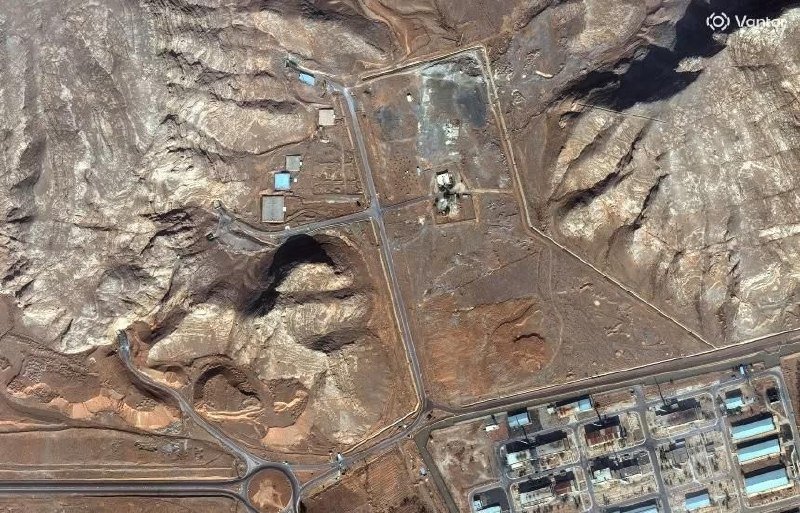
At 19:44 UTC on 12 June 2026, Iran's Foreign Minister Abbas Araghchi walked into a studio and, in the space of roughly an hour, redrew the political map around the Strait of Hormuz. The strait, through which roughly a fifth of the world's seaborne oil passes, would no longer be run on the terms of the pre-war order, he said. Services that have been free for decades would now carry a fee. And the deal under negotiation with the United States — the so-called Islamabad Memorandum — would not be a sequence of concessions but a single 14-clause package, signed remotely in the coming days, with no public airing of the text until both sides have completed their internal procedures.
That is the message Tehran wants on the record before any handshake in Islamabad, Muscat, or a video link. The thread running through Araghchi's remarks is unmistakable: Iran intends to convert the leverage it accumulated during the 12-day war with Israel into a structural change in how the waterway is governed, how its nuclear file is closed, and how the United States is expected to behave. The question for markets, Gulf monarchies, and Western diplomats is how much of this is a negotiating posture ahead of a deal and how much is a new doctrine.
What Araghchi actually said
Three concrete claims anchor the interview, and they travel together. First, the Islamabad Memorandum "has never been so close to completion," Araghchi said at 20:45 UTC, while warning journalists against speculating about the text (sprinterpress on X, 12 June 2026). Second, the document is a single integrated package of 14 clauses, not a list of tradeable items: "We cannot say this is in exchange for that" (War Front Witness, 19:56 UTC, 12 June 2026). Third, on the 60-percent-enriched uranium stockpile that has been the IAEA's central concern, the Iranian position is that the material must be diluted, not handed over or shipped out — the only way, in his words, to "resolve the issue of materials enriched to the level of 60%" (englishabuali on Telegram, 20:57 UTC, 12 June 2026).
The Hormuz intervention is the politically loaded part. Araghchi said the waterway lies under the sovereignty of Iran and Oman, explicitly rejected the legal framing of an "international waterway" in Hormuz, and described the strait as one of Tehran's "most important deterrent tools" (Middle East Eye, 20:14 UTC, 12 June 2026; Open Source Intel on Telegram, 19:44 UTC, 12 June 2026). Future services — transit management, security escorts, the practical infrastructure that keeps tankers moving — will no longer be free of charge (Clash Report, 20:27 UTC, 12 June 2026). "The management of the Strait of Hormuz will not return to its pre-war state," Araghchi said, in remarks carried simultaneously by Open Source Intel and War Front Witness between 19:44 and 19:51 UTC on 12 June 2026.
Two further procedural points round out the picture. The memorandum will be signed remotely, "possibly in the coming days," once both governments complete their internal decisions (War Front Witness, 20:18 UTC, 12 June 2026). And there is a financial track embedded in the package — a mechanism to address Iran's frozen funds, which Araghchi confirmed exists while declining to discuss its specifics (Middle East Eye, 20:10 UTC, 12 June 2026).
The counter-narrative: a deal under stress
The dominant Western wire reading of the past fortnight has been that Washington and Tehran are converging on a face-saving framework that trades sanctions relief and a partial unfreeze for verifiable constraints on enrichment. Araghchi's interview, read on its own terms, supports that read — but only just. His comments on the "other side" being "inherently prone to bad faith" and willing to "exploit any opportunity to create problems in implementation" (War Front Witness, 19:49 UTC, 12 June 2026) are the language of a negotiator who has done this before and expects the agreement, if signed, to be tested almost immediately.
Two Iranian red lines complicate the convergence thesis. The first is structural: a single 14-clause package is a diplomatic device for preventing the kind of sequenced collapse that ended the 2015 nuclear deal. Once a clause is renegotiated, all fourteen move. The second is geographic: a fee regime on Hormuz services is not a bargaining chip. It is an assertion of sovereign control that, if implemented, would impose new costs on every Gulf-exporting monarchy and on every Asian buyer of Gulf crude. The United Arab Emirates and Saudi Arabia, which operate parallel pipeline routes specifically because Hormuz is a chokepoint, have strong reasons to treat that assertion as destabilising regardless of how the nuclear file closes.
A plausible alternative reading is that Araghchi is signalling upward — to a domestic audience that includes the Islamic Revolutionary Guard Corps and a hardline parliament — that no humiliation is being signed. From that vantage point, the fee language and the deterrent framing are insurance against a replay of the 2018 US withdrawal from the JCPOA. The evidence in the thread is consistent with both reads, and the source items do not allow this publication to adjudicate between them.
What is actually changing in the waterway
For three decades the practical governance of Hormuz has rested on a combination of Omani and Iranian naval coordination, US Fifth Fleet presence in Bahrain, and the unspoken assumption that passage is free at the point of use. Araghchi's announcement does not, on the public record, threaten to close the strait. What it does is rename it. By declaring that there is "no international waterway" in Hormuz — a position Iran has pressed at the International Maritime Organization for years — and by attaching a price to services that have historically been unpriced, Tehran is moving the waterway from a global commons governed by custom into a bilateral arrangement governed by contract.
The economic implication is concrete. Even a modest per-transit fee, applied to the roughly 20 percent of global seaborne oil that moves through the strait, would generate a steady revenue stream denominated in hard currency at a moment when Iran's oil exports are already under sanctions. The geopolitical implication is sharper: it would harden a two-tier oil market in which Gulf producers pay for the security Iran now claims to provide, and in which Iran's leverage over its Arab neighbours — and over China, the largest single buyer of Gulf crude — is no longer episodic but structural.
There is a real question, on the public record, of whether Tehran has the maritime capacity to enforce a fee regime against traffic that refuses to pay. The thread does not resolve it. What it does establish is that the political decision to move from a free-passage norm to a paid-service norm has been taken at the level of the foreign minister, and that the framing is being amplified in real time across Iranian-aligned and regional outlets.
Stakes and what to watch next
The narrowest read of the next seventy-two hours is procedural: a remote signing ceremony, followed by quiet IAEA consultations in Vienna on the dilution of the 60-percent stockpile. If that sequence holds, oil futures will probably soften, the rial will rally on the parallel market, and the diplomatic calendar will pivot to implementation disputes. If it breaks — over the sequencing of sanctions relief, over the frozen-funds mechanism, or over an Israeli signal that the 12-day war is a precedent rather than a closed chapter — the same Hormuz remarks that today read as a negotiating posture will be reread as a doctrine.
Three indicators will tell readers which way the wind is blowing. First, the text of the memorandum, or at least an agreed summary, will need to surface within days of any signing; Araghchi's refusal to discuss the text is sustainable only briefly. Second, Oman's public posture will be the cleanest signal of whether the fee framing is bilateral cover for an Iran-Oman condominium or a unilateral Iranian claim — the thread records Araghchi invoking Omani sovereignty, but not an Omani response. Third, the response from Washington will need to go beyond the cautious "talks are progressing" line that has dominated since the spring. The fee regime is a test of whether the United States is prepared to accept a rewritten Hormuz order as the price of closing the nuclear file.
The sources do not yet allow a confident answer to any of those. They do establish that on the evening of 12 June 2026, Iran's foreign minister chose to put three propositions on the global record at once: that a deal is close, that it will be a package, and that the waterway through which a fifth of the world's oil moves will not be governed as it was before the war. The first is reversible. The third, once a price is attached, is harder to walk back.
This article was written from wire and Telegram-channel reporting available as of 21:00 UTC on 12 June 2026. Where claims are attributed to specific outlets, the source item in the underlying thread is cited in the Sources list. This publication will update if and when the text of the Islamabad Memorandum is released.
Wire provenance
This editorial synthesis draws on the following public wire/social posts:
- https://t.me/wfwitness
- https://t.me/wfwitness
- https://t.me/wfwitness
- https://t.me/englishabuali
- https://t.me/ClashReport
- https://t.me/osintlive
Follow the event.
These dated source records provide context. They do not retrospectively verify this archive article.
Separate what the nuclear watchdog reported from what it could not determine after the June 2025 strikes.