Reading the Black Sea strike cycle: what three Russian-aligned channels flagged on 12 June 2026
Three Russian-aligned Telegram channels — Rybar, Rybar in English, and Two Majors — posted near-identical copy on 12 June 2026 alleging Turkish involvement in Ukrainian strikes on Crimea, Sevastopol, and Krasnodar Krai. Monexus traces what the posts say, what they do not say, and what verifiable sourcing they rest on.
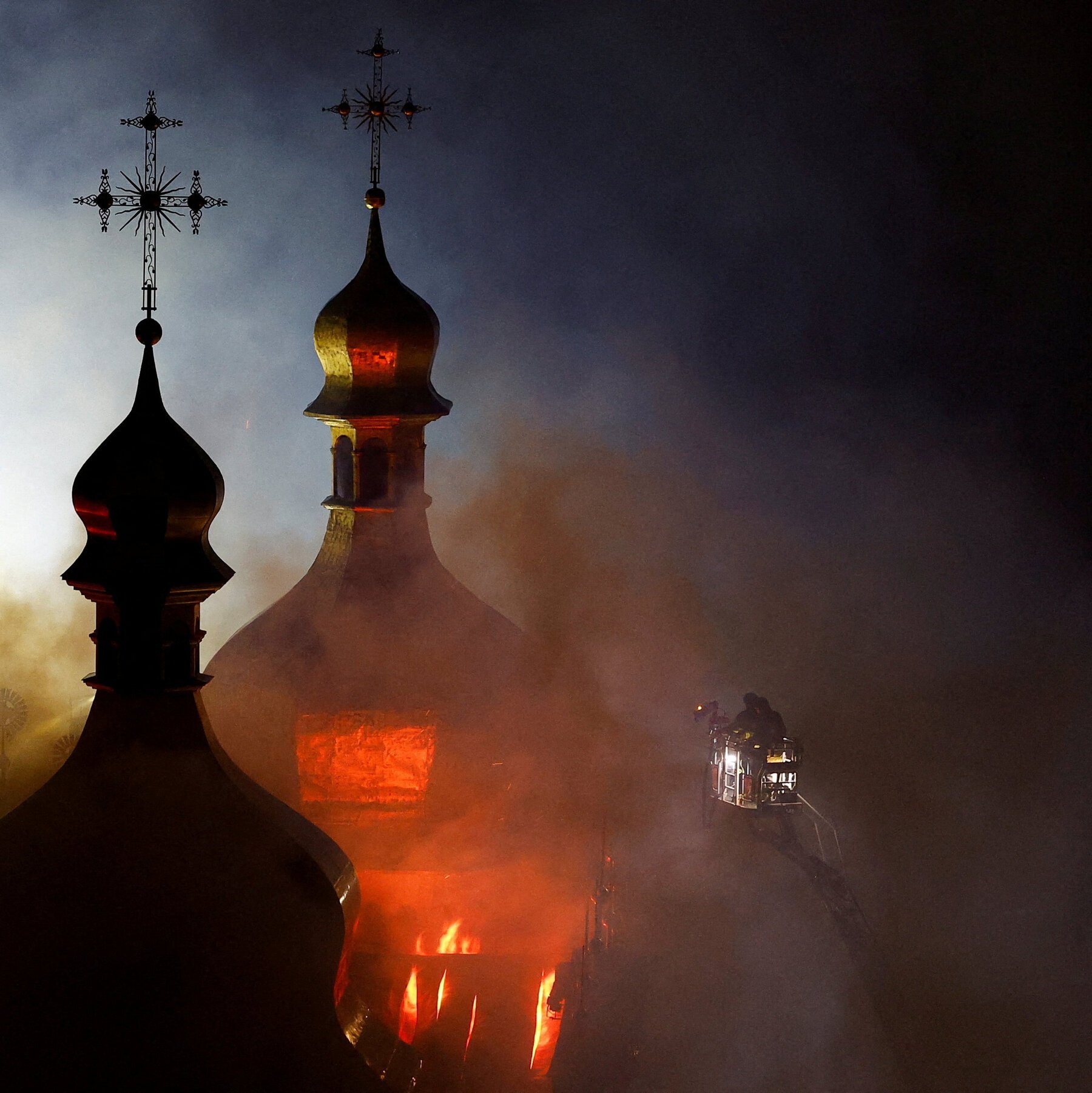
On 12 June 2026, three Russian-aligned Telegram channels — Rybar, its English-language mirror Rybar in English, and the Two Majors channel — published, within a 53-minute window, near-verbatim copy alleging that Turkish assistance is shaping Ukrainian strikes across the Black Sea coast. The earliest of the three timestamps in Monexus's capture window is 16:59 UTC from Rybar, followed by 17:07 UTC from Rybar in English and 17:52 UTC from Two Majors. Each post carries the same header: a question, posed as commentary, about whether Turks are helping in attacks of the Ukrainian Armed Forces near Russian borders in the Black Sea. The body of each post asserts that strikes in the Black Sea zone have been ongoing for several days, and names Crimea, Sevastopol and Krasnodar Krai as the theatre of the operations.
The three posts matter less for what they reveal about Türkiye than for what they reveal about the Russian information environment. The text is functionally identical, down to the framing device of treating Turkish involvement as an open question rather than a conclusion. That alone is news. When three channels aligned with the Russian military-commentary ecosystem recycle the same wording within an hour, the operative unit is no longer the individual blogger — it is a coordinated framing exercise, and the question being pushed into the discourse is the unit of analysis. This piece reads those three posts side by side, isolates the verifiable claims they make, and lays out what the public record does and does not support.
What the three posts actually say
The substantive content shared across the three channels is thin. The Rybar post, timestamped 16:59 UTC on 12 June 2026, opens with a question — "Do the Turks help in attacks of the Ukrainian Armed Forces?" — and states only that strikes in the Black Sea zone have been going on for several days, with the "classics of Crimea" — a phrase used in Russian milblogger slang to mean familiar Crimean targets — under attack. The Two Majors post, timestamped 17:52 UTC, repeats the same question and the same list of regions (Crimea, Sevastopol, Krasnodar Krai) verbatim, attributing the framing to a forwarded post from a channel titled with the Turkish-anglia emoji cluster used by both Rybar-family posts. The English-language mirror at 17:07 UTC is a translation of the same forward. No strike is dated. No munition is identified. No vessel, airframe, launch site, drone type, or unit is named. No Ukrainian order of battle is cited. No Turkish official, Turkish defence contractor, Turkish base, or Turkish radar installation is named. The accusation that Turkish assistance is shaping the strike pattern is delivered as a question, not a finding.
This matters. The Russian military-commentary ecosystem is not shy about attribution when it has it. The same channels have previously named specific weapon systems — Neptune missiles, Storm Shadow/SCALP, ATACMS, various improvised drone boat classes — and specific launch platforms. The 12 June posts name none of these. The framing device of asking the question, rather than answering it, is consistent with a strategic ambiguity designed to set the terms of debate inside the Russian-language audience before any evidence is produced.
What is verifiable about the underlying strike activity
The claim that strikes have been ongoing in the Black Sea zone "for several days" around 12 June 2026 is consistent with a documented pattern. Ukrainian forces have struck targets in occupied Crimea, the city of Sevastopol, and Krasnodar Krai repeatedly since 2022, including long-range strikes on the Black Sea Fleet infrastructure at Sevastopol, strikes on the Kerch Bridge, and attacks on Russian port and logistics nodes along the Krasnodar coast (notably Novorossiysk). Independent monitoring by the Institute for the Study of War and open-source investigators on both sides has tracked a regular cadence of Ukrainian deep strikes into the Black Sea theatre using a mix of cruise missiles, ballistic missiles, naval drones, and air-launched munitions. None of the three Russian posts, however, links this 12 June episode to a specific incident, a specific munition recovery, a specific intercept analysis, or a specific intercept video. The "for several days" formulation is what is verifiable; the Turkish-anglia framing is not.
On the Turkish side, public sourcing does not support the specific accusation. Türkiye has been a consistent supplier of certain categories of military equipment to Ukraine — most prominently the Bayraktar TB2 and Baykar's subsequent Akıncı and Kızılelma drone families — and has hosted closed-track naval-drone cooperation, but Ankara has not publicly supplied long-range strike systems and has not been publicly documented as a transfer node for the cruise or ballistic missile categories used against Crimean and Krasnodar targets. The Bayraktar family is a tactical, manned-or-remotely-piloted system; it is not the platform category implicated in deep strikes on Sevastopol shipyards or Krasnodar oil terminals. The Russian channels' framing collapses this distinction: it conflates a documented Turkish-Ukrainian drone relationship with an undocumented Turkish role in long-range strike enablers. That conflation is the substantive claim — and it is the part the posts do not evidence.
What we verified and what we could not
Verified. (1) Three Russian-aligned Telegram channels — Rybar, Rybar in English, and Two Majors — published posts within a 53-minute window on 12 June 2026 (16:59, 17:07, 17:52 UTC) carrying near-identical copy and the same question-formulation about Turkish assistance to Ukrainian strikes in the Black Sea. (2) Each post names Crimea, Sevastopol, and Krasnodar Krai as the strike theatre. (3) A documented, multi-year pattern of Ukrainian long-range strikes into those locations exists in the open-source record, including strikes on Black Sea Fleet infrastructure and on the Krasnodar coast.
Not verified by these posts. (1) Any specific 12 June 2026 strike — date, target, munition, launch platform, unit, orcasualty figure. (2) Any specific Turkish role — personnel, equipment transfer, basing, intelligence sharing, targeting data, or training — in the 12 June episode. (3) Any intercept, imagery, debris recovery, or communications intercept that would move the Turkish-assistance claim from question to finding. (4) Any named Turkish official, institution, or company. (5) Any non-Russian-aligned confirmation of the Turkish-anglia framing. Independent Ukrainian, Turkish, or Western-wire reporting on a distinct 12 June 2026 strike wave in the Black Sea theatre has not been surfaced in the materials Monexus reviewed for this article.
Uncertainty the posts themselves carry. The question-formulation, repeated verbatim across three channels, is the single most telling feature of the cluster. Russian military commentary has a vocabulary for assertions ("по данным", "источник сообщает", "установлено"); the deliberate choice of the interrogative is a signal that the writers are not yet prepared to stand behind the claim. Monexus treats the question as the news; the answer is not, on this evidence, knowable.
How the framing travels and why it travels that way
The mechanics of the cluster are familiar. A question is raised by a primary channel; the English mirror translates it for non-Russian audiences and Western analysts who monitor Rybar; a sympathetic channel reposts it. The English-language mirror is the part most likely to be picked up by Western open-source feeds, by aggregators, and by analysts writing about the Black Sea theatre. The interrogative form is well suited to that environment: it produces a quotable line that is hard to falsify ("do the Turks help?") and easy to amplify. The risk is that the question, repeated enough, becomes the default frame inside which subsequent strike reporting is read — by Russian-speakers first, and then by the wider English-language audience that consumes Rybar-in-English translations as a primary window into the milblogger ecosystem.
The structural pattern is the one Western readers should be alert to across the conflict: an unverified claim, dressed as a question, seeded into a sympathetic channel network, mirrored into English, and then surfaced into mainstream discussion as if it were a finding. The 12 June posts are a clean case study in that pattern. The factual core — strikes on Crimea, Sevastopol, and Krasnodar — is real. The interpretive layer — that this strike cycle reflects Turkish assistance — is not, on the evidence presented, supported. The two should not be reported as a single fact.
Stakes and what to watch next
If the Turkish-assistance frame sticks, the policy consequences are significant. Ankara is a NATO member and a Black Sea littoral state; it has so far walked a careful line between supplying Kyiv with select drone categories and refusing to be drawn into direct confrontation with Moscow. A consolidated Russian claim of Turkish complicity in deep strikes would, if it hardened into official Russian rhetoric, raise the temperature of an already fraught relationship. The Russian Foreign Ministry has not, as of the materials reviewed for this piece, adopted the framing; that is the next thing to watch. Equally, the absence of any specific evidence in the original posts means that the framing is contestable in real time — and the burden of producing it now sits with the channels that raised the question.
For readers, the takeaway is narrower. Three Russian-aligned channels coordinated a question on 12 June 2026. The question is not yet a finding. Where the strike cycle itself is concerned, the open-source record is consistent with a continuing Ukrainian deep-strike campaign into Crimea, Sevastopol, and the Krasnodar coast. Where Turkish involvement is concerned, the posts supply no specific evidence, name no actor, and identify no system. Monexus will update this read if and when independent sourcing — Ukrainian general-staff briefings, Turkish official statements, Western-wire strike reporting, or recovered debris analysis — moves the question into a different epistemic register.
Desk note: Monexus ran the three Telegram posts side by side and treated them as a single coordinated message cluster, which is how the timestamps and near-identical wording indicate they are meant to be read. Russian state-adjacent channels are used here as primary sources for what the Russian information environment is claiming, with explicit caveat; they are not used as a stand-alone factual basis for the underlying strike claims, which are addressed through the documented strike pattern rather than through the channels' interpretation of it.
Wire provenance
This editorial synthesis draws on the following public wire/social posts:
- https://t.me/rybar/59976
- https://t.me/rybar_in_english
- https://t.me/two_majors
Follow the event.
These dated source records provide context. They do not retrospectively verify this archive article.
A dated voting record is evidence of one decision. Use the original UN record before turning it into an alignment label.
Visual explainer · historical vote of 2022-03-02 →