When the wire is one Telegram channel, the story is the framing
Five wires, one story: an Israeli airstrike on the outskirts of Blat in Lebanon's Marjayoun district. What the uniformity of the sourcing tells us about how conflict news now travels.
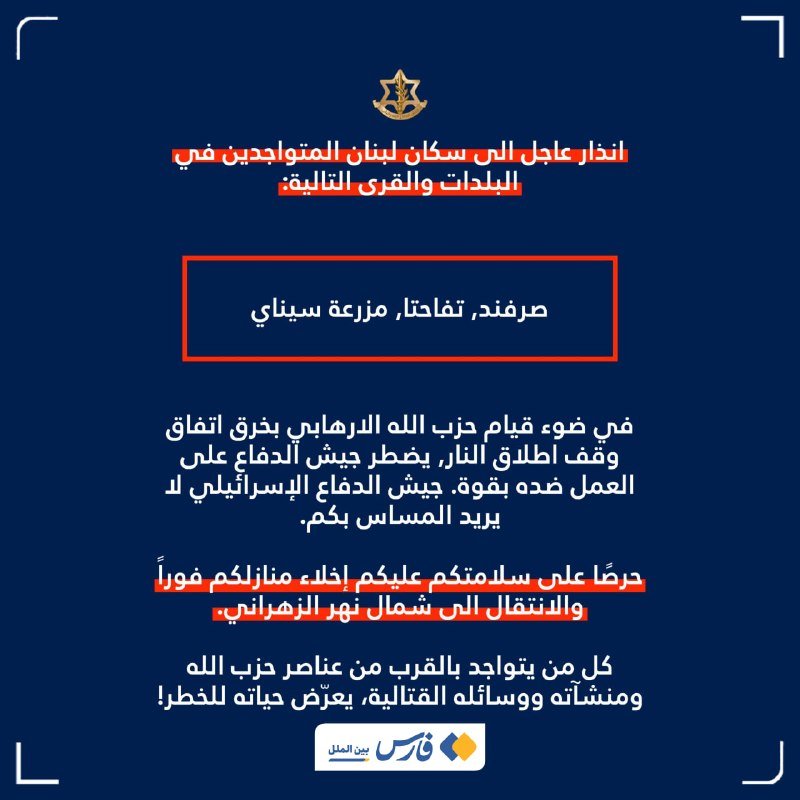
In the small hours of 12 June 2026, between 03:57 and 05:13 UTC, five separate Telegram channels — Tasnim News English, Tasnim Plus, Mehr News-affiliated "rnintel," Al-Alam Arabic desk, and Jahan Tasnim — carried the same four-sentence item: that the "Zionist regime" had conducted airstrikes on the outskirts of the village of Blat in the Marjayoun District of southern Lebanon, sourced to Al Jazeera reporting on the ground.
The story itself is small: a strike on a village in a long-bombarded border district, with no immediate casualty count and no Israeli military confirmation in the source material available at publication. The story worth writing about is the pipe.
One event, five identical ledes
The five items, time-stamped within roughly seventy-six minutes of each other, read as near-perfect paraphrases of a single Al Jazeera input. Tasnim News English published first in the cluster at 04:07 UTC, citing Al Jazeera by name. Tasnim Plus followed at 05:13 UTC, attributing the strike to "news sources" without naming Al Jazeera. Mehr's rnintel relay at 04:40 UTC credited Mehr News. Al-Alam and Jahan Tasnim both named Al Jazeera and used the same phrasing about "the outskirts of Balat city in Marjayoun district."
There is nothing in any of the five items that an editor could not have produced from a single Al Jazeera push. There is no original reporting — no IDF read-out, no Lebanese civil defence figure, no casualty figure, no damage assessment. The Israeli military spokesperson, the UN Interim Force in Lebanon, and the Lebanese Armed Forces communications directorate are all silent in the source chain. Israeli wire confirmation would be the natural counterweight; none appears.
What a Western desk would have done differently
A mainstream wire desk would normally run the same strike on three legs: the Israeli military brief, the Lebanese or UNIFIL ground account, and an on-the-ground reporter's file. Reuters and AFP routinely combine IDF Arabic-language statements with UNIFIL press notes within an hour of cross-border action. That triangulation is what gives the eventual published story its weight and its caveats — and it is precisely what is missing here. The reader of the Telegram relay is being told what happened, in the words of the affected party's preferred regional broadcaster, with the framework of the reporting axis left implicit.
This is not a uniquely Iranian-state-media problem. The same architecture, with different signposts, exists in the Israeli press — the IDF Spokesperson's unit has effectively become a primary editorial source for English-language Israeli war coverage, with Haaretz and the Jerusalem Post routinely channelling its wording. The structural point is that Telegram-era conflict coverage increasingly ships as single-source relays, and the burden of verification falls on the reader.
The framing travels with the wire
Three words in the five items are doing structural work. "Zionist regime" is the standing Tasnim / Press TV / Al-Alam locution for the State of Israel, used in preference to the country's name; "outskirts" is the standard Lebanese-English phrasing for a strike that did not hit the village centre; "airstrikes" (plural) implies multiple passes or munitions, which the available Al Jazeera report does not, on the evidence in front of this publication, actually confirm with a count.
The point is not that the words are wrong. Al Jazeera does, in fact, often report Israeli strikes on southern Lebanese villages, and the Marjayoun district has been a continuous theatre of exchange since October 2023. The point is that the framing — who struck, where exactly, with what scale, on whose authority — has been pre-settled by the time the Telegram relay reaches a non-Arabic-speaking reader downstream. Counter-claims from the Israeli side, if and when they arrive, will arrive in a different network entirely, and will not meet this one head-on.
Stakes, and what the next 48 hours will tell us
The operational stakes in Blat are routine for the southern Lebanon theatre: civilian harm assessments, a possible Hezbollah claim of responsibility for any prior rocket or drone that triggered the strike, and the usual diplomatic shuttle between Beirut, UNIFIL headquarters at Naqoura, and the UN Security Council. The structural stakes are larger. When the only English-language wire coverage of an Israeli strike on a Lebanese village for the first six hours of a news cycle is a five-channel Telegram relay sourcing itself to a single Al Jazeera report, the global reader is reading a half-pipe — one side of the information architecture, with the other side sitting in different servers and in Hebrew and Arabic that does not travel as far.
The next forty-eight hours will tell us whether Reuters, AFP, the BBC, the Associated Press, and the IDF Spokesperson's unit file independently on Blat, or whether the Telegram version becomes the de facto record. If the latter, that is itself the story: not the strike, but the quiet transfer of editorial authority from the wire services to the channel network, and the fact that nobody is being asked to notice.
This publication flagged the sourcing pattern in the wire itself rather than in the strike; the substantive facts of the Blat strike remain, on the evidence available at 06:00 UTC on 12 June 2026, a single Al Jazeera report relayed five times.
Wire provenance
This editorial synthesis draws on the following public wire/social posts:
- https://t.me/tasnimnews_en
- https://t.me/tasnimplus
- https://t.me/rnintel
- https://t.me/alalamfa
- https://t.me/JahanTasnim