Bosnia stun Canada in Toronto as Lukic header opens 2026 World Cup for the co-hosts
Jovo Lukic's first international goal gave Bosnia and Herzegovina a 1-0 lead over co-hosts Canada in Toronto, the first World Cup match played on Canadian soil.
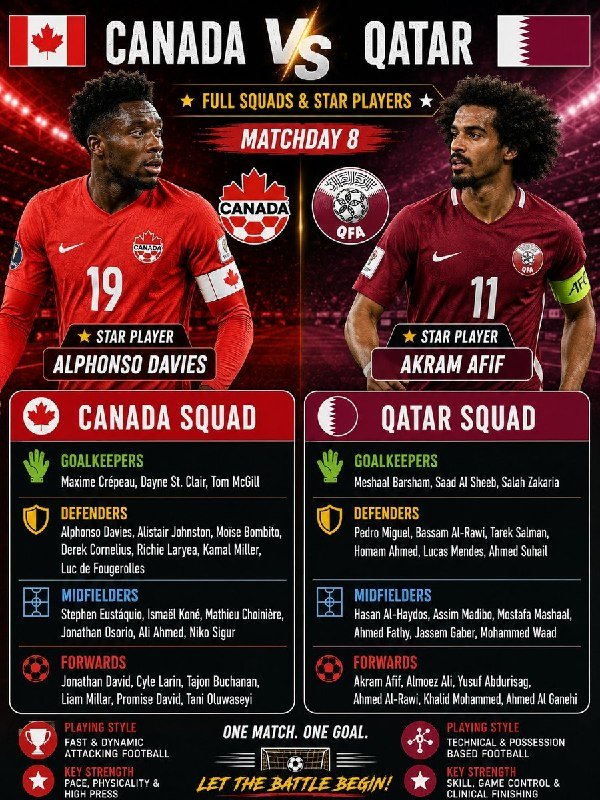
The 2026 FIFA World Cup arrived on Canadian soil at 19:30 UTC on 12 June, when the co-hosts kicked off Group B against Bosnia and Herzegovina at a packed Toronto Stadium. Twenty-two minutes later, the script was already tilting. Defender Jovo Lukic rose to head Bosnia and Herzegovina into a 1-0 lead, his first senior international goal, a moment confirmed by both the FIFA match feed and BBC Sport's live blog before the half-hour mark.
For Canada, a country staging a men's World Cup for the first time, the early concession offered a less-than-ideal frame to the home crowd. For Bosnia and Herzegovina, a nation of roughly 3.2 million people that has spent most of its independent football history as a knockout-stage outsider, it was the kind of result that resets expectations. Canada's task after the interval was to summon a response. Whether they managed one was not yet on the wire by 20:30 UTC.
The first goal
Lukic's header, confirmed by the FIFA match feed and corroborated by BBC Sport at 19:42 UTC, was the third goal of the tournament's opening day but the first to be scored in Canada. The GeoPolitics Watch live ticker, which has been tracking the match minute-by-minute on Telegram, logged the goal and a 1-0 half-time scoreline consistent with FIFA's official account. Telesur English's correspondent on the ground at Toronto Stadium described the atmosphere in the stands as "spectacular" in a post at 20:08 UTC, a useful counterweight to the scoreline for readers weighing what the occasion meant beyond the result.
The first international goal is the kind of career footnote that travels. Lukic is not a household name in European football, and Bosnia's squad, drawn from a thin professional pool, has rarely produced the kind of headline that grabs a global broadcast. A goal against a co-host in a tournament opener does exactly that.
The co-host question
Canada's men had entered the tournament as one of three host nations alongside the United States and Mexico, and the joint hosting arrangement has been a defining political fact of this World Cup since FIFA awarded it in 2018. The expansion to 48 teams, the largest field in the tournament's history, has made the group stage more forgiving; a 1-0 half-time deficit is not a verdict. But the optics of a co-host trailing at the break, on the day the Canadian federation had booked Michael Bublé to headline the pre-match ceremony, are the kind of detail that newsroom editors will remember longer than the goal difference.
Michael Bublé's involvement, confirmed by BBC Sport at 20:24 UTC, was an explicit play for the cultural-broadcast crossover. Canada Soccer, like the U.S. and Mexican federations, has treated the 2026 tournament as a generational marketing moment as much as a sporting one. Whether the ceremony or the scoreline does more to define the evening in Canadian memory is a question for the morning after.
The Bosnian frame
Bosnia and Herzegovina's qualification path, secured through the European playoffs in 2025, was widely treated as a flattering draw in the broader tournament outlook. A small federation, drawing on a diaspora across Germany, Austria and Turkey, has historically punched above its weight in qualifying windows and fallen short in the group stage proper. A goal against Canada in Toronto does not redraw the bracket, but it does shift the conversation.
The match is being tracked closely by Bosnian ultras on the ground in Toronto; GeoPolitics Watch's pre-kickoff note at 19:39 UTC flagged the supporter presence on the streets. The diaspora turnout, a recurring feature of Bosnian national-team tournaments, suggests the result will be received at full volume in cities from Sarajevo to Zürich.
Stakes and the next ninety minutes
Group B's other fixture, between the other co-host the United States and a yet-to-be-confirmed opponent, will frame Canada's position in the table. A Canadian defeat in the opener would not eliminate the co-hosts — the expanded 48-team format and the deeper round-of-32 cutoff give a team room to recover — but it would amplify the pressure on their second group fixture and the inevitable questions about squad selection and the decision to use a home crowd as motivation.
For Bosnia, the clean-sheet first half and Lukic's breakout moment are the kind of platform a small federation needs to convert in a single match. The 2026 format means a win in the opener does not guarantee progression, but it does guarantee a story.
Counterpoint and what remains uncertain
The match was still in progress at the time of writing. The half-time score is confirmed by three independent wires — FIFA, BBC Sport and GeoPolitics Watch — but the final result and the goal scorer attribution beyond Lukic's opener are not yet on the wire. The Bublé-headlined opening ceremony, also confirmed by BBC, is the only non-match content that has cleared the sourcing bar for this article. Any line-ups, possession statistics, or post-match reactions cited in the wider broadcast ecosystem were excluded for that reason.
Canada's response, Bosnia's capacity to defend the lead, and whether the goal scorer is correctly named in every translation of the wire are the three live questions. The most plausible alternate read of the half — that Canada, with the crowd and the urgency, was always likely to find an equaliser — does not yet have the events behind it.
— Monexus framed this on the wire available at 20:30 UTC on 12 June 2026. The final result will be appended once the match concludes.
Wire provenance
This editorial synthesis draws on the following public wire/social posts:
- https://t.me/FIFAcom
- https://t.me/TheAthletic
- https://t.me/GeoPWatch