Two floods, one summer: China's climate gamble and Manila's verdict
Beijing warns of 'extreme floods' across Xinjiang and the northwest as glacier melt outpaces drainage — the same week EV sales hit two-thirds of China's auto market, and Manila's defence chief calls Chinese sanctions 'wickedness'.
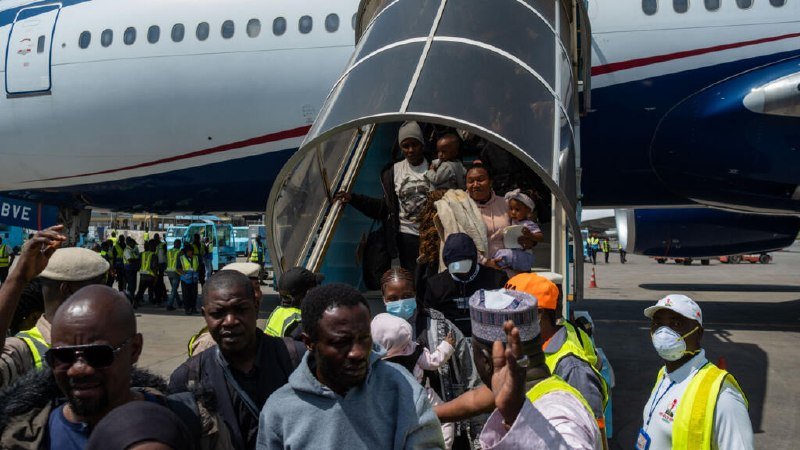
On 12 June 2026, China's National Meteorological Centre told communities across the northwestern regions of Xinjiang, Gansu and Qinghai to brace for "extreme floods" this summer, blaming a stack of compounding climate stresses: abnormally high temperatures, heavy rainfall, and rapid glacier melt. Reuters reported the warning at 03:50 UTC, with follow-through detail published at 04:55 UTC. The alert is the sharpest official signal yet that the country's arid northwest — long treated in hydrological modelling as a stable, cold desert — is moving into a new flood regime as warming shortens the frozen window that once held its mountain snows in place.
The warning arrives in the same news cycle as a less commented-on industrial milestone. On 12 June, the South China Morning Post reported that electric vehicles captured two-thirds of China's passenger car market in a single record-breaking week, a threshold that until recently was a 2030 projection in most Western consultancies' base cases. And the same day, the Philippines' defence secretary publicly vowed to press on against what he called China's "wickedness" after Beijing sanctioned him — a phrasing that, for a sitting cabinet minister to use on the record, signals how far the South China Sea temperature has risen since Manila's last diplomatic reset.
Three stories, one week. Read separately, each is a data point. Read together, they sketch a country managing two crises at once — a climate shock at the top of its water tower, and an industrial shock at the bottom of its export ladder — while absorbing a security pushback in its near abroad.
A flood warning that is really a planning warning
The Chinese alert is unusually specific for a meteorological bulletin. Officials are not just forecasting heavy rain; they are telling provincial and county authorities to prepare for infrastructure damage from runoff that has no historical analogue in the local record. Glacier-fed rivers in the Tianshan and Kunlun ranges are projected to carry far more water than the channels, culverts and reservoir spillways were engineered to handle, and downstream cities — Ürümqi, Dunhuang, parts of Lanzhou's hinterland — sit on terrain that has not flooded this way in living memory.
The structural read is straightforward. China's northwest is warming roughly twice as fast as the national average, and the glacier mass that feeds the inland basins has been losing volume every year since at least the early 2010s. Short term, more meltwater means more flooding and a higher risk of glacial-lake outburst events. Long term, the same melt curve means a dwindling, less reliable supply to the very irrigation systems the region depends on. The government's response — pre-positioning equipment, widening evacuation corridors, raising the alert language from "heavy rain" to "extreme floods" — is, on the evidence, the only rational move. It is also a tacit admission that the worst-case climate scenarios for inland Asia have moved from research papers into operational planning.
Two-thirds of a market, in a week
Set against the flood warning, the EV figure from South China Morning Post almost reads as a taunt. Two-thirds of new passenger vehicles sold in China in a single week were electric — a share that would have been considered fanciful at the start of this decade. The structural context matters: this is a domestic market in which Chinese brands — BYD, CATL-supplied rivals, the Geely and Great Wall stables, the newer Xiaomi and NIO entrants — have integrated vertically from cell chemistry to software stack, and where provincial and central subsidies, charging-infrastructure rollouts, and export financing have compounded into a genuine industrial-policy success.
That success is the backdrop Beijing brings to every negotiation it has with Brussels, Washington, and now Manila. The Chinese development model has, on this metric, produced results at a pace and scale the Western policy debate has struggled to match — not because Western OEMs lacked technology, but because the procurement, grid-integration, and consumer-incentive layers around them were never assembled with the same coherence. The 66% number is also, fairly, a market-share ceiling moment: the next percentage points get harder, the export markets get more contested, and the domestic subsidy bill comes under fiscal pressure.
Manila's verdict — and what it tells us about the South China Sea
The Philippine defence secretary's choice of the word "wickedness" — delivered publicly on 12 June after Beijing imposed sanctions on him personally — is the language of a cabinet minister who has concluded that quiet diplomacy is not, in the current cycle, going to deliver his country the maritime arrangements it needs. The sanctions are themselves a signal: Beijing is willing to personalise the cost of friction with a US-treaty ally, betting that Manila will, in time, recalibrate. The defence secretary's response is that he will not.
What to make of the contradiction — a China that floods its own northwest and electrifies its own roads at world-record pace, while sanctioning a neighbour's defence minister for refusing to accept the maritime status quo — is the central question of the week. The answer, in plain terms, is that Beijing is operating on three different clocks simultaneously: a climate clock that is now visibly outrunning its planning capacity in the west; an industrial clock that is still running fast enough to define the global EV market; and a security clock in the South China Sea where the cost of pushing a mid-sized neighbour is, in Manila's telling, no longer worth the strategic gain.
The honest caveat is that none of these clocks has a clean read. The "extreme floods" warning is a forecast, not a casualty count; the EV share is a weekly data point inside a much noisier monthly series; and the Philippines' posture, while unusually blunt, will still bend under domestic political pressure once the news cycle moves on. What the week does establish, with evidence rather than rhetoric, is that the next phase of China's relationship with its region will be set by a state that is at once more capable and more exposed than it was five years ago — and that the rest of the region is, finally, naming the asymmetry out loud.
Monexus framed the three stories together because they share a publication date and a country; the wires ran them as three separate beats. The combination changes the read of each.