Graham breaks with Trump over reported $300bn Iran reconstruction fund
A sitting Republican joins Democrats in warning that a reported $300 billion reconstruction package for Iran risks rewarding the regime in Tehran — and exposes fractures inside the GOP over the shape of any deal.
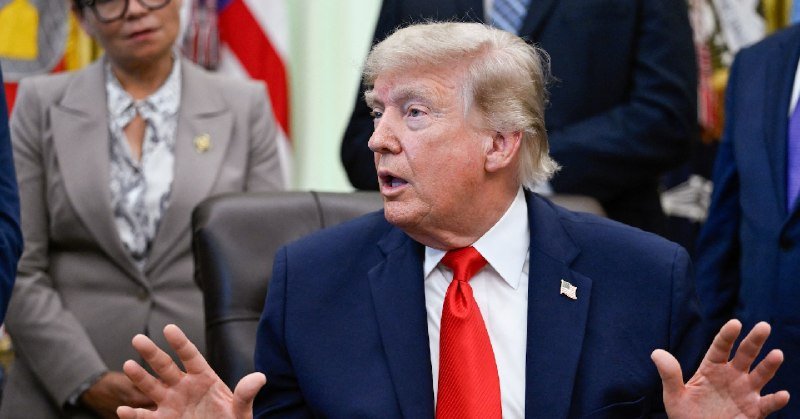
Senator Lindsey Graham, the South Carolina Republican and one of President Donald Trump's most reliable Senate allies on national security, broke publicly with the White House on 12 June 2026 over details of a possible United States agreement with Iran — warning that a reported reconstruction fund for Tehran would amount to a postwar giveaway to a hostile government. The intervention, carried in identical posts by the Iranian-affiliated channels English Abuali and Abu Ali Express and amplified by the war-monitoring aggregator Clash Report, signals that even the administration's tighter circle is not yet aligned on what an eventual deal is supposed to look like.
Graham's complaint is not about whether to negotiate. It is about the price tag. The senator, citing a reported figure of $300 billion, said that transferring anything like that sum to a government currently run by Tehran's clerical leadership "seems to be tone deaf," and added that the arrangement would be "akin to a Marshall Plan for Germany with the Nazis still in charge." The line is Graham at his most vivid, and it lands at a moment when the administration's own messaging on Iran has been uneven — public denials of the same Iranian-state reporting that Graham appears to be reacting to, alongside back-channel language about reconstruction assistance that has not been formally confirmed.
What the senator is objecting to
Graham's posts, timestamped between 14:58 and 15:36 UTC on 12 June, do not name a specific text. They refer, repeatedly, to "details published" — language consistent with reading Iranian state media coverage of the talks rather than an American or joint communique. The reported $300 billion figure, the senator said, would be "tone deaf" given Iran's conduct. The Marshall Plan analogy is rhetorical shorthand: postwar American aid rebuilt a defeated, denazified West Germany under allied supervision. Graham is arguing, in effect, that no equivalent supervisory mechanism exists for the Islamic Republic, and that an aid package of that size would simply bankroll the regime's domestic primacy and regional posture.
There is no official confirmation from the White House, the State Department, or any other named American institution in the source material that a $300 billion reconstruction fund is on the table. Iranian state outlets, which have published the figure most prominently, are not the canonical record of a US negotiating position. That distinction matters: the senator is opposing a reported number, not a finalised US offer. But the political signal is real. Graham is one of the most influential Republican voices on the Senate Foreign Relations and Appropriations committees, and his willingness to attack the framework — even obliquely, by reference to Iranian media — gives cover to Democrats who would rather see the talks fail.
The fracture inside the GOP
The more consequential fact is not that Graham is criticising Iran. He has done that for two decades. The consequential fact is that he is doing it in a posture that puts daylight between himself and the president he has backed on nearly every other national-security file. The posts quote Graham as saying he is "very pleased to hear from President Trump" that the Iranian-state reports of a $300 billion package are not accurate — a formulation that grants Trump deniability while still landing a punch on the underlying framework. It is the language of an ally who wants the deal to survive, but only on different terms.
That is where the story is. On a Republican bench otherwise inclined to defer to a second-term Trump on Iran, Graham is the early warning that reconstruction assistance — the kind of number floated in Iranian coverage and picked up by analysts in the Gulf and in Israel — will be a hard sell on Capitol Hill. A bipartisan coalition against any sizeable transfer to Tehran now has a public face, and it is not a Democrat. Any administration push to attach reconstruction money to a nuclear settlement will arrive in Congress with a pre-built opposition that includes the Senate's most prominent Republican hawk.
What the dispute is really about
The argument is, at root, a contest over what the United States is buying. Tehran's negotiating theory — visible in the Iranian-state coverage Graham is reacting to — is that any durable agreement must include the unfreezing of foreign reserves, the release of oil-export revenue, and a credible path back into the global financial system. The reconstruction framing is, in that reading, a euphemism for reparations, recognition, and rapid reintegration. It is the prize Tehran has been reaching for since the 2015 Joint Plan of Action collapsed.
The counter-theory, of which Graham is now a vocal proponent, is that the United States cannot transfer resources to a state that continues to underwrite armed groups in Lebanon, Iraq, Yemen and Syria, and that retains the capacity to reconstitute a nuclear programme on short notice. Under that reading, a large reconstruction fund is not a confidence-building measure but a strategic subsidy to an adversary. The Marshall Plan analogy is doing real work here: it sets the bar for aid as denazification, allied supervision, and the demilitarisation of the recipient. None of those conditions, Graham is saying, is in prospect.
What remains unsettled
The single most important caveat is that the source material for the $300 billion figure is Iranian state media, not an American statement of position. The English-language channels that carried Graham's posts, English Abuali and Abu Ali Express, are sympathetic to the Iranian negotiating line; Clash Report is an open-source-intelligence aggregator that lifts and amplifies text from across the wire. None of them is a US-government primary source. The honest reading is that a number is in circulation, that a senior Republican has attacked it, and that no Western or Israeli wire cited in the available material has independently confirmed the figure, the mechanism, or the conditions.
The contested ground includes: the size of any release of frozen Iranian assets; whether reconstruction assistance is a Western-funded programme, a Russian- or Chinese-financed alternative, or a multilateral facility; whether any such package is conditioned on a verified rollback of Iran's nuclear and ballistic-missile programmes; and whether the IAEA would have the access required to certify compliance. Those are the items the Senate will want to see before any committee markup. Graham's intervention, on the available evidence, is the first public sign that those answers are not yet ready, and that the White House has not yet closed the gap between its negotiating posture and its congressional coalition.
Stakes
If the gap does not close, the most likely outcome is not a failed negotiation but a thinner one — a deal that exchanges sanctions relief for nuclear constraints without the headline reconstruction component Tehran wants. That is a deal the administration can sign and a deal Graham can defend. If the gap widens, the deal collapses, the sanctions architecture stays in place, and the regional escalatory dynamic that has run since 2023 continues. Either way, the political centre of gravity on Iran policy in Washington is shifting, and on 12 June 2026, it shifted visibly inside the Republican caucus.
— Monexus framed this as a coalition story, not a deal story. The wires led on the Iranian-state figure; this publication led on the Republican fracture the figure produced.
Wire provenance
This editorial synthesis draws on the following public wire/social posts:
- https://t.me/englishabuali
- https://t.me/abualiexpress
- https://t.me/ClashReport
- https://en.wikipedia.org/wiki/Lindsey_Graham
- https://en.wikipedia.org/wiki/United_States%E2%80%93Iran_relations