Haaland swaps the pitch for the ice: Norway's striker courts hockey crowd ahead of World Cup
Erling Haaland and his Norway squad took in Game 5 of the Stanley Cup Final in Florida, a cross-sport cameo that lands three days before the striker's World Cup debut.
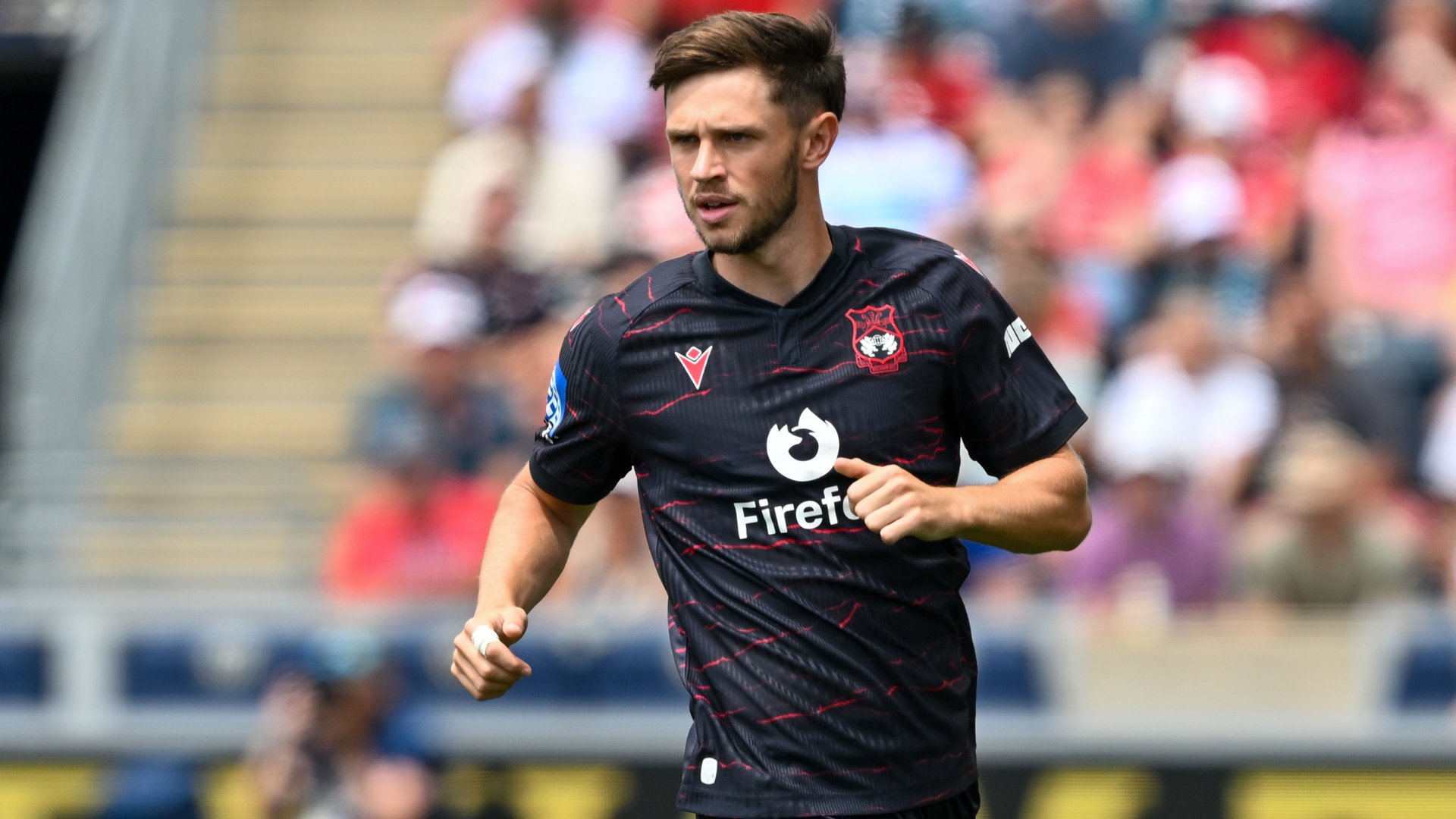
Erling Haaland, the Manchester City striker who will lead Norway into their first men's World Cup since 1998, spent the evening of 11 June 2026 watching hockey instead of playing it. The 25-year-old and his Norway squad were in attendance at Game 5 of the Stanley Cup Final in Sunrise, Florida, a trip the squad documented through Haaland's Snapchat account and that FIFA's official channels amplified within hours. The match itself — a swing game in a tied Final — was, for one night, the second most interesting thing on the ice.
The cameo is small in competitive terms. It is large in signalling terms. Three days before Norway open their World Cup campaign, the country's most recognisable footballer was embedded in a North American sport's marquee event, photographed in another sport's building. For a federation that has spent the last two decades trying to punch above its weight on the international calendar, the optics are useful — even if the underlying motive was, by all appearances, simpler: a squad in town early for a tournament wanted to see the show.
A different kind of scouting trip
Norway's men have not qualified for a World Cup in 28 years. They have not won a match at one in 30. Their opening fixture, scheduled for 14 June 2026, breaks a generational absence that has shaped how the country's federation markets its best player: not as the face of a contender, but as the carrier of a long-delayed return. Haaland's own club form at Manchester City — a fifth straight Premier League Golden Boot, a sixth consecutive season of 30-plus goals in all competitions — does the heavy lifting on the pitch. The off-pitch work is about converting individual stardom into national momentum.
Watching hockey in Florida is part of that brief, whether or not anyone planned it that way. The Stanley Cup Final draws an audience that is unusually attentive to the rituals of visiting stars: the pre-game warm-up, the bench cam, the celebrity cutaway. Haaland, who is two metres tall and recognisable to anyone who has glanced at a football broadcast in the last five years, registers in that frame without effort. FIFA's official account on Telegram reposted the image within hours; the league body's verified channels were doing distribution work that the Norwegian federation could not buy at any price.
The cross-sport economy of attention
The trip also illustrates how thin the boundary has become between sports property in 2026. The Stanley Cup Final is owned by the National Hockey League, a closed North American league whose international growth strategy is built on moments exactly like this one: a global football superstar in the building, captured on a global football superstar's own social account, redistributed through the most-followed football account on the planet. The NHL does not pay for that. It earns it by being the highest-leverage place for a tourist with a phone to be on a given evening.
Haaland, for his part, plays in a Premier League that has spent two decades turning visiting stars into its own marketing channel. He is fluent in the grammar of the visit: show up, look like you are enjoying yourself, let someone else handle the broadcast. Norway's football association gets a photograph that says "our best player is a world-stage athlete" without anyone having to say it. The hockey gets a photograph that says "our Final has crossover draw". The arithmetic works for everyone in the room except the people who were not in the room.
What it does, and does not, tell us about Sunday
None of this is a prediction. Haaland's appearance at a hockey game on the eve of a World Cup is a scheduling convenience, not a tactical tell. Norway's group, drawn from the European slots, contains opponents whose physical profile is closer to Haaland's than to the average NHL forward; the lessons of an evening at the rink do not transfer cleanly. What the visit does do is normalise a squad that has been working toward a single date for years, and remind the North American audience that the World Cup itself is a three-day event that does not need a press conference to introduce.
The harder question is whether the attention converts. Norway's federation has been disciplined about not over-promising: Ståle Solbakken's squad has spoken, throughout the qualifying campaign, in the language of "compete in every game" rather than "progress to the knockouts". The visit to a Stanley Cup game is consistent with that register. It is a photograph, not a manifesto. The match on 14 June will be the only press release that matters.
The picture that travels
What lingers is the image itself, and the speed at which it moved. From Haaland's Snapchat to FIFA's Telegram channel to a Wednesday morning BBC Sport story, the path measured hours, not days. The sports-media economy in 2026 is built for exactly this kind of cross-code handoff: a single photograph, taken by a single tourist, redistributed through official accounts, picked up by news organisations whose editors know the audience will click on the name. The Stanley Cup Final did not need the publicity. Norway's World Cup campaign did. That the two needs aligned in the same building on the same night is, in the end, the only real news.
A Monexus desk note: the wires carried the photograph but not the context — that a 28-year World Cup absence frames every off-picture Haaland makes. We add the framing the wires do not.
Wire provenance
This editorial synthesis draws on the following public wire/social posts:
- https://t.me/FIFAcom
- https://t.me/TheAthletic