Hezbollah claims drone and missile strikes on Israeli positions in southern Lebanon as cross-border tempo holds steady
Lebanon's Hezbollah says it struck Israeli soldiers in Tir Harfa and an artillery command post in Al-Adisa on 12 June 2026, the latest in a running series of claimed attacks since the November 2024 ceasefire.
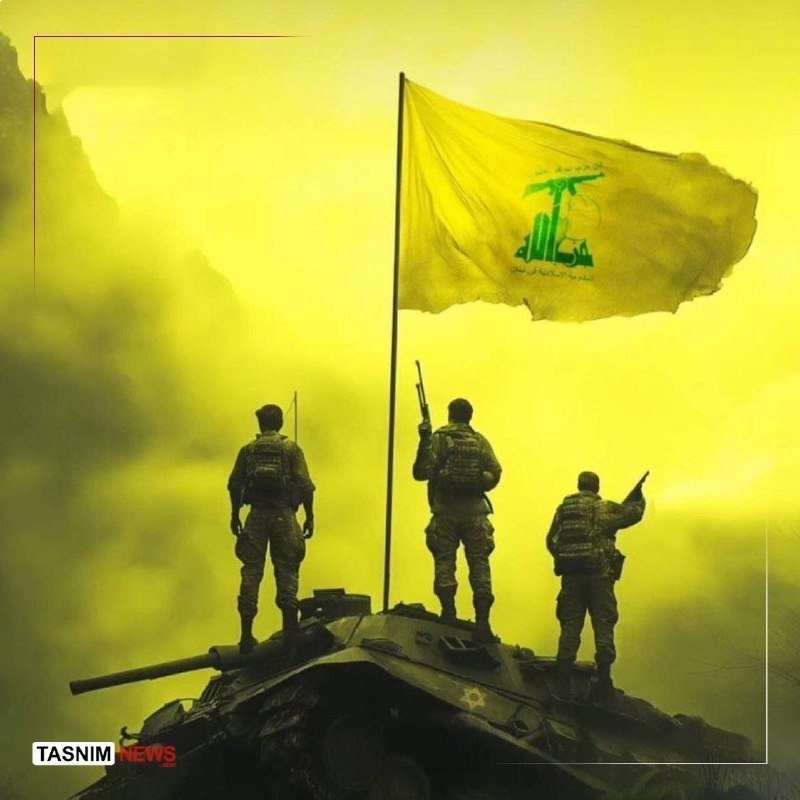
Lebanon's Hezbollah announced on Friday 12 June 2026 that its fighters had struck Israeli soldiers in the town of Tir Harfa and targeted an Israeli artillery command centre in Al-Adisa, both on the Lebanese side of the border, in a pair of operations the group says were carried out with drones and guided missiles. The claims, carried by Hezbollah-aligned outlets Al-Alam and the Iranian state wire Tasnim between 12:26 and 13:14 UTC, are the latest in a near-daily rhythm of cross-border strikes that has held since the November 2024 ceasefire ended the open war between Israel and Hezbollah.
What is unusual about the 12 June claims is the precision of the targeting language and the alignment of two separate regional outlets. Tir Harfa and Al-Adisa sit on the Lebanese side of the Blue Line in the sector that bore the heaviest ground fighting in late 2024. The Israeli military has not, as of publication, issued a public statement confirming or denying casualties from either incident. The structural pattern, however, is now well established: an Iranian-aligned combatant announces an attack, Iranian and Lebanese outlets amplify the claim, and Western wire reporting on the same strike follows hours later, when and if Israeli or UNIFIL sources corroborate.
What the claims actually say
The first Hezbollah statement, released via the group's official channels and repeated by Iran's Tasnim news agency at 13:08 UTC, asserted that "the fighters of the Islamic resistance targeted the soldiers of the Zionist army, who were entrenched in a building" in Tir Harfa. A companion report from Al-Alam at 13:14 UTC said the strike on Tir Harfa was carried out with a drone against a military vehicle. Tasnim's English feed used near-identical language — "Hezbollah drone attack against the Zionist regime" — and the Iranian outlet Jahan-Tasnim, also at 13:01 UTC, framed the Tir Harfa attack as having killed the targeted soldiers, a claim the other two outlets did not echo. Earlier, at 12:26 UTC, Al-Alam had circulated footage purporting to show a missile and drone strike on an Israeli artillery command centre in Al-Adisa, a town further east along the frontier.
Three things are worth flagging about the framing. First, the same incident produces three different versions across three allied outlets: Tasnim's English says "targeted"; Jahan-Tasnim says "killed"; Al-Alam's caption speaks of strikes on a vehicle in Tir Harfa and a command centre in Al-Adisa as though they are a single operation, when the timing and target language suggest they are two. Second, none of the three outlets have presented independent verification — no geolocated footage, no name of a confirmed casualty, no Israeli acknowledgement that would allow a fact-check. Third, Hezbollah's media arm has a documented track record of overstating Israeli losses in the post-ceasefire period; the November 2024 truce has not, on the evidence of the 12 June posts, brought with it a more verifiable communications discipline on the Hezbollah side.
The post-ceasefire tempo
The 12 June claims sit inside a pattern that has held, with brief pauses, since the ceasefire of 27 November 2024. Hezbollah, the smaller Iranian-aligned Palestinian factions in southern Lebanon, and the Israeli military have all continued to fire across the Blue Line, mostly in the form of anti-tank missiles, drones, and short-range rockets from the Lebanese side and airstrikes and artillery from the Israeli side. The United Nations Interim Force in Lebanon (UNIFIL) has logged the incidents; the Lebanese state has, in most cases, declined to claim ownership. Hezbollah's own media statements have, until recent months, been more circumspect — and the escalation in 2026 of explicit, named, geolocated claims of strikes on Israeli soldiers is, on the visible record, new.
What changed is partly rhetorical. The phrase "Islamic resistance," used by both Tasnim and Jahan-Tasnim, is the umbrella term Hezbollah increasingly applies to a wider coalition of Iranian-aligned groups operating from Lebanon, Syria, and Iraq, rather than to its own fighters alone. That linguistic move matters because it widens the pool of plausible attack attributions without requiring Hezbollah to claim direct responsibility for every strike. It also, on the same logic, makes it harder for an outside observer to determine who actually fired. Israeli military briefings in 2026 have made much the same point in reverse, frequently attributing strikes to "the Iranian axis" rather than to Hezbollah by name.
Why Tir Harfa and Al-Adisa
Tir Harfa and Al-Adisa are not random. Both lie in the Marjeyoun plain and the Bint Jbeil district respectively, the two areas where Israeli ground forces pushed furthest into Lebanese territory during the 2024 campaign. The Israeli military maintains a forward presence in both, in the form of either troops in cleared buildings, observation posts, or armoured vehicles on the roads; UNIFIL's own reporting from the post-ceasefire period has repeatedly noted that Israeli forces have not fully withdrawn to the international boundary. Hezbollah's choice of named targets, with named villages, is therefore a signal that the group is tracking and willing to publish the location of specific Israeli units, not merely firing into a general area.
That, in turn, has implications for the Israeli side's preferred framing. Israel has insisted, in statements to UNIFIL and in briefings to foreign press, that its presence in southern Lebanon is necessary to prevent the re-establishment of Hezbollah infrastructure in the area south of the Litani — a position that the Lebanese government disputes as a continued occupation of territory that should have been vacated under the ceasefire terms. The 12 June claims feed both narratives: the Israeli line that Hezbollah is reconstituting, and the Hezbollah line that Israeli forces are in fact still dug in on Lebanese soil.
What the sources do not tell us
The 12 June posts do not contain Israeli casualty figures, do not name a specific Israeli unit, do not reference UNIFIL reporting on either incident, and do not provide a video that can be independently geolocated against open-source satellite imagery. The claim that soldiers were killed in Tir Harfa appears only in Jahan-Tasnim and is not echoed in the Tasnim English wire, which is unusual for a sibling outlet; this publication was unable, on the material available before publication, to confirm or refute that framing. Israeli military statements on the 12 June incidents were not, at the time of writing, in the public record. Readers should treat the existence of the strikes as more likely than not — the operational pattern and the location-specific language are consistent with a real incident — but should treat the casualty claims and the specific target identifications as unverified at this stage.
A second uncertainty is the broader political effect. The 2024 ceasefire was brokered under heavy US and French pressure and includes a Monitoring Committee that the Lebanese government has criticised as toothless. A 2026 pattern of named, precise, video-accompanied Hezbollah claims against specific Israeli positions is a test of whether that committee is functioning, or whether the arrangement has effectively reverted to a low-intensity war by other means. The 12 June posts do not, on their own, answer that question — but they raise it more sharply than the diffuse "resistance operations" language of 2025.
Stakes
If the tempo of named, specific Hezbollah claims continues, the political space for the Lebanese government to argue that the ceasefire is holding will narrow further. Beirut has staked a large part of its post-2024 reconstruction argument on the claim that the ceasefire is being respected; named strikes on Israeli soldiers at named Lebanese towns make that position harder to defend in Beirut's dealings with Washington, Paris, and the Gulf donors underwriting the south. On the Israeli side, the same incidents give the government a continuing political warrant for its southern Lebanon posture, in a domestic environment where the political cost of acknowledging that Hezbollah retains direct-fire capability on the border has historically been high. The 12 June claims, in other words, are being read on both sides of the line for what they imply about the next time the tempo ticks up — not the one already here.
How Monexus framed this: the 12 June posts are Hezbollah-aligned claims circulated through Hezbollah-aligned outlets, presented here in their own words and then tested against the visible record. Where a sibling outlet went further than another on a casualty claim, the piece says so. The structural context — the post-November 2024 ceasefire, the Israeli forward presence in southern Lebanon, UNIFIL's role — is foregrounded because it is the frame the wire service reporting on these incidents will inevitably use, and a reader is better served by seeing the frame on the page than by inferring it.
Wire provenance
This editorial synthesis draws on the following public wire/social posts:
- https://t.me/alalamfa
- https://t.me/tasnimnews_en
- https://t.me/JahanTasnim
- https://t.me/alalamfa
Follow the event.
These dated source records provide context. They do not retrospectively verify this archive article.
Separate what the nuclear watchdog reported from what it could not determine after the June 2025 strikes.