Twenty hours in the Strait: How a Hormuz closure and an unwritten deal redrew the Gulf's leverage
A claimed blockade, a reported framework, and twenty hours of contradictory signals have left the world's most important oil chokepoint operating on nothing but a Reuters flash and a Polymarket line.
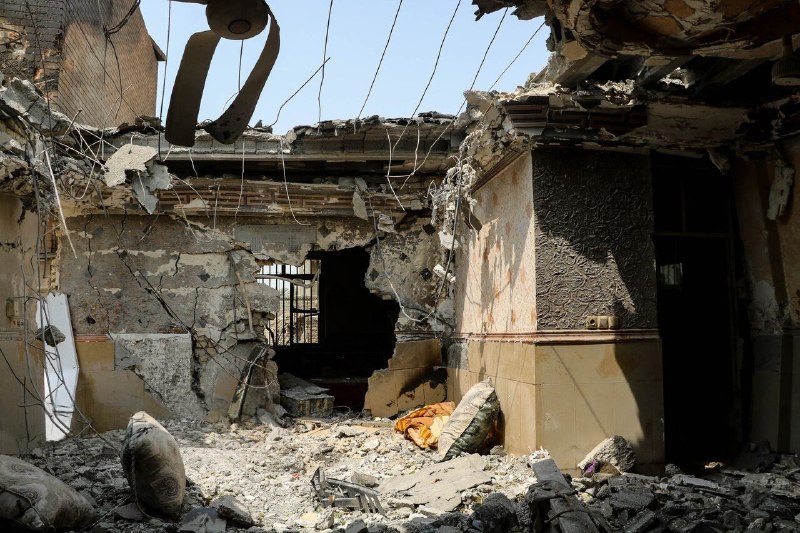
On 12 June 2026, in the space of roughly twenty hours, the world's most consequential energy chokepoint moved from a routine transit corridor to the live wire of a great-power negotiation. Iran's Khatam al-Anbiya Central Headquarters — the unified command structure of the Islamic Republic's armed forces — announced the "complete closure" of the Strait of Hormuz to oil tankers and commercial vessels, according to a post carried on X by TeleSUR English at 18:00 UTC. Less than an hour earlier, at 17:12 UTC, the Telegram channel Clash Report cited a senior U.S. official telling Reuters that a deal "accomplishes core U.S. objectives," would "reopen the Strait of Hormuz," and would see the United States "receive enriched nuclear material." At 17:27 UTC, the prediction-market account @Polymarket pushed a parallel flash: a senior U.S. official expected Washington to sign an Iran agreement in the coming days that would "reopen the Strait of Hormuz and dismantle Iran's nuclear program."
The mismatch between those wires is the story. A closure announced as final by one party, a deal described as imminent by the other, and a chokepoint through which roughly a fifth of seaborne crude ordinarily passes — all held in suspension for a full trading day by nothing more authoritative than social-media posts and a Reuters read-out. The pattern is familiar from past standoffs in the Gulf, but the speed of escalation and the inverted signalling — Tehran announcing a blockade while Washington announces a resolution — is less common, and it tells readers something specific about who currently holds the initiative in the room.
The announcement, and the counter-announcement
The Iranian announcement, carried on X by TeleSUR English at 18:00 UTC, is unusually categorical. Khatam al-Anbiya is not a routine spokesperson: it is the joint operational headquarters through which the regular army, the Islamic Revolutionary Guard Corps, and the broader force structure coordinate. "Complete closure to the transit of oil tankers and commercial vessels" is the language of a war-room communiqué, not of the foreign ministry. That does not settle the question of whether vessels are physically being turned around, but it does establish that Tehran is choosing to communicate this episode through its military command, not its diplomats.
The U.S. counterwire is different in kind, and the difference matters. A "senior U.S. official" speaking to Reuters — paraphrased on Telegram by Clash Report at 17:12 UTC — is the canonical format for trial-balloon diplomacy: deliberate, anonymous, designed to move a market or a counterpart without committing the principal to text. The three substantive claims in that flash — that the deal "accomplishes core U.S. objectives," that it "will reopen the Strait of Hormuz," and that the U.S. "will receive enriched nuclear material" — are the architecture of a settlement rather than a press release. The Polymarket-linked flash at 17:27 UTC, framing a near-term signing, is consistent with that read.
What is striking is the timing. The U.S. framework surfaced first, in the Reuters read-out, and Iran's closure landed minutes later. Read narrowly, that sequence could be read as Washington leaking a settlement and Tehran spoiling it. Read more carefully, it is more plausible as a coordinated warning: the U.S. telegraphed the upside, Tehran telegraphed the cost of failure, and both parties left themselves the option of declaring victory within a single news cycle.
What a Hormuz closure actually means
The Strait of Hormuz is the narrow seal between the Persian Gulf and the Gulf of Oman — at its tightest, roughly 33 kilometres wide, with shipping lanes on each side passing through even narrower two-mile corridors. Iran sits on its northern shore; Oman on the south. The choke is the only sea route from the Gulf's oil exporters — Saudi Arabia, the United Arab Emirates, Kuwait, Iraq, Qatar, and Iran itself — to the open ocean. Closure, even partial and brief, is the single largest supply-side risk in the global energy system, not because the volume lost is the dominant share of world production, but because the marginal barrel of Gulf crude sets the global price.
What is and is not happening at sea is, on the public record as of 12 June 2026, genuinely unclear. The Iranian announcement was framed in absolute terms, but no major wire has independently confirmed a halt to commercial traffic at the time of writing, and satellite verification cited on social channels does not yet amount to a continuous picture. The U.S. characterisation — that the strait will be reopened by a deal "in the coming days" — is, by contrast, forward-looking: a description of an expected future state, not a description of the present one. Between those two claims sits a window in which the global oil benchmark, the LNG market, and the politics of the Gulf are being priced on essentially no confirmed ground truth.
That uncertainty is itself a form of leverage, and it points to the structural question hanging over the whole episode.
The structural shift: sanctions, the dollar, and the negotiating table
The deeper frame is the renegotiation of where the U.S.-Iran relationship sits inside the global financial architecture. For two decades, the principal mechanism of pressure on Iran has been dollar-clearing: the SWIFT network, secondary sanctions, and the implicit threat of being cut off from the U.S. banking system. The current round is different. The U.S. is reportedly prepared to "receive enriched nuclear material" — a phrase that implies physical transfer, custodianship, or international supervision rather than the older arrangement of capped enrichment on Iranian soil. That is a structural shift. It suggests Washington is willing to convert some of the sanctions architecture into a managed-fissile-material regime, in which the United States itself becomes a counterparty on material it previously tried to keep out of Iran's hands.
This is consistent with the broader reshuffling under way in the post-2024 period. The Gulf's commercial logic is no longer purely hydrocarbons-for-dollars. Saudi Arabia's pivot toward BRICS+, the UAE's trade-and-investment deals with China, the Iranian-Russian oil relationship, and the marginalisation of the petrodollar recycling model in periods of high U.S. interest rates have all eroded the older settlement. A U.S.-Iran framework that, in effect, brings enriched material under joint stewardship is the kind of arrangement that only becomes possible once the United States accepts that the alternative — sustained blockade, sustained sanctions, sustained war risk — is more expensive than accommodation.
The Chinese and Russian positions, while not on the wire in this episode, sit inside that same architecture. Both capitals have an interest in any deal that stabilises the strait and brings Iranian oil fully back into the formal market. Beijing in particular is the largest single buyer of Iranian crude under the current sanctions-circumvention arrangements, and a normalised Iran would re-route that trade through formal channels — at a cost to the shadow-fleet intermediaries that have, until now, captured much of the margin.
The market reaction, and the politics of the forward curve
For an oil trader on a screen at 17:30 UTC on 12 June, the day's signals pointed in two directions at once. The Iranian closure flash, if believed, argues for a price spike. The U.S. framework flash, if believed, argues for a price decline: a deal "in the coming days" with the strait "reopened" is the canonical supply-bullish news. That the market is being asked to price two contradictory outcomes from the same news cycle tells the reader something about how the negotiation is being conducted: through the tape, not through the room.
This is the giveaway that the announcement is theatre as much as it is policy. A genuine Iranian closure would be communicated in the form of naval instructions, vessel boarding, or seizures — operational facts, not communiqués. A genuine U.S. deal would be announced by the Secretary of State or the President, not by an anonymous senior official quoted in a Reuters read-out. The fact that neither side has chosen to escalate beyond the press cycle suggests that both are managing the same thing: a domestic audience that needs to see a hard posture, while a private channel is being used to converge on terms.
What remains genuinely uncertain
It is worth naming what the public record does not, as of 12 June 2026, actually establish. The sources do not specify the precise status of commercial traffic in the strait — there is no independent confirmation from a major wire that tankers are being boarded, turned around, or held. They do not specify the contents of the U.S. framework beyond the three claims attributed to the senior official: that it "accomplishes core U.S. objectives," "will reopen the Strait of Hormuz," and that the U.S. "will receive enriched nuclear material." The identity of the official, the counterpart Iranian, and the precise location of the negotiation are all unstated. The prediction-market read on a near-term signing is consistent with the Reuters flash, but is not corroboration of it; it is a market-implied probability of the same event. And the Iranian side has not, in the wires cited here, commented on the U.S. framework directly — only on the closure.
What the sources do establish is more modest but still significant: a public closure announcement, in the name of a credible Iranian military body, followed within minutes by a public U.S. claim that the closure is the variable a deal will resolve, and a parallel market signal that the deal is expected imminently. That sequence is itself a kind of answer to the question of who is moving first.
Stakes: who wins, who loses, on what clock
If a deal is signed in the coming days on the terms described in the U.S. read-out — a reopened strait, enriched material moving toward U.S. or joint custody, and a formal end to the immediate blockade threat — the principal winners are the Gulf hydrocarbon exporters, who regain the security of their main export route; the U.S. administration, which converts a war-risk file into a non-proliferation deliverable; the global oil consumer, which sees a downward price impulse; and the Iranian government, which secures sanctions relief and the return of frozen assets.
The principal losers are the harder-line constituencies on both sides — the Iranian Revolutionary Guard factions with the most invested in the sanctions-evasion economy, and the U.S. legislative and think-tank constituencies most invested in maximum-pressure enforcement. Over a longer horizon, the structural loser is the architecture of dollar-based secondary sanctions as a default tool: a deal in which the U.S. takes physical custody of enriched material is, implicitly, an admission that the older financial-leverage model is not the decisive instrument it was in 2012 or 2015.
The clock on all of this is short. "The coming days" is the window in which the Polymarket line, the Reuters flash, and the TeleSUR English post have to resolve into either a signed text or a fresh round of escalation. By the time this article is published, the public ledger will have moved further. The point worth holding onto is the shape of the episode: a closure, a counter-announcement, and a market being asked to bet on which one survives contact with the next 48 hours.
Desk note: Monexus has framed this episode as a contradiction between two wires in real time — an Iranian military-communique closure and a U.S. anonymous read-out of a near-term framework — rather than as the resolution of a single event, because the public record on 12 June 2026 does not support either being treated as settled. The Iran file, by its nature, is read through the Reuters-AP-Axios wire and the Iranian state outlets (IRNA, Mehr, PressTV) as primary sources; Western editorial consensus and Iranian state framing will be presented in their strongest forms, with the structural judgment rendered in plain prose.
Wire provenance
This editorial synthesis draws on the following public wire/social posts:
- https://t.me/ClashReport
- https://en.wikipedia.org/wiki/Strait_of_Hormuz
- https://en.wikipedia.org/wiki/Khatam_al-Anbiya_Central_Headquarters
- https://en.wikipedia.org/wiki/Enriched_uranium
- https://en.wikipedia.org/wiki/SWIFT
- https://en.wikipedia.org/wiki/BRICS