Hormuz in the crosshairs: the 24 hours that reset the Iran file
Within twelve hours Tehran said it had struck US bases in Jordan and Bahrain and shut the Strait of Hormuz; by Thursday evening the President was calling a deal "great." The contradiction is the story.
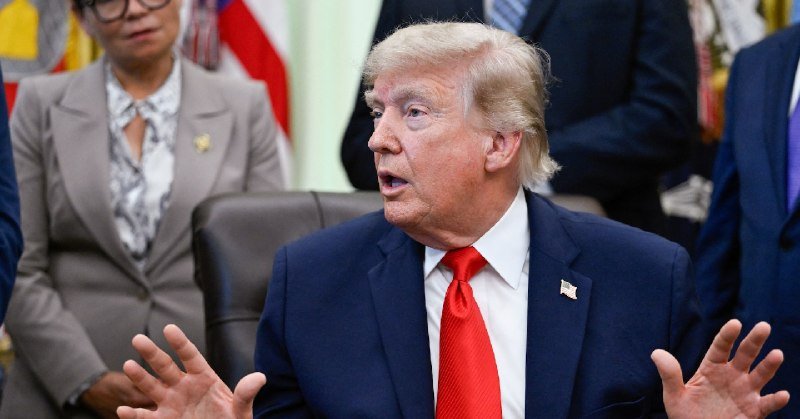
At roughly 02:00 UTC on 12 June 2026, Iranian state television announced that the Islamic Republic had launched coordinated strikes on US military positions in Jordan and Bahrain and was moving to close the Strait of Hormuz. Twelve hours earlier, US President Donald Trump had told reporters the waterway would reopen as soon as a "great settlement" with Tehran was reached. The gap between those two statements — one a war announcement, the other a deal announcement, both delivered the same day — is now the operative fact in Middle East energy markets and in every Gulf capital's risk book.
The contradiction is not new. It is the operating system of the Iran file in 2026: maximalist rhetoric from Tehran, transactional language from Washington, and a chokepoint that does the actual talking.
What was actually said, and by whom
According to Press TV's English Telegram channel, dated 11 June 2026, Iran claimed responsibility for strikes on US targets in Jordan and Bahrain and announced the closure of the Strait of Hormuz. The report framed the action as a response to ongoing US pressure. Press TV is Iranian state media; its claims sit in a different evidentiary category from a US Central Command briefing or a Reuters wire report, and readers should treat them as Tehran's declared narrative rather than independently corroborated battlefield fact. The same channel's framing of Trump — that he had "backed down again" — is editorial rather than descriptive, and the wording is worth flagging.
The counter-claim came from the US side. On 12 June 2026 at 01:13 UTC, a Telegram channel monitoring Trump's public remarks reported him saying the Strait of Hormuz "would be opened as soon as a great settlement" of the broader dispute was reached. The phrasing is conditional — opening tied to a settlement, not an irreversible fait accompli — and it implies that in the President's read, the strait is currently constrained but negotiable.
The two statements are not necessarily incompatible. Iran can announce a closure while Washington negotiates the terms of reopening; both actors have incentives to keep the ambiguity alive. But the optics — a kinetic claim and a peace claim, twelve hours apart, on the same chokepoint — are the optics of a crisis being managed in public, not resolved in private.
Why the strait matters more than the strikes
The Strait of Hormuz carries roughly a fifth of global seaborne oil. A credible closure threat, even one that is partly rhetorical, is enough to move Brent crude by single-digit dollars per barrel within hours and to force insurance underwriters to re-rate war-risk premiums for the entire Gulf. The strikes on bases in Jordan and Bahrain, if confirmed, would be escalatory; but a sustained disruption to tanker traffic in the strait would be order-of-magnitude more costly, and not only to Gulf exporters. Asian importers — China, India, Japan, South Korea — would absorb the price shock first.
That is the structural fact behind the day's headlines. The kinetic story is what the wires lead with. The economic story is the chokepoint itself, and it is the chokepoint that gives the Iranian statement its leverage, regardless of whether the announced strikes took the form Iran claims.
The reading the Western wires will not lead with
The dominant frame in Western coverage is likely to treat Trump's "great settlement" line as the authoritative read and the Iranian announcement as bluster — a familiar pattern in which official US positioning is treated as fact and Iranian state positioning is treated as performance. The reverse is equally possible: the Iranian claim of strikes on US positions in Jordan and Bahrain may be closer to operational reality than the President's sunny language suggests, and the deal talk may be the bluster. The honest position is that both could be true simultaneously. Washington may be negotiating from a position of force absorption rather than force projection; Tehran may be claiming a closure it cannot fully enforce while reserving the option to enforce it selectively against specific tanker traffic.
What the sources do not let us resolve is which of those two reads is dominant. The Press TV item is an Iranian state account, and the Trump line is a single reported remark rather than a written policy statement. Neither is a primary document.
Stakes over the next 72 hours
Three things will clarify the picture in the short term: an independent confirmation or denial of the strikes on US positions in Jordan and Bahrain; an official US response that goes beyond a presidential aside; and any movement in real tanker tracking through the strait, which is observable from commercial satellite feeds. Until then, energy desks, insurance markets, and Gulf ministries are pricing an ambiguity — and ambiguity, in the Hormuz corridor, has historically been resolved by a single large move rather than a slow drift.
The Iran football team's first open training session in Mexico on 11 June, ahead of a World Cup campaign unfolding under the same shadow, is the small mercy inside an ugly week. The squad is preparing for football while its government prepares, by its own account, for war.
Desk note: Monexus has treated the Press TV item as an Iranian-state claim rather than a confirmed battlefield fact, and has placed the Trump "great settlement" line in the same evidentiary register — a reported remark, not a written accord. The story's centre of gravity is the chokepoint, not the press conference.
Wire provenance
This editorial synthesis draws on the following public wire/social posts:
- https://t.me/presstv/
- https://t.me/ourwarstoday/
- https://t.me/france24_en/
Follow the event.
These dated source records provide context. They do not retrospectively verify this archive article.
Separate what the nuclear watchdog reported from what it could not determine after the June 2025 strikes.