New Delhi's patience with Washington's sea-lane enforcement is wearing thin
India's foreign ministry has summoned a US diplomat for the second time in days over strikes on commercial vessels carrying Indian crew, exposing the friction inside a partnership both sides keep calling strategic.
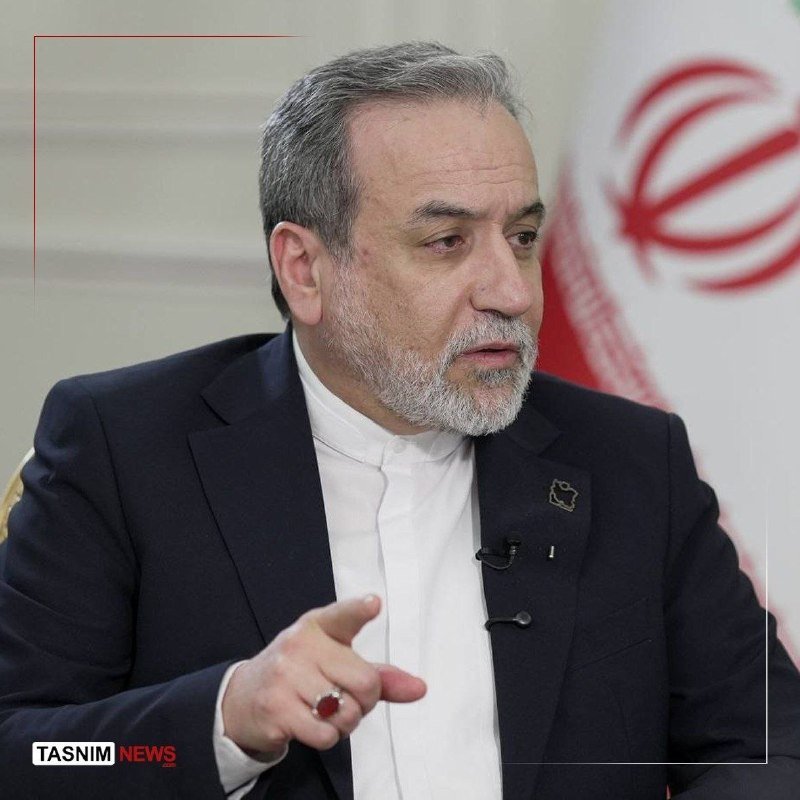
On 12 June 2026, India's Ministry of External Affairs summoned a US embassy official in New Delhi for the second time in days, registering a formal protest over continued strikes on commercial vessels carrying Indian crew in the Indian Ocean region. The escalation is small in diplomatic choreography and large in what it signals: a partner that has spent two decades branding itself as Washington's indispensable Indo-Pacific counterweight is publicly contesting the operating logic of US maritime enforcement.
What makes the protest worth reading carefully is not the language of the summons but the timing. Strikes on shipping in the western Indian Ocean have continued into June, Indian seafarers remain among the affected crews, and the MEA has now moved from démarche to repetition — the diplomatic equivalent of asking, twice, whether the message landed. According to Scroll.in's 12 June 2026 wire, the ministry summoned the US diplomat to convey that attacks on vessels with Indian personnel are unacceptable and that India expects its nationals to be spared in the conduct of any third-party enforcement action at sea. The wire does not specify which US operations are being referenced, but the geography — Indian Ocean, commercial tonnage, mixed-nationality crews — points squarely at the corridor enforcement that has intensified since late 2024.
The structural friction here is older than the present operations. India's doctrine of "strategic autonomy" has always chafed against any arrangement in which the security of its sea lanes is delivered by a single external power on terms New Delhi did not write. The US framework treats commercial vessels in certain waterways as admissible targets of pre-emptive action against state and non-state adversaries; the Indian framework treats the same vessels, when crewed by Indians, as falling under New Delhi's protective remit. The two doctrines are not formally in conflict — until a strike actually hits a ship with Indian sailors on board, at which point the difference becomes operational rather than theoretical.
The counter-narrative, as one would expect, comes from Washington and its partners: that enforcement actions target vessels linked to sanctioned networks, weapons flows, or adversarial naval activity, and that Indian crews are incidental rather than intentional subjects of the action. The argument has force in the abstract, and US officials have historically been careful to brief Indian counterparts in advance of named operations. The Indian objection is not that the policy is illegitimate in principle; it is that the residual risk to Indian nationals has not been engineered down to a level New Delhi finds tolerable, and that the protest pipeline — summon, register, expect — is not producing visible change. A government that has to summon the same embassy twice in a week is, by diplomatic convention, signalling that the first summons was not treated as a correction.
What this sits inside is the slower rebalancing of a partnership that both governments still describe as a cornerstone of Indo-Pacific stability. India's market for US defence equipment, its quiet logistical support for joint exercises, and its diplomatic weight in forums from the Quad to the G20 all depend on the relationship functioning on terms both capitals can defend publicly. Summoning a US diplomat is not a rupture; it is the price of a relationship that still has to be maintained in plain view of two domestic audiences — one in Washington that wants harder enforcement, and one in New Delhi that wants its seafarers off the target list. The interesting question is not whether the summoning stops the strikes, but whether India's accumulated protests become a precondition for the next phase of bilateral negotiation, or get quietly absorbed the way earlier friction points were.
A 12 June 2026 Indian Express dispatch captured a different texture of the same day: a consumer court in India ordering Reliance Jio to pay Rs 19,700 to a subscriber over throttled internet speeds. The juxtaposition is not editorial flourish; it is a useful reminder of what the Indian state is being asked to do at two altitudes simultaneously. One altitude is the small, domestic, evidentiary — prove the contract, win the small print, pay the rupee. The other is the strategic — assert the protection of Indian nationals inside an enforcement architecture not of India's making, in a corridor that is, by any honest reading, the most contested sea space on the planet. The summons belongs to the second altitude, and it is the one with the longer tail.
The sources do not specify the US agency's response to the second summons, the number of Indian nationals involved in recent strikes, or the operational directive that is being protested. Those gaps matter: the line between a discreetly absorbed démarche and a genuine policy adjustment runs exactly through them, and the next seventy-two hours of diplomatic back-channel will tell more than the present read-out does.
How Monexus framed this: the wire lead treats the summons as a procedural step; this piece treats it as the second data point in a sequence that is testing the operating terms of the India-US maritime partnership.