Tehran frames Hormuz as a 'deterrent,' floats remote signing of US MoU
Iran's foreign minister says a two-page, 14-clause MoU is in final review, and that the Strait of Hormuz will not return to its pre-war operating regime — language designed for a domestic audience as much as a Washington negotiating room.
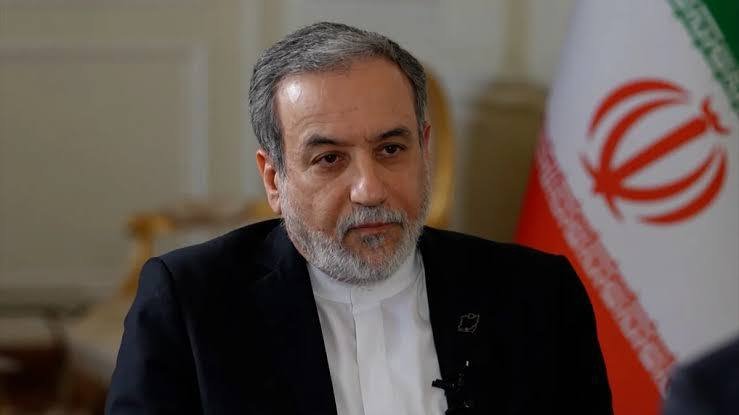
Iran's foreign minister, Abbas Araghchi, set out the most detailed public account yet of a proposed memorandum of understanding with the United States on 12 June 2026, describing a compact document of roughly two pages and fourteen clauses that he said would be signed remotely in the coming days once the Supreme National Security Council finishes its review. The package, Araghchi told reporters, contains a mechanism for the release of Iranian frozen funds and would, if concluded, "announce an end to the war on all fronts" — language that frames the deal less as a nuclear concession than as a structured de-escalation. The same press appearance doubled as a sovereignty statement on the Strait of Hormuz, which Araghchi described as "one of Tehran's most important deterrent tools" and asserted lies wholly within Iranian and Omani territorial waters. The two tracks — a paper-thin diplomatic text and a maximalist claim over the world's most consequential oil chokepoint — were delivered in the same breath, and the juxtaposition is the story.
The most plausible read is that Tehran is selling the same agreement to two very different audiences at once. The clauses are designed for Washington's lawyers, the Hormuz language for a domestic security council where Araghchi himself acknowledged "both supporters and opponents" of the text. The 14-clause framework is being presented as "a single package, not a quid pro quo" precisely because Tehran needs to be able to tell hardliners that nothing was traded clause-for-clause, while telling US negotiators that the package as a whole delivers what was asked for. Whether that rhetorical structure survives contact with the next round of sanctions enforcement is a separate question.
A two-page text and fourteen clauses
Araghchi's description of the document, delivered in a series of statements carried by Telegram channels including WarFootage Witness, Clash Report and Middle East Spectator between 19:44 and 20:18 UTC on 12 June, is unusually specific by Iranian diplomatic standards. The text is "no more than two pages" and has been reviewed by the foreign ministry and the Supreme National Security Council, with the Council retaining "full oversight." Crucially, the foreign minister insisted the package is being presented "as a single package, not as a quid pro quo" — "we cannot say this is in exchange for that." That formulation matters because it leaves Tehran room to argue domestically that no individual clause constitutes a concession, while still giving Washington the integrated package it has demanded.
The signing itself, Araghchi said, would be done remotely, "possibly in the coming days after final internal decisions are made," and would be announced once those stages are completed. He added that the proposed MoU includes a mechanism for Iranian frozen funds, while rejecting what he called inaccurate media reports about the text. The framework is intended to "announce an end to the war on all fronts" — a phrase that on the Iranian reading covers not only the nuclear file but the regional proxy axis that has been in open confrontation with Israel and the United States since late 2023.
Hormuz as deterrent, not bargaining chip
The most consequential line in the press conference had nothing to do with the MoU. Asked about the Strait of Hormuz, Araghchi said the waterway has become "one of Tehran's most important deterrent tools" and warned that it "will not return to its pre-war" operating regime. He framed the strait as lying within Iranian and Omani territorial waters, with no international waterway designation, and added that "the future management of the Strait of Hormuz will not be as it was in the past."
For maritime insurers, oil traders and the Gulf states, that sentence is the operative one. Roughly a fifth of global seaborne oil transits Hormuz, and any durable shift in its legal or security regime — even one short of outright closure — moves the price of crude and the calculus of every energy-importing economy. Araghchi's insistence that the strait is bilaterally Iranian-Omani, rather than an international waterway, mirrors the long-standing legal posture of the Islamic Republic and prefigures a negotiating demand: that future management of the chokepoint be a regional matter in which Tehran has a veto, not a US-protected commons.
Why the timing matters
The press conference lands at a moment when both governments have reason to want a face-saving announcement, and both have reason to distrust the other's compliance. Araghchi noted that "the other side is inherently prone to bad faith and will exploit any opportunity to create problems in implementation," citing Iranian experience with past agreements. He also offered an unusual historical gloss: "in the past two wars, negotiations did not lead to war — resistance did," a formulation that signals Tehran's narrative for any future flare-up.
Internally, the picture is more contested than the public posture suggests. Araghchi acknowledged that within the Supreme National Security Council there are "both supporters and opponents" of the MoU text, and that "eventually, a decision will be communicated." The remote-signing plan is itself a compromise — a way to commit the state to the document while preserving the council's ability to revisit the substance if implementation stalls. The frozen-funds mechanism, long a sticking point, is now explicitly inside the text. That is progress, but it is also a hostage to fate: if the US Treasury drags its feet on disbursement, Iranian hardliners will have the documentary basis to argue that the deal has already been violated.
Stakes and what to watch next
The shape of the next 72 hours is fairly constrained. Either the Supreme National Security Council clears the text for remote signature — Araghchi suggested the announcement could come "in the coming days" — or the document stalls in domestic review. If it is signed, the immediate question becomes which clauses are public, which are classified annexes, and whether the frozen-funds mechanism is operational on a defined timeline. If it is not signed, the Hormuz language becomes more than rhetoric: it is the operative Iranian policy on the world's most important energy corridor, and a prompt for the kind of naval posture adjustments that markets dislike.
For Gulf states, India, China, Japan and South Korea — the four largest customers for Gulf crude that transits Hormuz — the operating assumption should be that the strait's insurance and routing regime has already shifted, regardless of whether the MoU is signed. For Washington, the diplomatic prize is real but narrow: a text that "announces an end to the war on all fronts" is valuable only if the fronts actually close, and Araghchi's own caveats about bad-faith implementation suggest Tehran expects them not to. The bet both governments are making is that a paper-thin agreement is better than the alternative. The next data point will be the announcement of the signing — or the silence that follows its absence.
Desk note: Monexus has relied on Telegram-channel distributions of Foreign Minister Araghchi's 12 June press appearance (WarFootage Witness, Clash Report, Middle East Spectator, Middle East Eye on X) as the primary input set, and has not independently verified the full text of the proposed MoU. Western-wire confirmation of the two-page / fourteen-clause framing is pending; the publication will update the source ledger when wire reports land.
Wire provenance
This editorial synthesis draws on the following public wire/social posts:
- https://t.me/s/wfwitness
- https://t.me/s/ClashReport
- https://t.me/s/Middle_East_Spectator
- https://t.me/s/osintlive
Follow the event.
These dated source records provide context. They do not retrospectively verify this archive article.
Separate what the nuclear watchdog reported from what it could not determine after the June 2025 strikes.