Tehran redraws the rules of Hormuz — and the world's oil chokepoint just got a price tag
Abbas Araqchi declared the Strait a bilateral Iranian-Omani sovereign zone, announced fees for passage, and framed Hormuz as a 'deterrence tool' — a posture the rest of the world will now have to price in.
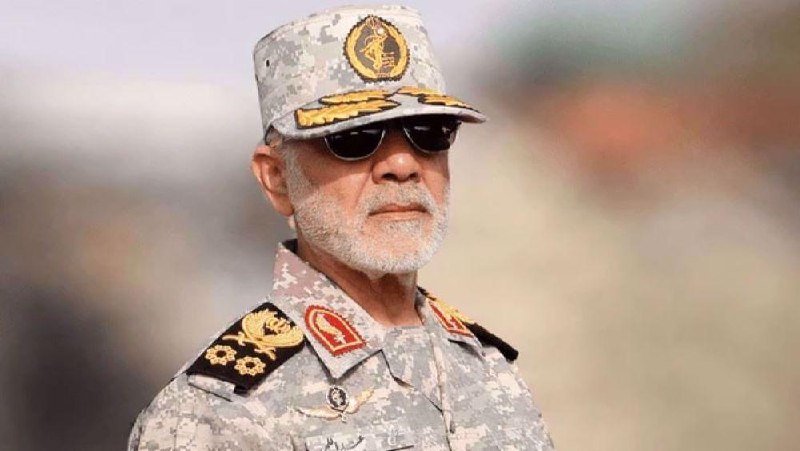
On the evening of 12 June 2026, Iranian Foreign Minister Abbas Araqchi stood before state-aligned media and announced something the world's energy desks will not be able to ignore for the rest of this decade: the Strait of Hormuz will no longer be treated as a free, neutral corridor. The strait, he said, "undoubtedly falls under the sovereignty of Iran and Oman and is not an international waterway," and any party using it in future will pay a fee for the privilege. The message was repeated five times in the space of an hour across Iranian state-aligned Telegram channels — Araqchi calling the waterway "one of our important deterrence tools" and warning that "no one can harm the sovereignty of Iran and Oman over the Strait."
The framing matters as much as the substance. Tehran is not merely signalling that it can close the strait — a threat it has made on and off for years. It is asserting ownership, pricing that ownership, and inviting Muscat to co-sign the invoice. In the same set of remarks, Araqchi confirmed that Tehran and Muscat had concluded "good consultations" on the strait and that a "joint action plan" would be issued soon.
The thesis to take from the evening's messaging is straightforward: the world's most consequential oil chokepoint is being reclassified, in real time, from a global commons into a bilateral condominium with a toll booth. Whether or not Iran's navy can enforce the new regime, the legal and political posture has shifted, and the markets and the diplomatic corps downstream of it will have to adjust.
The language of sovereignty — and what it costs
Araqchi's repeated invocation of "sovereignty" is doing heavy lifting. Under the United Nations Convention on the Law of the Sea, which Tehran has signed but never ratified, transit passage through straits used for international navigation is supposed to be uninhibited. Iran has long argued, with some legal cover, that parts of the strait are its territorial waters; the more aggressive leap is the claim that the entire waterway, jointly with Oman, falls outside the international-strait regime.
Iranian state media amplified the line on 12 June 2026, telling viewers that the management of the strait "will not be the same as it was in the past." The fees announcement is the operational companion to that claim. If the strait is sovereign Iranian-Omani territory, then services rendered in it — pilotage, security escorts, search-and-rescue readiness — can legitimately be billed. This is the playbook the Houthis ran, with quiet Iranian and Omani acquiescence, in the southern Red Sea between 2023 and 2025: secure transit in exchange for a price, even when the shipping itself is foreign-flagged.
The pricing will be the tell. A nominal fee — say, a few cents per barrel — is bearable, routable, and absorbable by insurers. A punitive fee calibrated to Iran's discount-customer politics (China, India, the smaller Asian buyers) would privilege some trade flows over others and effectively let Tehran redraw the customer map of seaborne crude. There is no public figure yet for what the Iranian-Omani "service charge" would be; the framing Araqchi laid down suggests the number is still being negotiated, not announced.
The Omani half of the bargain
The Muscat dimension is the under-reported story. Oman has historically played the honest broker in the Gulf — the back-channel to Tehran, the host of quiet US-Iran talks, the convener of the 2013–2015 secret backchannel. It is also the only Gulf monarchy that has consistently refused to publicly treat Iran as a pariah. If Araqchi is now selling the world a "joint action plan" on Hormuz with Muscat at the table, then the strait's new legal theory has a second state behind it.
That matters for two reasons. First, an Iranian claim alone is dismissable as rhetoric; an Iranian-Omani claim forces Western governments and shippers to engage the Omani foreign ministry, which is precisely what the Trump-era envoys and the Gulf state department types were already doing. Second, Oman is the state most likely to guarantee a service that the market can actually use — guaranteed transit windows, reflagging courtesies, insurance reciprocity. In other words, Oman gives the new regime operational legibility that Iranian rhetoric alone cannot.
Western and Gulf-based analysts will read this as Oman being corralled. The more parsimonious read is the opposite: Muscat is extracting a price for its cooperation, and that price is being built into the new legal architecture Araqchi is announcing, line by line.
What earlier reporting suggested, and how this changes it
The reading on 12 June 2026 contradicted what had been the working assumption just hours earlier. On the same day, IRNA, via the @unusual_whales X account, reported that Iran would not restore pre-war traffic levels through the strait, walking back earlier indications that commercial shipping would return to normal within a month. Combined with Araqchi's evening remarks, the picture is now: the strait does not snap back to its 2024 operational profile, traffic is throttled to a level Iran controls, and a fee regime is being installed over what remains.
The counter-narrative, and it must be stated, is that this is posturing. Iran is mid-isolate, mid-sanctions, mid-economic-stress. The room between "we will charge fees" and "we have the maritime capacity to collect fees from a non-compliant US-flagged VLCC" is large, and Tehran has over-played its hand on strait-related signalling before. A Western wire line that reads the announcement as noise, not signal, has a coherent case: the IRGC navy can harass, but it cannot impose transit fees on Chevron, Aramco, or Cosco without either Oman's full complicity or a shooting confrontation neither side wants.
The case for taking it seriously is that the joint plan with Oman is precisely the kind of step that converts a unilateral threat into a bilateral regime. If the action plan materialises, the Omani insurance pool, the Omani port of Sohar, and the Omani diplomatic backstop give the Iranian claim a structure that can survive a Western boycott attempt. Iran doesn't have to collect fees from everyone. It has to collect from enough of the global fleet to make non-payment a reputational and operational outlier.
Stakes — who pays, who adjusts, and on what clock
The structural frame here is the re-monetisation of the geography of energy. For two decades, Hormuz has been priced as a free input — capital markets assume it is open, insurers assume it is open, and the marginal barrel of seaborne oil therefore carries a Hormuz-risk premium that is, in good years, close to zero. Araqchi's announcement is a credible attempt to reintroduce a permanent Hormuz transit cost as a line item in the global oil bill. The time horizon on which that becomes a structural rather than episodic feature of the market is probably eighteen to thirty-six months — long enough for the joint action plan to be drafted, signed, and tested, short enough that 2027 contracts will price it in.
In that window, three sets of actors have the most to do. Asian buyers — India, China, South Korea, Japan — will be the first to negotiate the new terms, both because they are the largest consumers of Gulf crude and because they are the most willing to live inside an Iranian-Omani legal regime. European buyers will discover, in real time, how dependent their statement of 2018 ("we want freedom of navigation in Hormuz") actually is on US naval escort availability. And the US Fifth Fleet, the implicit guarantor of the old regime, will have to choose between enforcing free transit on a sovereign-claim basis that no longer holds, or accepting a fee structure it can neither veto nor ignore.
The Iranian counter-frame, also worth stating plainly, is that the United States itself has spent the last twenty years weaponising dollar-clearing, sanctions, and naval presence to extract a political rent from countries that did not consent to any of it. A fee on the strait, in that reading, is Iran doing a smaller and more honest version of what the US does daily through the financial system. The framing is coherent and irritating, which is usually a sign it has purchase.
What remains uncertain
The sources circulating in the 12 June 2026 window do not specify the fee schedule, the legal vehicle for collecting it, the dispute-resolution mechanism for non-paying vessels, or whether the announced "joint action plan" with Oman is a treaty, a memorandum, or a press statement. IRNA's walk-back on pre-war traffic levels was reported by an aggregator account on X; the original IRNA text and any follow-up Iranian or Omani foreign ministry readouts have not been independently confirmed. The structural argument this piece makes — that the strait is being reclassified from commons to condominium — is consistent with the available material, but the operational details are still ahead of the evidence, and they are the details that will determine whether 2026 is remembered as the year Hormuz was repriced or the year it was merely retagged.
Desk note: Monexus has framed the 12 June 2026 announcements as a legal-regime change in progress, with Omani complicity as the load-bearing variable — not as a kinetic escalation, and not as a bluff to be dismissed. The wire line is still catching up to the implications of a fee-on-transit posture; we expect the next forty-eight hours of commentary to harden around the Omani role.
Wire provenance
This editorial synthesis draws on the following public wire/social posts:
- https://t.me/alalamarabic
- https://t.me/alalamarabic
- https://t.me/alalamarabic
- https://t.me/alalamarabic
- https://t.me/alalamarabic
- https://x.com/unusual_whales/status/2134