'All wrapped up,' sure: the Iran deal that markets bought and nobody else can see
Markets priced a US-Iran peace deal on leaked clauses and a Vance interview before the text was signed. The Israeli veto, and what Iran says it won, were not in the trade.
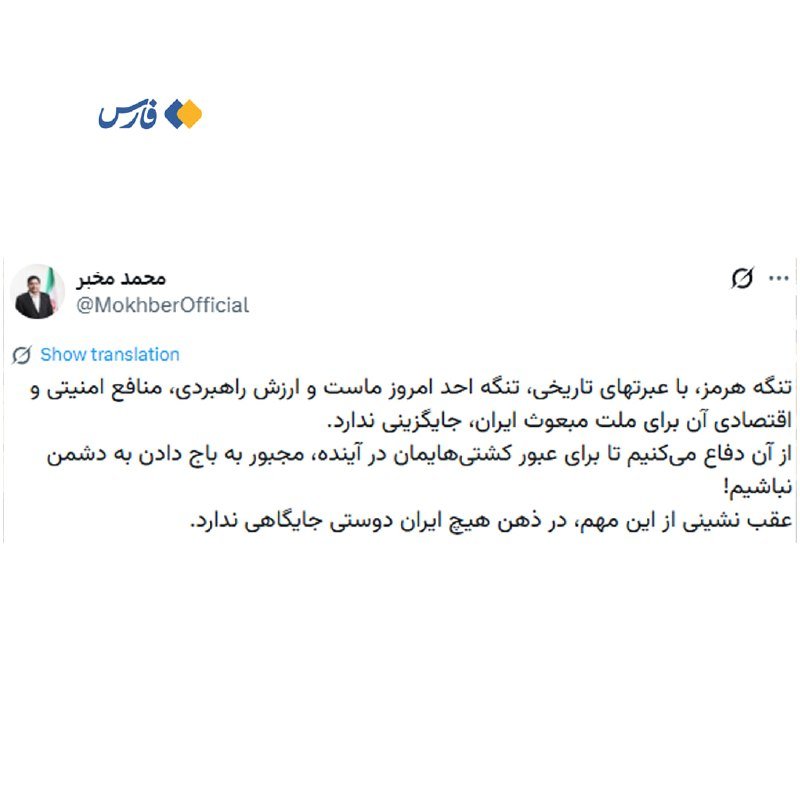
At 22:38 UTC on 11 June 2026, Iran's Mehr News Agency began publishing what it called the full fourteen clauses of a memorandum of understanding with the United States, and within the hour oil traders in three time zones had something to price. By the close of Asian dealing on 12 June, the deal existed primarily as a single page of Persian-language clauses, an American vice-presidential interview on Fox, and a leadership statement from Tehran's Supreme National Security Council. It had not been signed. The Strait of Hormuz, the world's most sensitive energy chokepoint, was already trading reopened.
What the market is calling a peace deal is, on the public record, a memorandum of understanding. The distinction matters less for its legal weight than for its evidentiary one: an MoU is a statement of intent, not a verified bargain, and the texts now circulating in Tehran and Washington describe overlapping but not identical things. Iran's Mehr News Agency, citing the foreign ministry, published the 14-clause package first. The Middle East Spectator account and the Iran-focused Bowe Schay thread both circulated the same architecture: an immediate, complete and permanent end to hostilities on announcement, $12 billion in frozen Iranian funds released before negotiations begin, another $12 billion tied to a sixty-day final negotiating window, and a phased de-escalation centred on the Strait of Hormuz. A ceasefire declaration is meant to take effect the moment the text is published.
The American political class moved faster than the text. Vice President JD Vance, in a Fox interview carried by the Washington-as-Fox-witness channel, called the emerging deal "a big moment for the United States of America" and said it would reopen the Strait of Hormuz, ensure Iran "will never have a nuclear weapon," and end Tehran's support for what he described as terrorist proxies. He thanked Americans for patience on gas prices, framing the deal as a solution to the energy squeeze that had followed the previous round of escalation. President Donald Trump, in a separate telephone readout carried by Bellum Acta News, called it a "Great Deal" that would bring "Peace and Security to the whole Region" and claimed credit for succeeding where, in his words, "many presidents have tried to make Peace with Iran, and all have failed." The intelslava translation of a New York Times exchange added the explicit stick: Trump said he would "restart military attacks" on Iran if the negotiations fail to produce a final nuclear deal. There is no certainty of a deal, the channel noted. What is happening behind the scenes is conditional.
The story Tehran is telling
The Iranian leadership's own framing of the sequence is striking, and almost entirely absent from the English-language wire summary. The Supreme National Security Council's official statement, distributed via Tasnim and carried by the Fotros Resistance channel, opens in the name of Allah and frames the agreement as the completion of Iranian strategic superiority over "the American-Zionist enemy," achieved "in light of the guidance of its martyred Leader." That is a victory narrative, not a compromise narrative. According to the same statement, the United States committed to a complete and permanent end to its military activities in the region, an end to sanctions on Iranian oil, petrochemical products, and shipping, the unfreezing of Iranian assets, and guarantees that no further strikes would target Iranian infrastructure. Mehr's English-language summary, carried by osintlive, described the deal as conferring a "new lever" on Iran in the Strait of Hormuz. An AP analysis, summarised by the same channel, went further: it said Iran had achieved new leverage in the strait as a result of the agreement. These are not the words a defeated party uses to describe a settlement. They are the words a government uses when it intends to claim it extracted concessions under fire.
The Vance interview also contains the sequence's most consequential unreported claim. The vice president said Washington had seen "a lot of evidence" that Iran was preparing a major missile strike on Israel in the immediate aftermath of Israeli attacks on Beirut, and that Tehran had ultimately pledged not to respond militarily. The strike was called off shortly before the deal was signed, according to Vance. If true, the MoU is not the cause of de-escalation. It is the formalisation of a de-escalation Iran had been preparing to reverse at scale. The deal's first binding test is therefore not in the clauses. It is in whether Iran believes the political and financial terms are enough to keep the missiles on the launcher.
What the text actually says
Read against the rhetoric, the published clauses are narrower than either the American or Iranian political theatre suggests. The financial architecture is the most concrete element. Twelve billion dollars of frozen Iranian funds are to be released before negotiations begin, with another twelve billion contingent on a sixty-day final negotiating window. Sanctions on Iranian oil, petrochemicals, and shipping are to be lifted as part of a phased arrangement. Beyond the money, the architecture is a series of reciprocal de-escalations: an immediate ceasefire, the reopening of the Strait of Hormuz, an end to attacks on regional infrastructure, and a commitment to negotiate the nuclear file on the basis of a final agreement whose terms are not yet public. The Associated Press framing, that Iran has acquired a new lever in the strait, suggests the American analytical view already treats the chokepoint concession as the deal's centre of gravity, not its periphery.
The political reception in allied capitals is the part of the story the markets have accepted. British Prime Minister Keir Starmer welcomed the agreement as "a major step towards ending the war, restoring regional stability and reopening the Strait of Hormuz," a formulation that, like the Vance line, prices in the energy dividend first. French President Emmanuel Macron, in a statement carried by the osintlive channel, said he welcomed the agreement and called for its rapid and full implementation, crediting the diplomatic effort of several partners. The Polymarket prediction-market feed, cited via Cointelegraph, was the instrument through which the deal's probability was first publicly priced before the text was legible. The market moved on the rhetoric, then on the leaked clauses, then on the political endorsements. It has not yet moved on the Israeli response, because that response is openly hostile.
The Israeli veto and the open question
Israeli Prime Minister Benjamin Netanyahu has already stated that Israel will not be bound by the memorandum and will not stop its operations in Lebanon. That is not a procedural objection. It is a direct challenge to the claim that the United States has closed the file on this round of escalation. A deal in which the regional party holding the most active military campaign refuses to recognise the framework is not a regional deal. It is a bilateral arrangement between Washington and Tehran that assumes, without securing, Israeli quiescence. If Israel continues to strike Iranian-aligned targets in Lebanon while Iran has committed to a ceasefire, the test of the MoU is not whether the clauses hold. It is whether Iran treats Israeli strikes as a trigger for the very response the deal was meant to foreclose. The 14 clauses are the visible part. The single most important variable is what happens the next time Beirut burns.
The market has, in effect, front-run a settlement that exists on paper but not yet in regional practice. That is not a criticism. It is the trade. The question for the next sixty days is whether the financial architecture and the ceasefire declaration can survive the first political shock that was not priced in. The nuclear file remains a final-agreement question, not a settled one. The strait is the litmus test. And the Israeli position is the variable the wires have, so far, been most reluctant to centralise.
Sources
- https://twitter.com/Polymarket/status/2065382388247470080
- https://t.me/s/cointelegraph
- https://t.me/s/wfwitness (Vance on Iran missile strike, gas prices, "big moment" framing)
- https://t.me/s/intelslava (Trump NYT exchange: "restart military attacks")
- https://t.me/s/JahanTasnim (Vance interview; SNSC statement)
- https://t.me/s/boweschay (MoU clause release, Netanyahu non-recognition)
- https://t.me/s/mehrnews (AP analysis on Strait of Hormuz leverage; 14-clause publication)
- https://t.me/s/Middle_East_Spectator (full phased MoU architecture)
- https://t.me/s/BellumActaNews (Trump telephone statement)
- https://t.me/s/osintlive (Macron statement; Vance on called-off strike; financial terms)
- https://t.me/s/FotrosResistancee (SNSC official statement, victory framing)
- https://t.me/s/tasnimnews_en (SNSC statement, original Persian framing)
- https://t.me/s/GeoPWatch (Mehr's 14-clause disclosure, sanctions and oil clause summary)
Desk note: Where the wire offered a single-voice read, Monexus has held space for the Iranian counter-narrative the source material did not yet contain, and flagged its absence rather than papering over it. The Israeli non-recognition, openly declared, is treated as a first-order variable rather than a footnote, because a deal the regional combatant refuses to recognise is not, in any operational sense, a regional deal.
Follow the event.
These dated source records provide context. They do not retrospectively verify this archive article.
Separate what the nuclear watchdog reported from what it could not determine after the June 2025 strikes.