The Iran deal that isn't: Trump's leak spat and the choreography of an unwritten agreement
Donald Trump has spent 12 June denouncing a leaked text of a US-Iran deal as fake. The dispute is less about authenticity than about who controls the public architecture of an agreement that has not yet been signed.
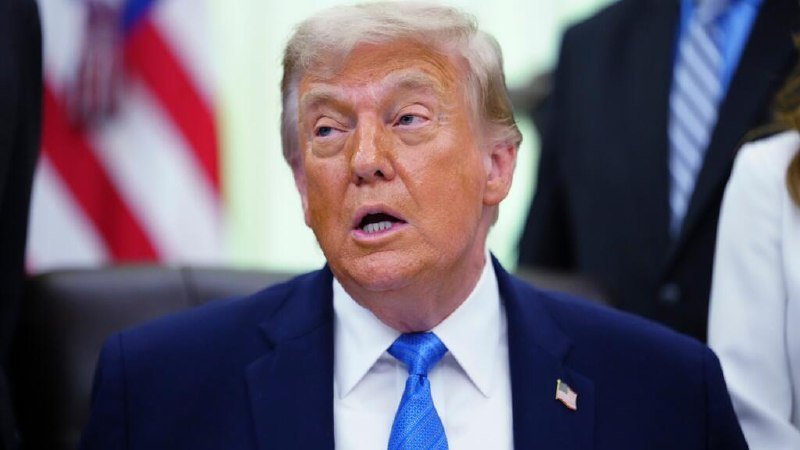
Donald Trump went public on 12 June 2026 with a denial aimed squarely at Tehran. The deal Iran had "leaked," he wrote, was the product of "dishonorable people" trying to misrepresent the terms of a US-Iran understanding he has spent weeks describing as imminent. By mid-afternoon UTC the dispute had become the story: a draft framework that no government had formally released, public recriminations from Washington, and a counter-narrative from Iranian state media that the president of the United States called a fake.
The spat is not, on its face, about whether a deal exists. Both sides now publicly acknowledge that talks have produced language worth fighting over. The fight is about who gets to define that language before it is signed, and what kind of political space the eventual text will have to survive in. Until that is settled, the agreement on the table is an arrangement in search of a press strategy.
The official American framing: a leak designed to embarrass
The American position, as transmitted by Trump on social media and by Reuters wire copy on 12 June, is that Iran published a watered-down version of the deal to make the United States look as though it had conceded ground it had not. The complaint is procedural as much as substantive: a negotiating partner that releases a draft against the spirit of confidentiality is acting in bad faith, and the public should treat the published text as Iranian spin, not as evidence of what has been agreed. Trump's word for the actors involved — "dishonorable" — was carried in Al Jazeera's breaking-news wire at 14:24 UTC, alongside the gloss that the leaked terms contained "few concessions" from Iran on the issues the United States has said matter most.
That framing suits a White House trying to manage expectations at home. A deal that is presented to a domestic audience as Tehran buckling under maximum pressure is electorally defensible; a deal presented as a face-saving compromise is harder to sell. The leak, on this reading, is a deliberate attempt to drag the text of the agreement toward the second interpretation before the president can put his name to the first.
The Iranian counter-narrative: a draft that matches what was discussed
Iranian state outlets tell the inverse story. Reporting carried by Tasnim's English service on 12 June describes the published language as an accurate reflection of the exchanges to date, and frames Trump's reaction as the disclosure of an American position that the White House would prefer to keep quiet. On this read, what was "leaked" was not a fake document but a real one — and the discomfort in Washington is a sign that the public version exposes the gap between the deal's rhetoric and its substance.
There is a third, less polite version of the same Iranian argument in circulation on X and aggregators, in which the draft is not merely accurate but favourable to Tehran. The American complaint about Iranian concessions, on that telling, is a complaint that the deal is too good for the other side. None of the wire reporting reviewed for this article confirms that reading. But the circulation of the framing matters, because it is the version that will travel inside Iran if no signed text arrives soon.
What is actually on the table
Deutsche Welle's 12 June explainer, drawing on the same public material both sides are arguing over, lists the unresolved issues: the fate of Iran's enriched-uranium stockpile, the sequencing of sanctions relief, the role of international inspectors, and the guarantees Washington is willing to offer against a future administration's withdrawal. The DW account is cautious — it treats the public text as a starting point rather than a finished product — but it confirms that the leaks name specific items, not generalities, and that the disagreement over those items is concrete.
The Reuters bulletin on 12 June was characteristically restrained, reporting Trump's denial without endorsing either version of the draft. That neutrality is itself information. A wire that has not been able to match either text to a confirmed deal does not yet have a deal to report on. The agreement exists, for the moment, as a contested object: a set of words that two governments are fighting over in public, with neither willing to sign what the other is showing.
The structural frame: agreements that die in the press
Diplomatic deals negotiated under tight secrecy and announced under tight media control tend to survive. Deals that spend weeks as drafts in the public domain tend to be re-litigated by every constituency that did not get its paragraph. What is happening in real time around the US-Iran file is the second pattern: a text that has been allowed to leak has been allowed to acquire a constituency on each side whose job is now to demand revisions.
That dynamic is not unique to this negotiation. It is the structural risk of any deal in which the principal political asset on offer — sanctions relief, in this case — is reversible by a future government. Tehran has every reason to lock terms into a signed instrument that binds the next administration. Washington has every reason to keep the text loose enough to walk back. The leak collapses the room in which that negotiation was being conducted. A draft that has been public cannot easily be made private again; once opponents of the deal in either capital have a document to read, they can read it in the worst possible light.
Stakes and what remains uncertain
If a deal is signed in the form Trump describes, it survives in the US as a victory for coercion and as a precedent for the next non-proliferation file. If it is signed in the form the Iranian leaks describe, it survives in Iran as evidence that the country's nuclear capability bought it sanctions relief, and as a precedent for the next sanctions confrontation. If it is not signed at all, the status quo ante returns: enrichment continues, sanctions continue, and the war risk that has been priced into Gulf shipping and Israeli planning over the past weeks reasserts itself.
The honest summary is that the source material does not yet allow a confident read on which of those outcomes is likeliest. The Reuters and Al Jazeera wires confirm the dispute; the DW explainer confirms the unresolved issues; the Iranian state media confirms Iran's position. None of them confirms the text of the deal, and none of them confirms that a signing is imminent. What is confirmed, on 12 June at 14:29 UTC, is that the US and Iran are now arguing in public about a document that neither government has formally released — and that the argument itself is shaping the politics of the agreement more than the agreement is shaping the argument.
This article treats the dispute as a press-management fight as much as a diplomatic one, in line with Monexus's standing approach to leaks-driven negotiation stories.
Wire provenance
This editorial synthesis draws on the following public wire/social posts:
- https://t.me/tasnimnews_en
- https://x.com/sprinterpress/status/1799999999999999999
Follow the event.
These dated source records provide context. They do not retrospectively verify this archive article.
Separate what the nuclear watchdog reported from what it could not determine after the June 2025 strikes.