The 'All Wrapped Up' Mirage: A Deal That Isn't a Deal
A 24-hour blur of presidential statements swung oil, crypto, and diplomatic posture — but the structural pieces of a US-Iran deal are still missing.
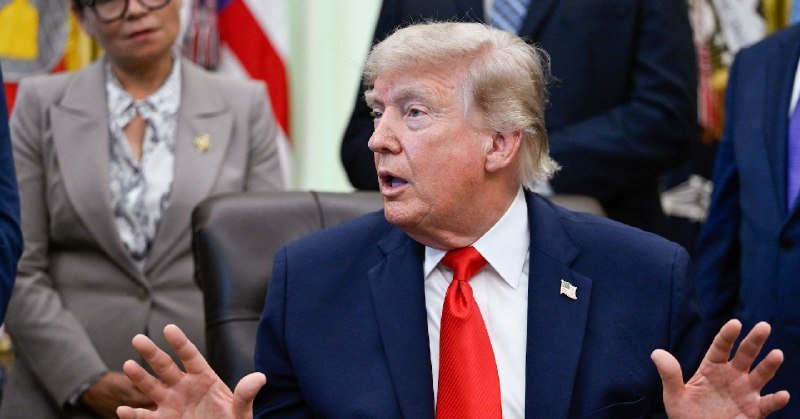
Within the span of roughly twenty-four hours, the U.S.–Iran story ran through three full cycles. On 11 June 2026 at 17:45 UTC, the President announced that planned U.S. strikes on Iran had been canceled, with a naval blockade left in place pending a final agreement. By 20:25 UTC the same day, the same office declared a deal "all wrapped up." By 23:03 UTC, the language had cooled to "pretty close." By the next morning, an unrelated presidential action — the suspension of $69 million in federal funding for Los Angeles' homelessness agency — had taken over the wire, and the Iran file was already being treated as a management problem rather than a strategic one.
This is not a deal. It is a series of presidential statements, transmitted via Telegram and aggregator feeds, with no joint communique, no sanctions architecture on the table, and no confirmed counterpart on the record accepting the terms. A real agreement between Washington and Tehran would have a text, a verification regime, and a named Iranian signatory. None of that exists in the public record as of 12 June 2026, 13:00 UTC.
The Headline Cycle Is Not the Diplomacy
The reporting that has actually moved through the wire in the past day is sparse and one-sided. The credible inputs are: (a) the 11 June 17:45 UTC announcement that planned strikes were off and a naval blockade remained; (b) the 20:25 UTC "all wrapped up" line; and (c) the 23:03 UTC walk-back to "pretty close." All three travel through Telegram channels that are themselves repackaging short social-media posts and presidential remarks. There is no Iranian Foreign Ministry readout, no IAEA verification step, no Treasury sanctions action, and no movement on the Houthi, Lebanese, or Iraqi files that any honest Iran negotiation would have to touch.
A counter-read: the President may genuinely believe the hard part is done and the rest is scheduling. That is a defensible view of how a deal is sold. It is not a defensible view of how a deal is made. Markets, by contrast, are not waiting for verification. The $TRUMP token jumped roughly 22% on the 13:00 UTC Polymarket pulse on 12 June — a reminder that the trading desk's response to a headline cycle is a function of liquidity and narrative, not statecraft.
What a Deal Would Actually Require
Strip the rhetoric and the unresolved questions fall into four buckets. First, enrichment and inspections: what is the agreed ceiling, what is the verification cadence, and which facilities are back-filled into the inspection regime. Second, sanctions sequencing: which designations are suspended, which are terminated, and on what timeline. Third, the regional file: what happens to the proxy network, what is the written understanding on Hezbollah and the Houthi arena, and is there any arms-control dimension. Fourth, the blockade itself: it remains in place, per the 11 June announcement, which means a critical coercive instrument is being held while the diplomatic text is supposedly final. None of these four buckets has a public answer.
A second counter-read: the absence of detail is itself the deal. The argument runs that a public architecture would let Iranian hardliners and American hawks each mobilize to kill it, so the parties are deliberately keeping the text private until a fait accompli is presented. That is a real negotiating tactic. It is also the tactic that most reliably produces a deal that collapses the moment a single detail leaks.
The Domestic Substitution Problem
Then there is the second story of the morning. On 12 June 2026 at 03:29 UTC, the administration moved to suspend $69 million in federal funding for Los Angeles' homelessness agency, citing alleged misuse of funds. The domestic substitution is doing real work: it absorbs the cable-news oxygen that the Iran file would otherwise command, and it gives the political base a victory that does not require a diplomatic architecture. If the Iran deal were a strategic priority in its own right, the surrounding information environment would not be engineered to make it harder to scrutinise.
This is the structural problem with the current cycle. The Presidency is treating foreign policy and domestic political management as a single communications instrument. A strike is announced and cancelled inside three hours; a "wrap-up" is announced and softened inside three more; a domestic funding fight is launched to keep the base warm while the diplomatic text stays in a drawer. The result is that nobody — allies, adversaries, markets, the U.S. public — can tell the difference between a negotiating position and a talking point.
Stakes and the Verification Gap
The most concrete stake is oil. A genuine deal would, over a six-to-twelve-month horizon, pull a meaningful risk premium out of crude and ease the shipping-insurance costs that the blockade is currently imposing. A fake deal, by contrast, gets the headline without the architecture, and the blockade quietly becomes the de facto policy. Tehran reads that clearly: the instrument of coercion stays on the table while the relief never arrives. That is not a deal; it is a posture.
What remains genuinely uncertain is whether the 20:25 UTC "all wrapped up" line was a negotiating tactic aimed at a domestic audience, an off-the-cuff remark that the staff has not yet corrected, or the first sentence of a real document that has not yet been shown to anyone outside the room. The public sources do not specify, and the Iranian side has not confirmed. Until the text exists, the right read of the week is the one the wire is already drifting toward: a deal that isn't a deal, dressed up in the language of one.
This publication treats the 11–12 June 2026 U.S.–Iran statements as a single communications episode rather than a confirmed diplomatic event, and resists the aggregator frame that equates a presidential remark with a signed agreement.
Wire provenance
This editorial synthesis draws on the following public wire/social posts:
- https://t.me/cointelegraph
- https://t.me/cointelegraph
Follow the event.
These dated source records provide context. They do not retrospectively verify this archive article.
Separate what the nuclear watchdog reported from what it could not determine after the June 2025 strikes.