Tehran pushes back on Trump's 'Sunday in Geneva' framing
A source close to Iran's negotiating team publicly contradicted the White House narrative, exposing a credibility gap that has become the story itself.
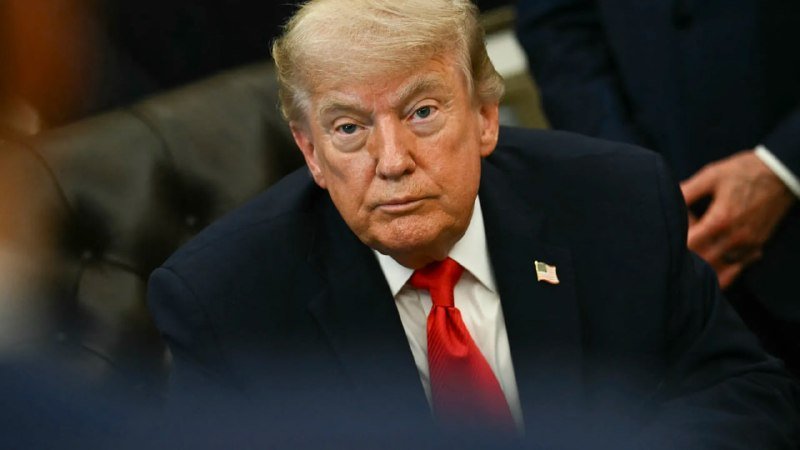
At 13:34 UTC on 12 June 2026, an outlet aligned with the Iranian state publicly detonated the most credible version of the week's biggest diplomatic headline. A source identified as "Fares" — speaking via the channel Al Alam Arabic — told viewers that claims by Donald Trump and unnamed foreign media that an Iran–United States agreement had been completed and was set for signature in Geneva on Sunday were "absolutely untrue." The denial was echoed minutes later by the same source relayed through Fars News, picked up by Intel Slava at 12:57 UTC, and surfaced in English by GeoPolitical Watch at 12:49 UTC, before the trading-account aggregator Unusual Whales repeated the Fars line at 13:42 UTC.
The story, on this reading, is not whether a deal exists. It is that two governments appear to be arguing about its existence in public, in real time, and that the loudest voice for one side is a social-media post.
A credibility gap, not a confirmation
The dominant Western narrative through the week has been that a framework is in place: an Iran–US understanding on nuclear constraints in exchange for sanctions relief, with Geneva pencilled in for a signing ceremony. Trump's social channels carried that line into the morning. By early afternoon European time, the Iranian side was pushing back, not with diplomatic hedging but with flat contradiction. According to the source cited by Al Alam and Fars, the deal has not been finalised, and the Sunday-in-Geneva framing is fiction.
The asymmetry is worth naming. One side is announcing an outcome; the other is denying that an outcome was reached. Until both sides describe the same document with the same words, the only honest read is that the public has been handed a marketing campaign rather than a treaty.
Why Iran's public posture matters
The Iranian negotiating team has every structural reason to be coy. Tehran's domestic audience — including a hardline press corps that reads any concession as betrayal — punishes visible flexibility. A public denial of a "completed" deal buys negotiators room to keep talking without owning Trump's deadline, and it forces Washington to re-publish rather than ratify.
But there is a second, less sympathetic read of the Fars denial. Iranian state-aligned outlets have, in past negotiation cycles, pushed back against imminent-deal headlines to extract last-minute concessions from a US side that wants a photograph. The denial may be tactical positioning, not a description of reality. Monexus finds that the available reporting does not resolve this — the sources are assertions from interested parties on both sides, and the underlying text of any agreement has not been published.
The structural frame: deal-by-tweet diplomacy
Whatever is or is not sitting in a draft folder in Geneva, the larger pattern is now plain. Theatrical announcements of foreign-policy outcomes are running ahead of the boring, written substance that would let observers verify them. The default assumption for any reader in 2026 should be: when a sitting US president claims a deal is "done" on a platform, wait for the text, wait for the counter-signature, wait for the other government's press conference. Treat the social-media post as a bid, not a bulletin.
This is not a uniquely American habit. Iran's own record of announcing strategic victories that later prove partial is long. What is new is the speed at which the gap between the two narratives is now a tradable, broadcast asset. Fars denied; Al Alam amplified; Telegram channels translated; an English-language X account restated the denial to a Western trading audience within an hour. Diplomatic ambiguity is no longer a backdrop — it is the news cycle.
Stakes and what to watch next
If the Geneva meeting does produce a signed document on Sunday, the Iranian denial becomes a footnote. If it does not, then Trump's pre-emptive announcement is the story, and the credibility cost falls on the side that told its audience the deal was already in hand. The market reaction — particularly in crude and in the gold complex — will function as a real-time verdict on which version of events traders believed first.
The sources are split on a single load-bearing fact, and this publication will not pretend otherwise. The Fars/Al Alam line says there is no completed agreement. The Trump line says there is. Until a document is published or a signing is photographed, both are claims, and the responsible read is that neither has yet been corroborated.
Desk note: Monexus has run the Iranian state-aligned denial at equal weight to the Trump announcement rather than burying it in the ninth paragraph, on the principle that the side denying an outcome deserves the same column-inches as the side claiming one.
Wire provenance
This editorial synthesis draws on the following public wire/social posts:
- https://t.me/alalamarabic
- https://t.me/intelslava
- https://t.me/GeoPWatch
Follow the event.
These dated source records provide context. They do not retrospectively verify this archive article.
Separate what the nuclear watchdog reported from what it could not determine after the June 2025 strikes.