Iran denies Geneva deal as Trump's 'psychological war' framing collides with Tehran's review process
A source close to Iran's negotiating team has rejected claims that a final agreement will be signed in Geneva on Sunday, exposing a widening gap between Trump's deal-narrative and Tehran's own review timeline.
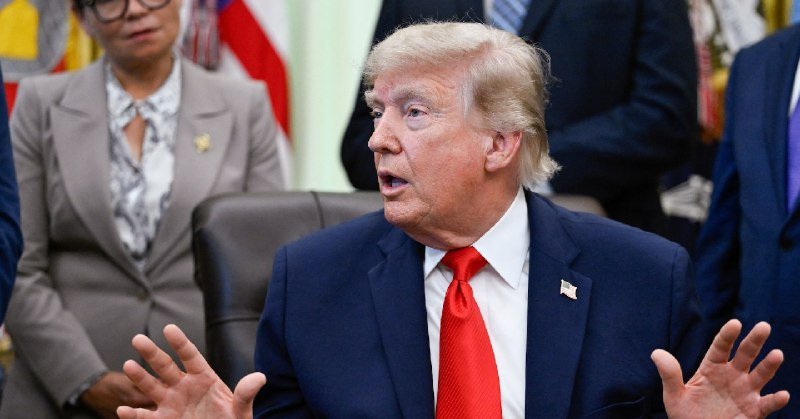
A source close to Iran's negotiating team told Fars News on 12 June 2026 that claims a final nuclear agreement will be signed in Geneva on Sunday are "completely false," and that Iran's review and decision-making process is still underway. The denial, carried by both Fars News and the Telegram channel ClashReport within minutes of each other, lands less than 24 hours after Donald Trump publicly insisted an arrangement was locked in and ready for signature. The collision — presidential certainty in Washington against official pushback in Tehran — is the sharpest signal in days that the diplomacy surrounding Iran's nuclear file is being run on two incompatible clocks.
The substantive question is not whether a deal exists on paper. The substantive question is whose version of events the rest of the world is meant to believe this weekend. Trump's pattern, Fars News argued in a 12 June commentary, is to retreat operationally while declaring victory rhetorically — "at the same time as retreating in action, by creating a narrative of reality after a psychological war," the agency's editors wrote. If that reading holds, the Sunday-signing story is not a forecast; it is a frame designed to bind Tehran's hand before its own review concludes. If it does not hold, and a deal genuinely is imminent, Iran's public denial is a domestic-political signal aimed at hardliners who would punish any government seen to have folded under American pressure.
What Fars News actually said
The denial appeared on Fars News's wire at midday UTC on 12 June, and was amplified in English by the Telegram channel ClashReport at 12:48. The wording was categorical: a source close to the Iranian negotiating team described the Sunday-signing claim as "completely false" and stressed that Iran's review and decision-making process had not concluded. The phrasing matters. Fars did not say negotiations had broken down, did not say the two sides were far apart, and did not rule out an eventual agreement. It said the announcement of a final deal was premature — a distinction Western wire reporting has tended to collapse.
Fars's companion editorial, also published on 12 June, framed Trump's approach as a recurring negotiating model. The pattern, the agency wrote, is to combine operational retreat with rhetorical escalation, so that the public-facing narrative outruns the underlying substance. In this telling, the gap between what is signed and what is announced is itself the instrument. The article did not name specific officials or cite specific concessions, and the sources do not detail what, if anything, has actually changed in the text under negotiation.
The Trump counter-frame
Trump's account, as relayed by Western media in the hours before the denial, is the opposite: a deal is essentially done, the remaining issues are cosmetic, and Geneva on Sunday is the venue for a signing ceremony. The two framings cannot both be true at the same moment, and the news cycle is now a contest over which one the diplomatic record will eventually ratify. Coverage that treats Trump's claim as the default frame — as some US-network reporting did through the morning of 12 June — is, in effect, granting the American side the benefit of the announcement while asking Tehran to disprove it. That asymmetry is exactly what Fars's editorial was designed to spotlight.
Iranian state media is not a neutral observer, and the framing of "psychological war" is itself a piece of domestic-political positioning. But the structural critique embedded in the Fars piece — that a public announcement can be weaponised to compress a sovereign review process — is a point that does not depend on believing the commentator. The empirical claim is that Trump has, in past negotiations, declared wins that subsequent text did not fully support, and that Tehran's review exists precisely to resist that compression. The sources do not adjudicate the past pattern; they only set up the present collision.
The Geneva venue and the clock problem
Geneva is the kind of neutral-European venue in which the P5+1 process has historically tried to seal its Iran files. But the sources do not confirm a date, a venue, or a text. The Sunday claim, as carried into Fars's denial, is unattributed beyond the general phrase "some foreign media outlets" — a phrasing that lets the Iranian side reject the framing without naming specific publications and without dignifying them as authoritative. The hard fact on the record is that no document has been published, no joint statement has been issued, and no two delegations have been confirmed in the same room.
That vacuum is the diplomatic story of the moment. Without a text, the field is held by whoever speaks loudest and last. Tehran is speaking on the record, through a named agency and a named source category. Trump is speaking through interviews and social posts, which his own administration has not, in the sources, walked back. The Sunday claim, in other words, is at this point an American frame that has not yet been contradicted by an American official — only by an Iranian one.
What the sources do not settle
Three things remain genuinely uncertain. First, whether a deal text exists at all in a form both sides would sign; the sources are silent on the substance of any draft. Second, whether Iran's public denial is a negotiating posture or a substantive position — the language used ("completely false," "review and decision-making process still underway") is closer to the latter, but Iranian negotiating teams have used similar language in past rounds before signing. Third, whether the Sunday reference is a leak from the American side designed to lock in momentum, or an aspirational schedule that was never confirmed by Tehran in the first place. The sources, taken together, only establish that one side has claimed a deal and the other has denied that claim; they do not yet establish which side is closer to the underlying reality.
The diplomatic market will price the answer over the next 48 hours. If a text appears, or if both delegations confirm travel to Geneva, the denial becomes a tactical feint. If Sunday comes and goes without a ceremony, the denial becomes the first draft of the historical record, and Trump's frame becomes the overreach the Fars editorial was already previewing. Until then, the most accurate description of the state of play is the one the sources actually support: an announced deal on one side, an explicit denial on the other, and a text that nobody has yet been willing to put on paper.
Desk note: Monexus is leading on Iranian state-media sourcing for the denial because that is where the on-record pushback originated; we have not amplified the Sunday-signing claim because no document has been published and no second source has independently confirmed it.
Wire provenance
This editorial synthesis draws on the following public wire/social posts:
- https://t.me/GeoPWatch
- https://t.me/ClashReport
- https://t.me/farsna
Follow the event.
These dated source records provide context. They do not retrospectively verify this archive article.
Separate what the nuclear watchdog reported from what it could not determine after the June 2025 strikes.