Tehran signals the 'Islamabad memorandum' is close — and asks the press to stand down
Iran's foreign minister says a draft understanding with Washington is closer than at any point in the cycle, while warning outlets against speculating about its contents.
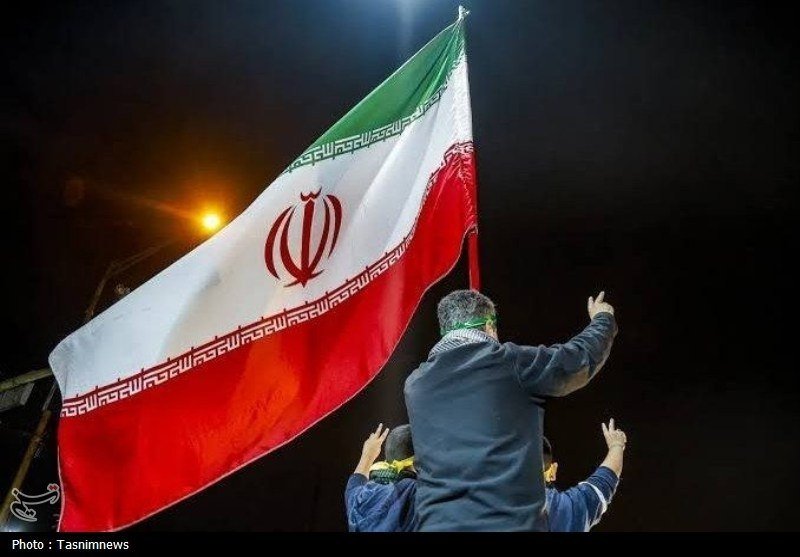
Iran's foreign minister, Abbas Araghchi, declared on 12 June 2026 that a draft understanding with the United States — negotiated under the working name of the "Islamabad Memorandum of Understanding" — had "never been closer" to finalisation, while simultaneously telling the press to stop guessing at its contents.
The comments, posted by Araghchi on X and amplified across Iranian and regional outlets in the 14:54–15:08 UTC window, are the most explicit signal Tehran has offered in this cycle that the diplomatic track hosted in Pakistan is approaching a deliverable phase. They are also a public-relations move: by managing expectations downward on details, the foreign ministry is buying itself room to walk back from a deal if the politics turn.
What Araghchi actually said
The core message is short and was carried by every outlet that broke the story in the same news cycle. The foreign minister wrote that the Islamabad memorandum "has never been closer" and that "pending its finalization, the media should refrain from entering speculation about its content." Multiple wire-style channels — Tasnim, PressTV, the Middle East Spectator, the BRICS News account, Geopolitical Watch, the Clash Report and the Washington Free Beacon's witness feed — published versions of the statement within roughly fifteen minutes of one another, between 14:54 and 15:08 UTC, all sourcing the language to Araghchi's own social media post.
The restraint on detail is itself the substance. Tehran does not normally bother to dampen speculation unless it fears that premature reporting of terms could derail an exchange. The fact that the foreign minister felt compelled to address the gap between the leaks circulating in regional media and the formal status of the document suggests the working text has begun to harden, and that the next moves will be political — the green light from capitals — rather than technical.
Why the Pakistan venue matters
Hosting the round in Islamabad rather than Muscat, Doha or Geneva is itself a signal. Pakistan has served as the back-channel for at least one earlier Iran–United States exchange in this decade, and the choice narrows the cast of intermediaries. The pattern of late-cycle diplomatic work in Pakistan, when it has surfaced in previous reporting, has been a stage where texts are finalised quietly and then carried to capitals for sign-off — not where the most contentious political decisions are negotiated in the room. The fact that the venue is not on the Gulf, and that Omani and Qatari mediators are not visibly anchoring the room, is a meaningful shift in process if it holds.
The "memorandum of understanding" framing is also worth taking seriously as terminology, not just diplomatic wallpaper. A memorandum is a softer instrument than a treaty: it commits political intent and procedural steps without binding either side to the harder verification and enforcement architecture that a full accord would require. For Tehran, that is an attractive structure because it preserves leverage; for Washington, it is attractive because it allows delivery of sanctions relief in tranches that can be reversed. Reading the choice of instrument, rather than its contents, is the most honest guide to what is actually on the table.
What the deal-shaped object probably is
The press has been trading in versions of the text for weeks. None of the public reporting from this news cycle reproduces those versions with sufficient sourcing to be cited here; Monexus declines to paraphrase speculative drafts as if they were fact. What can be said with confidence is the shape of the negotiating space both sides have been operating in: a constrained-enrichment and verification architecture in exchange for the unfreezing of some Iranian funds held abroad and the loosening of a defined band of secondary sanctions, in tranches tied to verified steps. Whether the current text matches that shape is the question that Araghchi is, in effect, refusing to answer on the record.
The honest framing for readers is this: the working assumption among regional and Western analysts has long been that the deliverable, if any, will be a partial instrument — narrower than a nuclear deal in the JCPOA sense, broader than a humanitarian-only channel. Araghchi's own language does not contradict that assumption, but neither does it confirm it. The instruction to the press not to speculate is best read as an instruction to leave the foreign minister the freedom to define what the eventual document is, when it is politically convenient to do so.
Counterpoint and what could derail this
The most obvious alternative read is that the foreign minister is signalling closeness in order to manage a domestic audience — the Iranian public, the conservative press inside the Islamic Republic, the hardliners who view any direct deal with Washington as a strategic error — in advance of an announcement that is not actually imminent. It is a pattern: Iranian negotiating teams have periodically declared the track "close to conclusion" while in fact restarting on a separate, more contentious annex, particularly over the sequencing of sanctions relief and the disposition of Iran's stockpile of highly enriched material. The press management this time is unusually disciplined, which argues for the deal being closer to a real text than the previous false dawns — but does not eliminate the possibility that the remaining gap is the political one, not the drafting one.
On the American side, the deal's viability depends on a domestic politics that has not been the subject of verifiable reporting in this news cycle. The sources do not specify the position of the White House, the Senate, or the office of the special envoy. They do not specify whether a third-party guarantor has been brought into the architecture, or whether the verification regime contemplates on-the-ground IAEA access on a timeline that Iran has been willing to accept. Until those questions are answered, "never been closer" remains a negotiating posture rather than a forecast.
The structural read
The interesting question is not whether the memorandum lands this month but what kind of instrument the regional order is now being asked to absorb. The Middle East of 2026 is a different political object from the one in which the original nuclear architecture was negotiated: Iran's relationship with the Gulf monarchies has, on most visible metrics, recalibrated; the sanctions-and-snapback machinery has been tested and partially bent; and the United States is operating with thinner regional bandwidth than it did a decade ago. A partial, memorandum-grade settlement would lock in a managed coexistence without delivering the strategic closure that a treaty would. That is, in fact, what both sides may want — a stable ambiguity that the next administration, on either side, will inherit.
Stakes and what to watch next
The winners from a successful Islamabad round, on the most plausible read of the draft, are the Iranian foreign ministry (deliverable, sanctions relief), the Pakistani government (visibility as a diplomatic venue), and the segments of the US business community with pre-2018 exposure to the Iranian market, which have been lobbying quietly for a partial opening. The losers are the maximalist faction in Tehran, which has argued that any direct deal with Washington legitimises the sanctions regime, and the harder end of the US sanctions architecture, which has built an entire compliance industry around the existing structure. The timeline that matters is the next 30 to 60 days: a memorandum announced in that window could plausibly be the first concrete output of the round; anything beyond it drifts into the next domestic political cycle on one or both sides.
The honest concession to make is that this story is being carried almost entirely through Iranian and Iran-adjacent regional channels, with the substance of the text not in evidence in the public record. Monexus will treat Araghchi's framing as a real signal of negotiating intent, not as a forecast of an imminent deal.
This piece is built around a single official statement carried by Iranian and regional channels in a fifteen-minute window on 12 June 2026; the desk treats it as a negotiating signal rather than a confirmed diplomatic output.
Wire provenance
This editorial synthesis draws on the following public wire/social posts:
- https://t.me/tasnimnews_en/13085
- https://t.me/presstv/3891
- https://t.me/bricsnews/1802
- https://t.me/Middle_East_Spectator/4401
- https://t.me/GeoPWatch/2990
- https://t.me/wfwitness/2210
- https://t.me/ClashReport/5177
Follow the event.
These dated source records provide context. They do not retrospectively verify this archive article.
Separate what the nuclear watchdog reported from what it could not determine after the June 2025 strikes.