The Iran-US deal that wasn't quite announced
Iranian state media on Thursday reported a memorandum of understanding committing Washington to lift sanctions and respect Iranian sovereignty. Tehran's account of its own deal is now doing the diplomatic work that no signed text yet can.
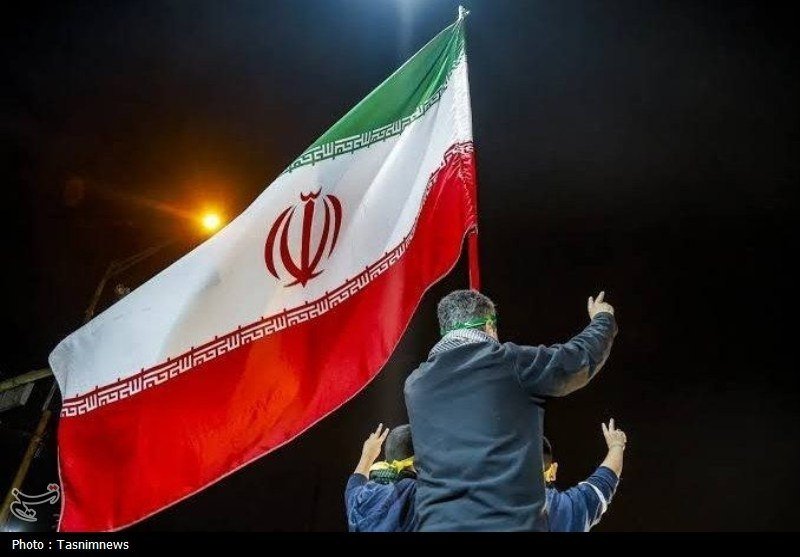
At 08:30 UTC on 12 June 2026, the Iranian state news agency Mehr set off a cascade of alerts across Arabic-language Telegram channels. The text, repeated almost verbatim by @alalamarabic and re-broadcast by @abualiexpress, described a memorandum of understanding with Washington that would lock in a 60-day negotiation, a complete lifting of US primary and secondary sanctions, and — in a final flourish — endorsement through a United Nations Security Council resolution. The same wire added a political sweetener: an American commitment not to interfere in Iran's internal affairs and to respect the sovereignty of the Islamic Republic.
The pattern is familiar. Tehran's state-aligned outlets publish the shape of a deal before the deal itself exists on paper. In this case, the only documents cited are Mehr's own dispatches; there is no joint communique, no named American signatory, and no confirmation from Washington in the four thread items available. What we have is Iran's preferred narrative, written by Iran, for a regional and domestic audience that has been waiting fifteen months for sanctions relief.
What the wires actually say
The architecture Mehr describes is a three-stage sequence. Stage one is a memorandum of understanding committing both sides to negotiate. Stage two is a 60-day negotiating window covering nuclear issues and a "complete lifting of US primary and secondary sanctions," language that is broader than the snapback architecture used between 2015 and 2018. Stage three is a UN Security Council resolution enshrining the final agreement — a step that would, in theory, immunise the deal against a future US administration walking away the way the first Trump administration walked away from the JCPOA in May 2018.
The political content — non-interference, sovereignty — is the Iranian side's traditional ask in any such exchange. Its inclusion in a leaked MOU suggests Tehran is signalling to domestic constituencies that the diplomatic cost of engagement has been a written US concession on regime-security language. The framing is, deliberately or not, an answer to hardliners in Tehran who have argued that talks buy time without delivering sovereignty guarantees.
The gap between announcement and document
There is a problem with treating this as a deal. Iranian state media is reporting an agreement the other party has not, in the available record, acknowledged. The four source items are all from Iranian or Iran-sympathetic channels. Reuters, the Associated Press, the BBC, Al Jazeera English, Axios, and Bloomberg do not appear in the thread. The White House has not, in the materials available, confirmed the 60-day clock or the UNSC route. Until at least one Western wire or US official source corroborates the substance, this is a one-sided announcement — significant as such, but not a signed text.
That distinction matters. Tehran has used preliminary MOUs in the past to lock in negotiating frames and to test domestic and regional reactions before anything binding is signed. The 60-day timeline, if real, would push finalisation into mid-August 2026 — past the US political calendar's summer break and into a window where a US administration can be measured against a concrete deliverable.
Why the sovereignty language is the news
Lift the sanctions question for a moment. The politically combustible item is the US "commitment not to interfere in Iran's internal affairs." That formulation has historically been the deal-breaker in US-Iran negotiations: Washington resists codifying non-interference because it implies the United States has, until now, interfered — and because it constrains future administrations, congressional sanctions, and the Treasury toolbox that has been the principal US lever against Iran since 1995.
If Mehr's account survives contact with American and European sources over the next 48 to 72 hours, the MOU represents something the Obama-era JCPOA architects specifically avoided: a political exchange that bundles the nuclear file with a declaratory ceiling on US coercive policy. That is, in structural terms, a different deal — closer to a recognition track than a non-proliferation track.
The structural read
The wider pattern is not new. Hegemonic transitions tend to drag smaller powers into the space between declining and rising orders, and Iran has spent two decades converting that space into leverage. A deal signed in mid-2026, after a year and a half of regional escalation, would consolidate Tehran's position as a state that the United States must talk to — not as a favour to Tehran, but because the alternative architecture (maximum pressure plus military containment) is producing diminishing returns. The same logic that has brought Washington back to the table with Caracas is, in plain terms, drawing it back to the table with Tehran.
Stakes
If a binding text emerges, Iran gets sanctions relief and a UN-anchored shield against unilateral US repudiation. Washington gets a verified cap on Iran's nuclear programme and a precedent for managing rather than converting adversaries. The losers are the regional actors whose security strategies were built on the assumption that Iran could be isolated indefinitely — and the harder edges of the US sanctions-industrial complex, which would lose a long-running case file. The time horizon is short: 60 days, if Mehr's number holds, puts a final agreement inside the narrow window before the UNSC's renewal cycle on Iran-file resolutions becomes a pressure point of its own.
What remains genuinely uncertain is the basic question of whether Washington has agreed to anything yet. The sources do not specify a US signatory, a US readout, or an agreed text. They agree on one thing: Tehran wants the world to read this morning as the day the diplomatic geometry changed. Whether it did is the next 48 hours' story.
How Monexus framed this: the wires available are all Iranian or Iran-aligned; the article reports the announcement faithfully, flags the missing Western confirmation explicitly, and treats the sovereignty language as the substantively new element rather than the sanctions headline.
Wire provenance
This editorial synthesis draws on the following public wire/social posts:
- https://t.me/alalamarabic
- https://t.me/alalamarabic
- https://t.me/alalamarabic
- https://t.me/abualiexpress
- https://en.wikipedia.org/wiki/Joint_Comprehensive_Plan_of_Action
Follow the event.
These dated source records provide context. They do not retrospectively verify this archive article.
Separate what the nuclear watchdog reported from what it could not determine after the June 2025 strikes.