Tehran, Washington and the theatre of 'wrap-up'
Forty-eight hours of contradictory signals from Tehran and the White House have produced a deal that exists mostly in the conditional tense — and a $24bn frozen-assets figure that the Iranian side keeps moving.
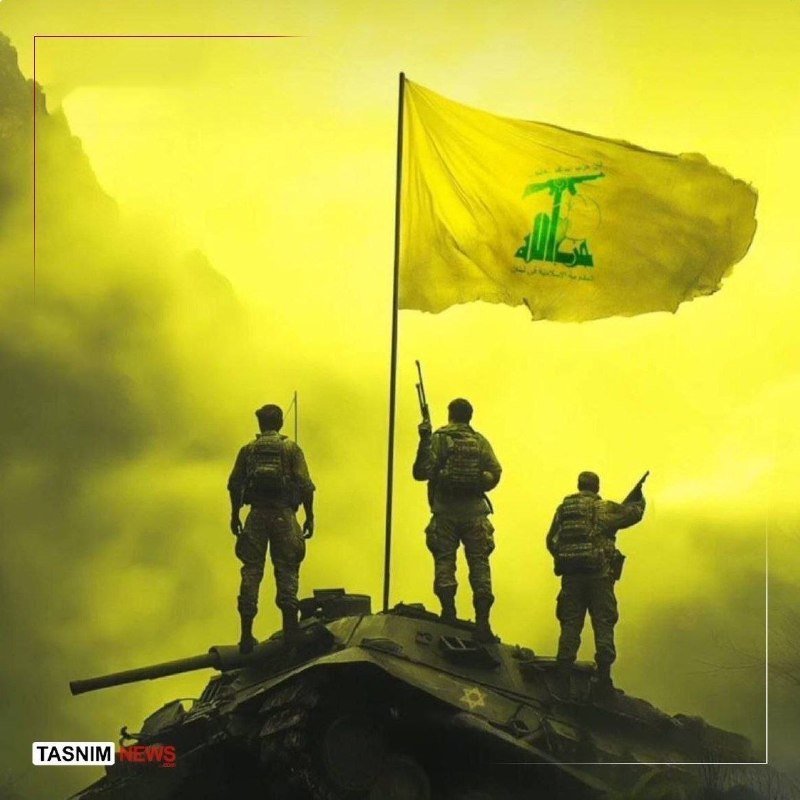
The ledgers on both ends of the Persian Gulf do not, as of 12 June 2026, add up. Within a 24-hour window starting 11 June, two governments announced, denied, re-announced and partially walked back the terms of a putative agreement that — if it holds — would release roughly $24 billion in frozen Iranian assets, terminate the open war between Israel and Hezbollah on Lebanese soil, and end a direct US-Iranian confrontation that had, hours earlier, come within a presidential decision of an American strike.
The pattern is familiar. A deal that lives in the conditional tense — if the text is approved, if the assets are unfrozen, if the strikes remain cancelled — is, in practice, a deal in which neither side has yet paid the cost of making it real. What is unusual this time is the speed at which the cycle has run, and the asymmetry between Washington's public posture and Tehran's.
The sequence, in order
On 11 June 2026, 17:37 UTC, US President Donald Trump announced that scheduled strikes against Iran had been cancelled. Less than an hour later, at 18:24 UTC, he told reporters that Iran could obtain "the greatest deal in history" if it agreed to surrender and to declare the United States the world's greatest power. By 18:29 UTC, the same president was describing the negotiations as "pretty much wrapped up" — a phrase the White House has used before, and one that has, in prior episodes, preceded both concluded agreements and renewed hostilities within the same news cycle.
The Iranian side was less coherent. At 19:07 UTC on 11 June, Fars News Agency — a wire affiliated with the Islamic Revolutionary Guard Corps — reported that Tehran had not yet approved any text for an agreement. Twenty-eight minutes later, at 19:35 UTC, Fars carried the opposite line: given that Washington had accepted a text proposed by Iran, the likelihood of that text being approved was high. By 09:16 UTC on 12 June, Iranian state media were broadcasting the package itself: a potential $24bn unfreezing, an end to the war on the Lebanese front, and a wider settlement frame.
The contradictions are not, on close reading, actual contradictions. They are a sequence of trial balloons tested against two very different audiences — domestic hardliners in Tehran, and a financial-markets-and-Congress audience in Washington — and revised in real time as each balloon was shot down or floated. The deal exists, in other words, less as a document than as a price discovery exercise for what each side can credibly claim to have won.
What the framing papers over
Two frames dominate Western coverage. The first treats the episode as a Trumpian vindication: a president who, by repeatedly threatening force, has extracted concessions a more conventional diplomacy could not. The second treats it as another exercise in the politics of the unreal — a non-deal designed for cable-news consumption, with the underlying contest unchanged.
Both frames miss what is structurally new. The $24bn figure, circulated by Iranian media, is not a settled sum; it is a reference price for Iran's frozen oil revenues held in escrow, primarily under sanctions architecture imposed after the United States withdrew from the Joint Comprehensive Plan of Action in 2018. Any release of that magnitude would, in practice, require not merely a US executive decision but a choreography of Qatari, Iraqi, South Korean and Swiss intermediaries who hold the underlying escrow balances. Iranian state media's claim that the war in Lebanon would also end sits in tension with the operational reality that Hezbollah's calculus is not, at this point, a single variable inside a Washington-Tehran equation.
What the framing also papers over is the cost of the threatened strike, on the days when it was still scheduled. The cancellation of a strike, in this administration's vocabulary, has repeatedly functioned as a deliverable in itself — a price the other side pays in concessions to ensure the strike does not resume. That pricing model is, on the evidence of the past eighteen months, both lucrative and unstable.
The plain-language version
The deal on the table is, structurally, a familiar one. The party with deeper financial reserves and superior air power makes a credible threat of further escalation; the party with constrained liquidity and a network of regional clients seeks a cash-for-restraint swap. The two are not equal, but they are not zero-sum, and the gap between them is where diplomacy actually happens.
The Iranian position — as expressed through Fars and the Foreign Ministry in Tehran — is that the deal is conditional on the unfreezing, and that the unfreezing is conditional on verified US compliance, and that verified US compliance is, in turn, conditional on a written text that Tehran has now, per Fars, effectively agreed to. The US position is that the deal is conditional on Iranian acceptance of terms that include, in Trump's own formulation, a public declaration of US primacy — a formulation that no Iranian government of any faction can sign without ending itself politically.
This is why the deal, if it lands, will not look like the deal that either side is currently describing in public. It will land as something narrower: a sequenced release of tranches, a Hezbollah ceasefire calibrated to a Lebanese political timetable, and a written text that says enough on both sides to permit each to declare victory at home.
Stakes, and the part that remains uncertain
The stakes for Iran are the survival of a sanctions-battered economy through a winter in which the rial has continued to lose ground against hard currency. The stakes for the United States are the credibility of a coercive template that has produced, in sequence, an October 2025 Gaza ceasefire, an inconclusive round of Ukraine-related sanctions against third-country buyers of Russian crude, and now this. If the template holds here, it becomes a reusable instrument; if it does not, the next crisis will price that failure in.
The honest remaining uncertainty sits in two places. The first is the text itself: as of the latest Fars wire at 19:35 UTC on 11 June, Iran's text has been the one under discussion, not a jointly negotiated one. The second is Lebanon: Iranian state media's claim that the deal would end the war including in Lebanon is not a claim that any Lebanese actor has yet ratified, and the operational disposition of Hezbollah's forces in the south of the country has not, on the public evidence, changed. A deal that does not change the disposition of forces is, at best, a pause.
The most defensible read, given the contradictions on the wire over the past 48 hours, is the unsatisfying one: this is an agreement that has not yet been reduced to a single document, in a sequence in which the absence of a document is itself a tool. The deal is real, in the sense that both sides are now committed to the price of a deal. Whether it survives contact with a single shared page is the question the next seventy-two hours will answer.
How Monexus framed this: where the wire services reported a binary — deal or no deal — this desk treated the day-1 contradictions in Iranian state media as the lead, on the view that the price-discovery of the agreement, not the announcement of it, is the actual news.
Wire provenance
This editorial synthesis draws on the following public wire/social posts:
- https://t.me/insiderpaper/
- https://x.com/unusual_whales/status/
- https://x.com/unusual_whales/status/
- https://x.com/unusual_whales/status/
- https://x.com/polymarket/status/
- https://x.com/unusual_whales/status/