Tehran, Washington, and the rhythm of "almost"
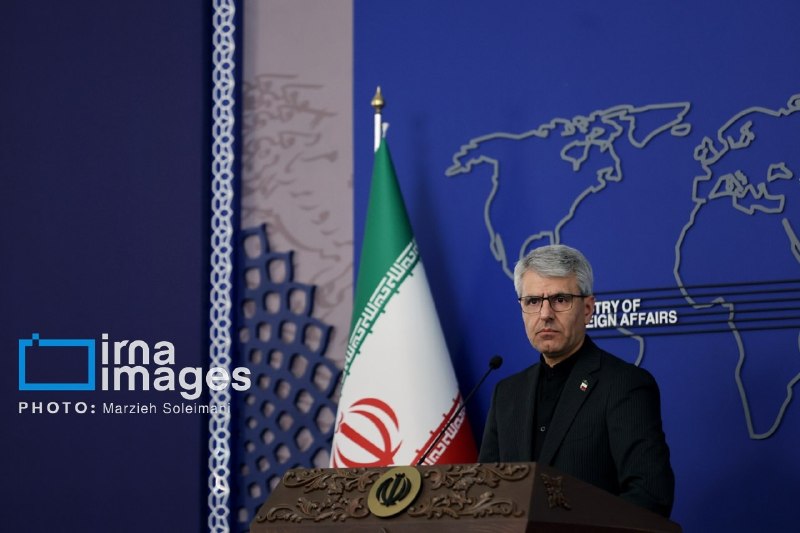
For roughly forty-eight hours, the Iran–United States nuclear file has operated on a single, maddening verb: almost. On 12 June 2026 at 17:36 UTC, Israel's Kan news reported that the United States and Iran were "closer than ever to a principles agreement, with a possible signing in Geneva as early as tomorrow or the day after," and said the political echelon had instructed the IDF to prepare accordingly. Barely two minutes later, on the same wire, Kan cited a senior U.S. official saying the Trump administration's negotiating team had put America "in a very good spot" — followed by the customary caveat that nothing was final. By 17:42 UTC, Iranian Foreign Ministry spokesperson Esmail Baghaei was on a different channel telling reporters that claims of being "very close to an understanding" were "not new," blaming "contradictory statements from the American side." By 18:02 UTC, his ministry was reiterating the point through Fars. The distance between those four posts, measured in minutes, is the entire story.
What is being negotiated, in plain terms, is a principles agreement — the stage before a full deal — under which Iran would receive sanctions relief or constraints in exchange for limits on its nuclear programme. The Trump administration has signalled it sees the package as nearly ready; Tehran's public posture is that near-miss announcements are themselves the problem. The asymmetry is structural: when an American official says "very good," the cost of being wrong is a news cycle; when an Iranian spokesperson says "not new," the cost of being wrong is leverage.
A pattern of optimism, then correction
The pattern is not new to this round. The thread shows the same sequence documented in past reporting cycles: an Israeli or American outlet quotes a senior figure saying the deal is days away; Tehran publicly cools the temperature; both sides claim the gap is narrow. The 17:38 UTC item from Kan, citing a senior U.S. official, added a regional layer — that U.S. President Trump had spoken with Israeli Prime Minister Netanyahu the previous day, and that once Israel saw the full agreement, it would be reviewed. That detail matters because Israel is not a signatory to a U.S.–Iran framework but is, by Washington's own description, a party whose buy-in is required before the framework becomes operational. A bilateral deal with a third-party veto attached is a different kind of instrument than a clean bilateral deal.
The 17:09 UTC item, attributed to Axios, captured Trump's framing in real time: he said a deal could still be signed "over the weekend or on Monday" and read Iranian Foreign Minister Abbas Araghchi's social-media post on the nuclear file as constructive. Araghchi's name appearing in the same sentence as a U.S. presidential read of his post is itself a measure of how much of this diplomacy is now conducted in public, on platforms designed to be read in fragments.
The structural read
Two things are true at once. The first is that principals do not usually talk this openly about timing unless they believe the gap really is narrow — public schedule-setting is a cost, and officials pay it only when they expect the schedule to hold. The second is that the gap is, by Iran's own description, still wide enough that Tehran's spokesperson felt obliged to publicly deny being close at the very moment American and Israeli counterparts were publicly claiming closeness. Both can be accurate. The deal may be technically drafted and politically on the brink; it may also be that the political cost of declaring success — for either side — has not yet been paid.
A useful way to read this is the difference between the text and the room. The text is the principles document: enrichment caps, inspection access, sequencing of sanctions relief, fate of the stockpile. The room is the coalition management problem — an Israeli government that wants to be shown the full text before blessing it, a Trump administration that wants a foreign-policy win it can name, an Iranian system that wants relief without the appearance of capitulation, and Gulf and European capitals that will be told after the fact. When officials say the deal is "close," they are usually talking about the text. When they say it is "not new," they are usually talking about the room.
What is genuinely uncertain
The thread does not specify which provisions are settled and which remain contested. It does not name the U.S. negotiating lead, the venue in Geneva, or the sequencing of any sanctions measures. Iranian state-aligned outlets are quoted here as primary sources for the Iranian position, which is appropriate, but their framing of "contradictory statements from the American side" is itself a negotiating posture, not a description of the document. The reporting also does not indicate whether the "principles agreement" being referenced is the same as the framework discussed in earlier rounds this year, or a new, narrower instrument. A reader looking for a substantive description of what Iran would concede and what it would receive in return will not find it in this thread.
The honest summary is the unsatisfying one: the principals think they are close; the principals' spokespeople think the other side is overselling it; the public statements are calibrated for different audiences and cannot be averaged into a single forecast. The deal may yet be signed in Geneva this weekend. It may also slip into the next reporting cycle, where the same sequence will run again, with the same verb, and the same qualifications.
This publication reads the Iran file the way the principals themselves appear to read it: as a contest over who is allowed to claim closeness, and on whose timeline. The wire, by contrast, tends to compress each cycle into a single headline. The truth, for now, is that no one outside the two negotiating rooms can tell you which side is right — and that, in itself, is the news.
Wire provenance
This editorial synthesis draws on the following public wire/social posts:
- https://t.me/wfwitness
- https://t.me/GeoPWatch
- https://t.me/wfwitness
- https://t.me/wfwitness
- https://t.me/GeoPWatch
- https://t.me/wfwitness