A Two-Page Memorandum, a Swiss Venue, and the War Iran Says It Won
Tehran and Washington appear closer to a memorandum of understanding than at any point in the conflict. The atmospherics, however, are stranger than the substance — and both sides are selling very different versions of who blinked.
By the close of business on 12 June 2026, the geography of the US–Iran confrontation had shifted — not from a battlefield to a ballroom, but from a war room to a Swiss drafting table. AFP, citing the Swiss Federal Department of Foreign Affairs, reported at 20:43 UTC that Bern had formally offered to host a possible signing ceremony for a memorandum of understanding between the United States and Iran. The venue under discussion: Geneva, the same city where, hours earlier, Iran's foreign minister had taken to a podium to declare victory in a war the United States has not admitted to fighting.
What is on the table is, on the evidence so far, remarkably small. Iran's Foreign Minister Abbas Araghchi, speaking via the Fars news agency at 19:47 UTC, characterised the draft as "less than 2 pages long" and insisted that the Iranian side had "implemented all the requested items" after the text had been "edited many times, word by word." That is the language of a negotiator claiming leverage, not a party preparing concessions. The document in question is being framed in Tehran as Iranian-authored; in Washington, the optic is more modest — the routine precursor to a longer negotiation that has not yet been conceded.
The Swiss offer and the choreography of neutrality
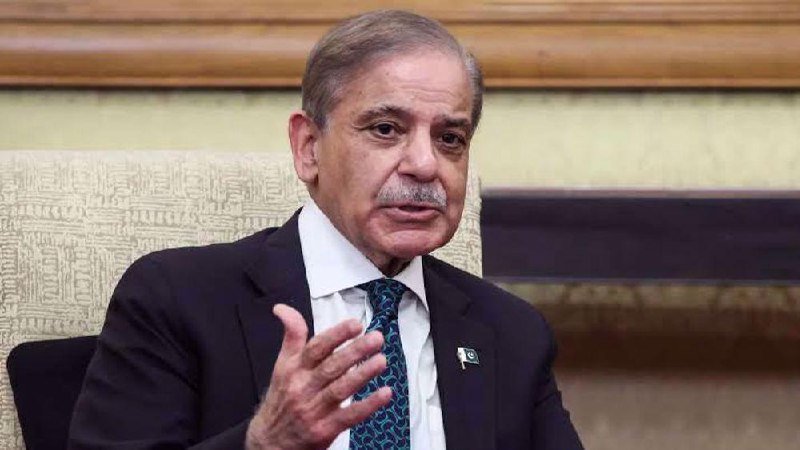
Switzerland's offer is procedurally unremarkable and politically loaded. Bern has served as the protecting power for US interests in Iran since 1980, and the Swiss statement — that "this country is available" to facilitate — leans on that long institutional muscle. The choice of Geneva is not incidental: it is the city of the 2015 framework that produced the Joint Comprehensive Plan of Action, and the symbolism of a return matters to Tehran as much as the substance of the document does. Pakistan's foreign minister, according to IRNA reporting at 19:44 UTC, was travelling to Geneva on the night of 12 June to "continue efforts to mediate" — a reminder that the diplomatic track is now multi-lateral, with Islamabad carrying water that the Gulf states and Oman have historically carried in earlier rounds.
The war that Iran says it won
The difficulty for any outside reader is that the two governments are not describing the same recent past. A statement attributed to the Iranian Ministry of Foreign Affairs and circulated on X at 20:18 UTC on 12 June claimed that "Iran won the war against the USA" — a formulation that has no equivalent in any US government statement and is not echoed in Western wire reporting. American framing, by contrast, has emphasised restraint and the avoidance of escalation, with the implicit claim that the absence of a wider war is itself the deliverable. Araghchi's own tone — technical, micromanaged, almost editorial — sits awkwardly between the two. A negotiator who insists the document is two pages long and has been redrafted "word by word" is not the voice of a side that believes it has settled for something cheap.
What a two-page MoU can — and cannot — settle
It is worth taking seriously what such a memorandum can plausibly contain, and what it cannot. A document of this size is not a treaty; it is not even an interim accord in the JCPOA sense. It is, most plausibly, a framework for further talks — a procedural handshake that freezes the kinetic phase, allows for sanctions choreography, and buys time for both governments to claim wins inside their own domestic frames. The Iranian claim that "all requested items" have been implemented must be read against the fact that, by Araghchi's own description, the text is short enough to recite in a single sitting. Long nuclear deals do not fit on two pages; face-saving interim frameworks do.
The structural read
The pattern here is familiar from earlier US–Iran episodes: the gap between performative maximalism in capital-to-capital messaging and the technical, low-resolution business of the negotiation itself. Tehran is selling the war as won because its domestic audience requires the framing; Washington is selling the process as deferral because its domestic audience requires a different framing. The Swiss venue, the Pakistani shuttle, and the Fars-broadcast technical details are the visible scaffolding of a deal whose principal content is the agreement to keep talking. The question that follows is whether the kinetic phase that produced this moment has genuinely wound down, or whether the memorandum is the prelude to a more difficult second phase once both governments have extracted the political value of restraint.
What remains genuinely uncertain
The thread does not establish what specific items are in the draft, which sanctions architecture the US side is offering to modulate, or whether the Israeli government has been formally briefed on the text. Iran's claim of victory is a framing, not a verifiable outcome; Washington's silence on the claim is itself a signal, but not a conclusive one. And the Pakistani mediation track, whatever its current weight, introduces a third mediator into a process that the United States has historically preferred to run through Omani and Qatari channels — a fact worth watching as the Geneva meeting takes shape.
Desk note: The wire line on 12 June has so far focused on the choreography — Swiss hosting, Pakistani shuttle, Iranian draft size. Monexus is foregrounding the dissonance between Iran's declared victory narrative and the modesty of the document on the table, because that gap is where the next phase of the story will actually be decided.
Wire provenance
This editorial synthesis draws on the following public wire/social posts:
- https://x.com/sprinterpress/status/0
- https://x.com/sprinterpress/status/0
- https://t.me/farsna/0
- https://x.com/sprinterpress/status/0
Follow the event.
These dated source records provide context. They do not retrospectively verify this archive article.
Separate what the nuclear watchdog reported from what it could not determine after the June 2025 strikes.