Israel widens southern Lebanon strikes as ceasefire framework frays
Israeli artillery hit Nabatieh and Kafrman hours after Washington and Tehran unveiled a 14-clause memorandum promising an immediate end to military operations across all fronts, exposing the gap between announced diplomacy and continuing fire.
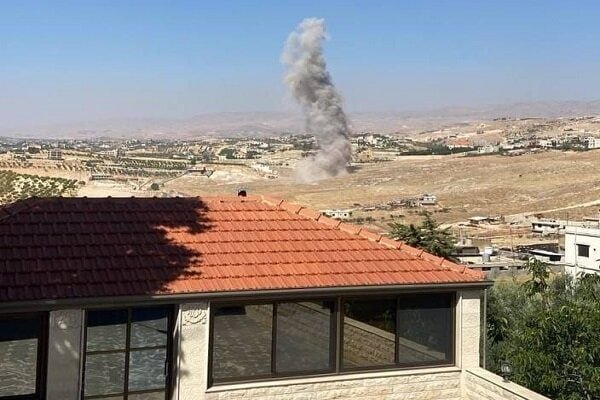
Israeli artillery struck the southern Lebanese city of Nabatieh and the town of Kafrman on the evening of 14 June, hours after Washington and Tehran announced a memorandum of understanding that promises an immediate, complete and permanent end to military operations on all fronts, Lebanon among them. The shelling, reported by Al-Mayadeen and relayed through Iran's Tasnim news agency, landed while the U.S.-Iran deal was being formally unveiled in Islamabad with Pakistan as the named mediator. The two events, a ceasefire announced and a barrage delivered, are the clearest indicator yet that the November 2024 framework has stopped functioning as a quiet backstop and has become instead a stage on which the region's principals act out their disagreements.
The U.S.-Iran memorandum, finalised on 14 June and circulated in fourteen clauses by Iran's Mehr News Agency, declares an immediate, complete and permanent end to military operations, commits both sides to reopen the Strait of Hormuz, and ties further progress to a nuclear arrangement whose shape has not been disclosed. France's President Emmanuel Macron welcomed it as the product of a multi-party diplomatic effort and called for rapid implementation; Britain's Prime Minister Starmer echoed the language, framing the deal as a step toward regional stability and the reopening of the waterway. Vice President JD Vance, speaking on Fox, told Americans that the arrangement had "solved the problem" of a terrorist-supporting Iran pursuing a nuclear weapon. The text, in other words, is being sold as comprehensive.
It is not, however, a treaty. Independent analysts were quick to note that the document is a memorandum of understanding, a diplomatic instrument whose legal force is weaker than a signed accord and whose enforcement depends entirely on the political will of the parties. That distinction matters in southern Lebanon, where the November 2024 ceasefire has frayed under the weight of nearly two years of intermittent fire. The municipality of Nabatieh, still scarred by earlier rounds of fighting, urged its residents on the evening of the 14th not to return until any new ceasefire is fully in force, citing the pattern of truces that did not hold. The warning was practical, not rhetorical: in the South Lebanon conflict that has run since 2023, the interval between a declared halt and the next barrage has often been measured in hours.
Israel's position, as transmitted by Prime Minister Benjamin Netanyahu to President Donald Trump, is that the IDF will not withdraw from Lebanon and that Israel does not consider itself bound by the Lebanon clause of the agreement. The statement was reported by DD Geopolitics on X and has not been contradicted by Israeli officials. It is the diplomatic equivalent of a written reservation, and it converts the U.S.-Iran deal, on the Lebanon question at least, from a binding arrangement into an instrument to which one of the region's most active militaries has declared itself a non-party. The Epoch Times report that Trump called publicly for restraint after Israeli strikes on Hezbollah targets in Beirut underscores the gap: the White House is still publicly aligned with de-escalation, but the operational authority for strikes sits in Tel Aviv, and Israel is signalling that operational authority has not changed.
In Tehran, the reaction has been carefully calibrated. Iran's foreign ministry, citing Israel's Lebanon strikes, indicated that the attacks had allowed Tehran to extract further concessions from Washington, language that frames the continued bombardment as leverage rather than provocation. Iran's parliament speaker, Mohammad Bagher Qalibaf, warned that "resistance will not be cornered," a phrase that travels well in domestic Iranian politics and that, in the context of a just-signed memorandum, reads as a reminder that the regional armed network the deal does not formally name is still treated by Iranian officials as a strategic asset. Lebanon itself, acting through the formal diplomatic channel rather than rhetoric, filed two separate complaints with the United Nations Security Council and the Secretary-General over Israeli attacks on its territory, an indication that Beirut intends to anchor its objections in the international legal record.
The wider context is a region in which several overlapping tracks are now running in parallel. A separate truce effort in Gaza is struggling; six Palestinians were reported killed by Israeli fire on the same Sunday mediators were trying to salvage that track, a reminder that the U.S.-Iran deal does not extend to every front. Trump's own comments to the New York Times, that absent a nuclear deal he would either resume strikes on Tehran or seek to make the United States "the guardian of the Middle East" in return for a financial arrangement, set a clock on the diplomacy that is measured in months at most. The southern Lebanese villages struck on the evening of 14 June are the operational answer to a question the memorandum did not resolve: who, exactly, is the guarantor when the principal signatory of the ceasefire on one side declares itself unbound? Without an answer, each round of artillery becomes its own precedent, and the 2024 framework becomes less a foundation and more a historical artefact that the parties cite when it suits them and ignore when it does not.
Sources
- https://t.me/rnintel, rnintel Telegram channel (geographic and operational updates on southern Lebanon)
- https://t.me/AMK_Mapping, AMK Mapping Telegram channel (geographic and operational triangulation)
- https://t.me/presstv, PressTV Telegram channel (Lebanon UN complaint; Qalibaf statement)
- https://t.me/JahanTasnim, Tasnim News English Telegram channel (Nabatieh and Kafrman artillery report; MoU negotiation details)
- https://t.me/Middle_East_Spectator, Middle East Spectator Telegram channel (full 14-clause text of U.S.-Iran MoU)
- https://t.me/osintlive, Open Source Intel Telegram channel (Iran Supreme National Security Council statement; Macron reaction)
- https://t.me/wfwitness, Warfield Witness Telegram channel (Nabatieh municipality warning; Starmer statement)
- https://t.me/ourwarstoday, Our Wars Today Telegram channel (AP Islamabad report; Gaza casualty report)
- https://t.me/epochtimes, Epoch Times Telegram channel (Trump restraint comments)
- https://x.com/boweschay, DD Geopolitics on X (Netanyahu rejection of Lebanon clause; MoU clause list)
- https://en.wikipedia.org/wiki/2024_Israel%E2%80%93Lebanon_ceasefire, Wikipedia, 2024 Israel–Lebanon ceasefire
- https://en.wikipedia.org/wiki/South_Lebanon_conflict_(2023%E2%80%93present), Wikipedia, South Lebanon conflict (2023–present)
Desk note: Monexus treated the three reporting channels as a triangulation set rather than as competing claims. rnintel and AMK Mapping agreed on the geographic and operational facts; PressTV supplied the named target village through its UN complaint coverage. Where the wires have not yet reported casualty figures from the 14 June strikes, this article has declined to estimate them, in line with our standard that uncertainty should appear as uncertainty, not as confident guesswork.
Follow the event.
These dated source records provide context. They do not retrospectively verify this archive article.
Separate what the nuclear watchdog reported from what it could not determine after the June 2025 strikes.