Katz's staying-power: Israel signals no pullback from Lebanon, Syria, Gaza or West Bank as US pushes regional package
Israel's defence minister has publicly ruled out withdrawal from four occupied or buffer territories even as Washington claims a broad regional deal is in train — putting the gap between Tel Aviv's stated position and the White House's framing on full display.
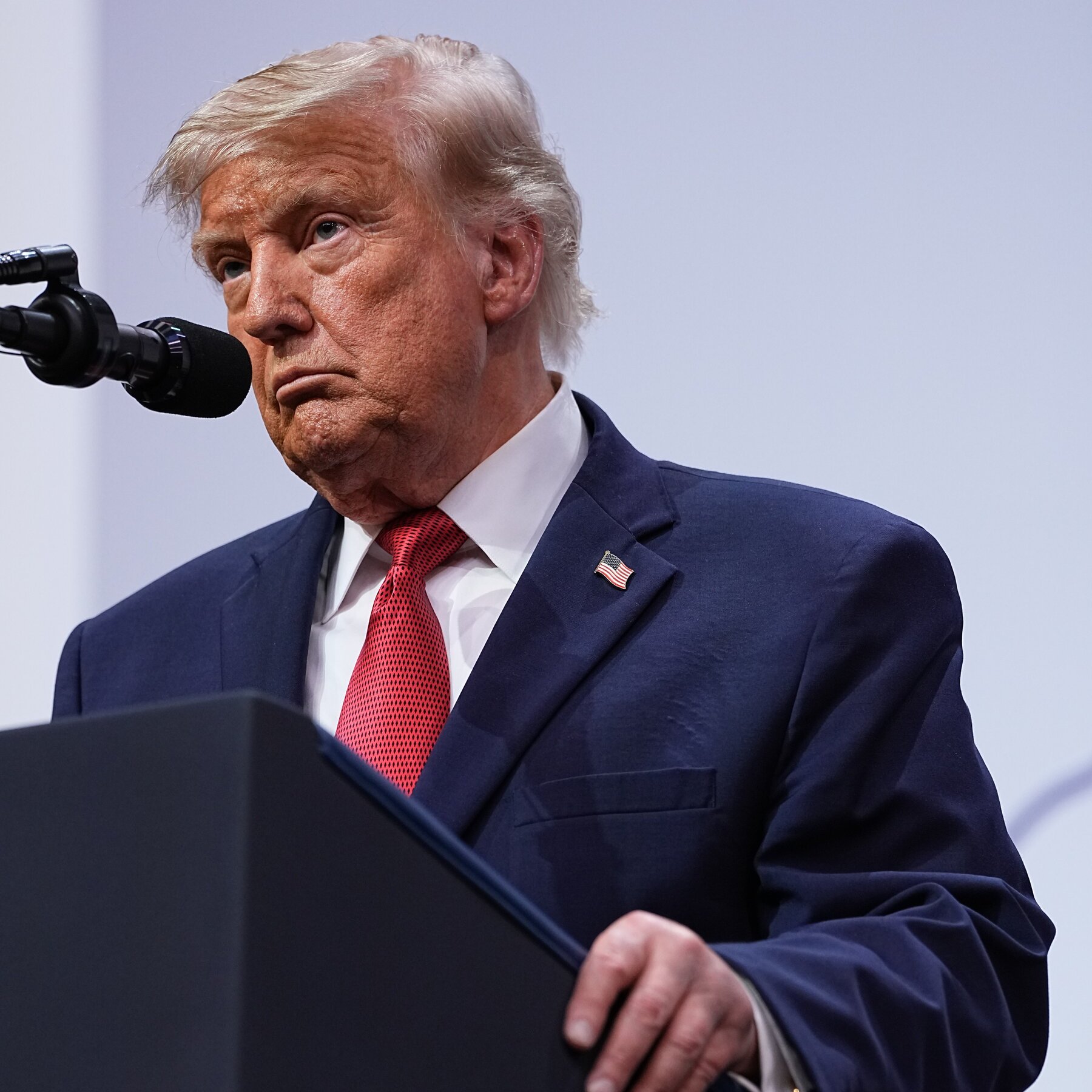
Israel's defence minister Israel Katz used a public appearance on 12 June 2026 to draw a hard line around the territories Israel currently holds or contests: Lebanon, Syria, Gaza and the northern West Bank will not be returned. The remarks, circulated by the Beirut-based outlet The Cradle, landed within hours of a separate claim — carried by the War and Frontlines Witness feed — that a senior US official had briefed journalists on a "broad regional peace agreement" covering Lebanon, Iran, the Gulf monarchies and Israel. Read together, the two messages expose the central tension of the moment: Washington is selling a packaged settlement; a senior Israeli cabinet member is publicly refusing the package's most territorially loaded elements.
The gap is not a minor drafting dispute. It goes to whether the architecture the Trump administration is reportedly assembling — in which Iran would surrender long-range missile capability and proxy support in exchange for sanctions relief and a normalisation track with the Gulf — survives contact with the government of the country the package is partly designed to reassure. If Katz is to be taken at his word, Israel expects to keep troops and security control in the four theatres where it currently operates, while the United States separately extracts the strategic concessions from Tehran. The diplomatic choreography that produces one outcome looks incompatible with the other.
What Katz actually said, and where it lands
According to two parallel Cradle dispatches timestamped 17:01 UTC on 12 June 2026, Katz told an audience that Israel will not withdraw from Lebanon, Syria, Gaza or the northern West Bank. He coupled that position with an expectation that the United States would press Iran to dismantle its long-range missile programme and to cease material support for the armed formations that operate along Israel's northern and southern peripheries. The language is the language of a maximalist security claim, not a negotiation opening: Israel is not bargaining over how quickly to leave; it is announcing that leaving is not on the table.
The territorial reference list is unusually broad. Lebanon and Syria place the statement inside the framework of the post-2024 cross-border conflict and the post-Assad reordering in Damascus. Gaza and the northern West Bank place it inside the Palestinian frame. By fusing the four into a single declaration of staying-power, Katz has effectively told any future interlocutor — whether in Beirut, Damascus, Ramallah or Tehran — that the geography of Israeli military presence is a permanent condition to be managed rather than a temporary occupation to be wound down.
The American package, as described to reporters
The competing signal came from a US official, on background, in a briefing summarised by the War and Frontlines Witness channel at 17:32 UTC. The package, in that telling, would stitch together Lebanon, Iran, the Gulf and Israel in a single regional framework. The official expressed confidence that allies would "get on board" — language that suggests the architecture is not yet signed, and that the US side is still selling it to capitals that have not formally endorsed it.
The framing is recognisable from earlier reporting: a transactional arrangement in which Iran's nuclear programme, missile inventory and proxy network are traded for sanctions relief, diplomatic rehabilitation and economic reintegration. The Gulf states are positioned as a normalisation corridor; Israel as the strategic beneficiary; Lebanon as a downstream recipient of de-escalation. The piece that does not fit cleanly into this picture is the Katz declaration. A Lebanon in which Israeli forces remain indefinitely is not a Lebanon that has experienced de-escalation, whatever the headline in Washington says.
Where the two narratives collide
The most plausible reading is that the American package and the Israeli staying-power claim are not, strictly, the same document. Washington can announce a regional framework whose substantive deliverables sit with Iran and the Gulf. Israel can maintain a separate posture in the four theatres where it has boots on the ground, treating those as bilateral files outside the regional settlement. The Lebanese, Syrian and Palestinian files would then be addressed — or deferred — through direct Israeli arrangements rather than through the Iran-centred architecture.
The problem with that reading is internal. If Iran is being asked to give up the proxy lever, the implicit price is some credible reduction in the threat those proxies were built to deter. If Israel is not withdrawing from Lebanon or the Syrian buffer or the northern West Bank, the threat the proxies were built to deter is not in fact receding. Tehran's compliance with the package is, on its face, inconsistent with an Israeli posture that treats the forward deployments as permanent. Either the US sells the deal to Israel by accepting the staying-power claim, in which case the Iranian component collapses, or the US sells the deal to Iran by securing an Israeli withdrawal, in which case the Katz position has to be walked back. There is no evident third option in which both hold simultaneously.
A second reading, more sceptical of the US announcement, is that the regional package is a headline construct with no fixed text — a frame within which Washington hopes to assemble concessions over the coming months. On that view, Katz's public statement is not a contradiction of the deal; it is a marker of how much pressure Israel expects to be able to resist as the deal takes shape. The official's confidence that allies will get on board would then be tested first inside the Israeli cabinet rather than in Tehran or the Gulf.
Stakes, and what remains genuinely unresolved
If the staying-power position holds, the practical consequences fall on Lebanon, Syria and the occupied Palestinian territories rather than on the principals at the negotiating table. A non-withdrawing Israel in southern Lebanon and on the Syrian side of the Golan buffer means a continuing security footprint in two sovereign states whose governments have not consented to it. In the northern West Bank, the implication is the consolidation of a security architecture that has, in recent reporting cycles, been associated with settlement expansion and the displacement of Palestinian communities. In Gaza, the language of "not withdrawing" sits uneasily alongside any framework that contemplates Palestinian governance reconstruction, since reconstruction presumes a sovereign authority inside the territory.
The Iranian side of the ledger is the one the US package is most clearly designed to move. Katz's stated expectation that Trump will extract the missile and proxy files is, in effect, the Israeli ask of the American negotiating track. Whether Tehran will trade those capabilities for sanctions relief while Israeli forces remain on its neighbours' soil is the open question that the next several weeks of diplomacy will be tested against.
What the two sources do not resolve is the most basic fact at the centre of the story: the actual content of the US package. The official's account is a senior-briefing summary, not a text; Katz's account is a political statement, not a negotiating position. No source item in circulation on 12 June 2026 confirms a signed framework, a sequenced timeline, or a list of counterparties. The reporting records two officials speaking past each other on the same day, in different registers, about overlapping files. The diplomatic substance between them remains, for the moment, unwritten.
This article draws on two Telegram wire feeds active on 12 June 2026. Where the available reporting is the statement of a political actor or a senior US official speaking on background, Monexus has flagged the source character explicitly and has not extrapolated beyond what the feeds carry. No additional outlet sourcing was available in the thread at time of publication.
Wire provenance
This editorial synthesis draws on the following public wire/social posts:
- https://t.me/wfwitness
- https://t.me/thecradlemedia
- https://t.me/TheCradleMedia
Follow the event.
These dated source records provide context. They do not retrospectively verify this archive article.
Separate what the nuclear watchdog reported from what it could not determine after the June 2025 strikes.