Mexico opens the 2026 World Cup with a goal, a flag, and a question about pink boots
The tournament's first goal went in at the Estadio Azteca on 11 June 2026. Off the pitch, the questions are louder than the football.
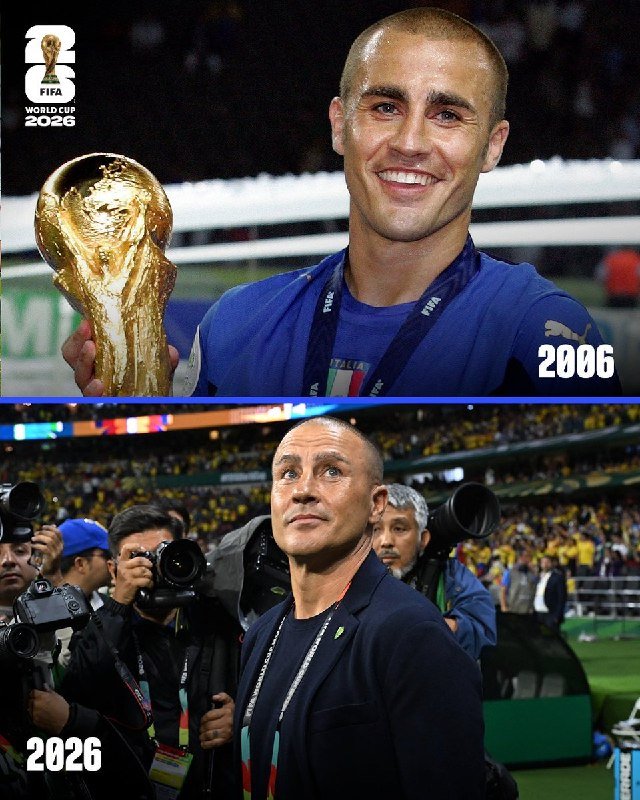
The 2026 FIFA World Cup began in front of a home crowd in Mexico City on 11 June 2026, with the first goal of the tournament greeted, according to FIFA's own social account, by a stadium full of Mexican supporters. FIFA's verified channels carried the line — "POV: You just scored the first goal of the World Cup in front of the home fans" — at 19:30 UTC, and the same post reappeared on FIFA's feed four minutes later with the words "home fans" substituted for "the home fans." The duplication is a small editorial footnote. The bigger one is the tournament itself: 48 teams, three host federations, and an opening day that doubles as the start of a month-long commercial event the sport's governing body has spent a decade selling.
What matters in the first 72 hours of a World Cup is rarely the football. It is the symbols: the walkout, the kits, the boots, the broadcast graphics. All four were on display on 11 June, and each one is now a story in its own right.
The opening ceremony, in oversized flags
FIFA's official social channels promoted a redesigned player walkout at 19:09 UTC: massive national flags unfurled inside the stadium, the teams assembled around the centre circle, and what the federation called its "brand new walkout" played out to a global broadcast. The visual was simple and effective — it read less like a sporting ceremony than like a content drop, designed for vertical video and reposted across The Athletic's newsroom account within minutes. The choreography is FIFA's, but the distribution is platform-shaped. A ceremony that would once have lived on a single broadcaster's feed now travels as a packet of short clips, each one competing for attention on the same feeds that carry the match itself.
The same logic explains the four-hour gap between the federation's "THE FIFA WORLD CUP 2026 IS HERE" post at 16:14 UTC and the first goal at 19:30 UTC. FIFA used the intervening window to seed atmosphere, not information. The Athletic, a subscription sports outlet owned by The New York Times Company, repackaged the federation's clips into its own social stream — a reminder that even the most established sports newsrooms now treat FIFA's own channel as their raw material.
The pink-boot question
The more durable story from the opening match came off the feet of the players. BBC Sport reported on 11 June 2026 that the opening match was "dominated by players wearing pink boots," and asked an unfashionable question for a World Cup news cycle: why? The answer is partly commercial — leading boot manufacturers have moved a meaningful share of their range into pastel and neon colourways in recent seasons, and the limited-edition release windows that once applied to training gear now apply to match-day footwear. It is also partly optical. Under floodlights and high-saturation broadcast colour grading, pink reads as white; it photographs as white; it does not show mud. In a tournament played across three countries in early summer, that is not a trivial consideration.
The story matters because it gestures at the gap between how the sport is sold and how it is actually played. A pink boot is not a tactical choice. It is a marketing artefact that has migrated, with the manufacturers' quiet encouragement, into the most-watched match of the cycle. BBC's framing — curious, slightly bemused — is the right register. The boots will be forgotten by the group stage. The colourway cycle will not be.
Formula 1, the Olympics, and the attention economy next door
The tournament does not have the sports calendar to itself. On 12 June 2026 at 04:39 UTC, the Formula 1 channel on Telegram posted an image of the grid's drivers captioned "Our World Cup squad," with the hashtag #BarcelonaGP attached. The gag is not subtle. F1's Barcelona round, run the same weekend as the World Cup's opening, is competing for the same global attention budget the tournament usually monopolises. Olympic channels, meanwhile, began previewing the Winter Youth Olympic Games and other 2026 calendar items at 22:15 UTC on 11 June, well aware that the World Cup window will compress almost every other sports conversation for the next month. The point is structural: the World Cup is no longer a singular event in a sparse calendar. It is a four-week monopoly bid against a sports media economy that has multiplied the number of claimants on the same screen.
What to watch in the next 72 hours
Three things will tell us whether the tournament's commercial scaffolding holds. First, whether the broadcast production matches the ceremony: a much-criticised 2022 production in Qatar was eventually ironed out by the knockout stage, and FIFA has spent the inter-cycle years rebuilding its host-broadcast unit. Second, whether the pink-boot visual language spreads to other matches or stays confined to the opening fixture. Third, whether the three-host format — United States, Mexico, Canada — produces the cross-border narrative FIFA has been selling since the 2018 vote, or whether logistics and visa friction pull the story back toward a single host city. The first goal was scored in Mexico City. The tournament's centre of gravity, for now, sits in Miami, Atlanta, and the broadcast hubs in between.
Desk note: Monexus framed this as a tournament-opening dispatch rather than a match report, because the source material from the first 24 hours is almost entirely ceremonial, commercial, or stylistic. The football will come later.
Wire provenance
This editorial synthesis draws on the following public wire/social posts:
- https://t.me/s/FIFAcom
- https://t.me/s/FIFAcom
- https://t.me/s/FIFAcom
- https://t.me/s/TheAthletic
- https://t.me/s/Olympics
- https://t.me/s/formula1