Musk's 10% confession and the cult of founder inevitability
On 12 June 2026, with the Nasdaq bell freshly rung, the world's loudest founder admitted the founding odds were brutal. That admission is the news.
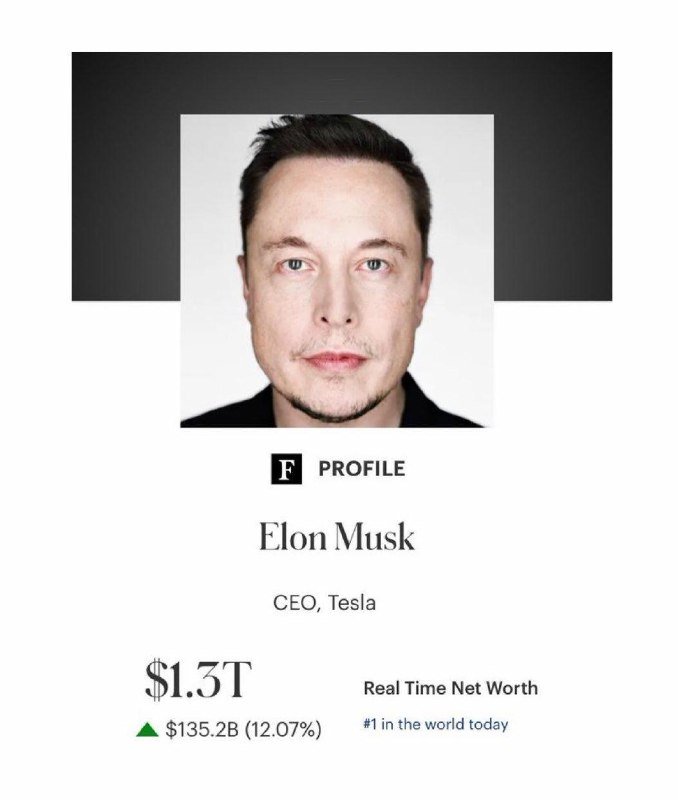
At 13:58 UTC on 12 June 2026, with the day's trading freshly opened and his hand still warm from the Nasdaq bell, the world's most photographed founder told a Polymarket-adjacent audience that SpaceX had less than a 10% chance of surviving when he started it. The market, evidently, did not flinch. The same personality cult that priced the company to perfection across the previous decade absorbed the confession without a hiccup and kept bidding.
The admission matters less for what it reveals about rocket science than for what it reveals about the storytelling layer that has accreted around American tech. A near-death origin is now an asset class. The point of the story is not the survival; the point is the brush with extinction, retroactively rewritten as inevitability.
The gospel, with the boring parts cut out
Tom Mueller — the engineer the BBC introduced on the same morning, 12 June 2026, as "employee number one" and a co-founder alongside Musk in 2002 — has spent two decades watching his own role in the company's survival get compressed into a single-author myth. Mueller told the BBC's Michelle Fleury that he helped build the Merlin engine, the thing that actually got Falcon 1 off the ground. The interview exists. It has been broadcast.
What gets retold is something else. The retold version has one protagonist, one garage, and a futures market in personal destiny. Mueller's name is optional. The fact that SpaceX nearly died three times before its first successful orbital flight in 2008 — and survived in part because NASA handed it a cargo-resupply contract at exactly the moment its treasury was empty — is the part that gets shaved off in the keynote. The 10% figure Musk volunteered on 12 June is real; what is fictional is the implication that the same person who guessed those odds also did all the surviving.
The bell, the bet, and the bid
The sequencing is worth noticing. At 13:48 UTC, Unusual Whales reported Musk had rung the Nasdaq opening bell. By 13:58 UTC, a confession of long-shot odds was circulating on prediction-market feeds. The bell and the confession are a matched pair. The bell certifies the present price. The confession certifies the past, reframing a decade of government contracts, taxpayer-financed launch purchases, and a near-monopoly on US crewed orbital transport as the product of one man's tolerance for risk.
Markets that price in the confession at the same time as the bell are not pricing risk. They are pricing narrative. The two Polymarket-flash items from 14:06 and 13:58 UTC are not news in the ordinary sense; they are liturgy. They tell existing holders what they already hold, and they tell new buyers that buying is the conformist move.
The structural read
There is a deeper pattern here, and it is not about Musk. The pattern is the steady conversion of public procurement, public money, and public infrastructure into the backstory of a private personality. SpaceX exists in its current form because the US government chose, in the late 2000s and again throughout the 2010s, to outsource crewed access to low Earth orbit. NASA is the customer. The Pentagon is the customer. The story of one founder's appetite for tail risk is the story of how that procurement decision got retailed to a retail-investor base that now treats the contractor's stock as a personality stock.
The point is not to deny that Musk took real bets. The point is that he took those bets with a put option under him — a sequence of government contracts designed, often by people inside NASA who knew exactly what they were doing, to keep the option alive. The 10% figure, repeated on prediction markets on 12 June, occludes that put. It is, in the language of the trade, a story sold to the seller.
What the confession actually concedes
Read carefully, the 10% figure concedes something the keynote circuit does not usually concede: that a different founder, in the same market, with the same NASA contract, would probably also have survived. The skill was not the tolerance for tail risk. The skill was the placement of the bet inside a public procurement system that was already paying for the survival of its own bet. The bravado, the late-night tweets, the manufactured war with regulators, the cameo at the White House — these are the marketing layer on top of a structure that has, for twenty years, been quietly underwriting one company's existence.
The 12 June confession, in other words, is not modesty. It is the opposite. It is a private founder claiming credit for a public scaffold, and asking the market to keep treating that claim as fact. Mueller's BBC interview sits awkwardly inside that claim, which is probably why the bell and the Polymarket feed got the column inches and the engineer got the brief.
Stakes
The stakes are not trivial. The US is now reliant, for civilian crewed access to orbit, on a single contractor whose cultural mythology is built on the romance of one man betting the house. The procurement architecture that produced that contractor is bipartisan, deliberate, and probably defensible on industrial-policy grounds. The mythology built on top of it is none of those things. When the next near-death moment comes — and on the schedule of orbital launch, it will — the mythology will be asked to do work it cannot do, and the procurement architecture underneath will have to absorb the shock.
The 10% figure is honest. The story it has been inserted into is not. That gap, on the day a bell rings and a confession lands, is the news.
Desk note: Monexus treated the bell, the Polymarket flashes, and the Mueller interview as a single story rather than three, on the view that the confession is only legible against the procurement structure it edits out.
Wire provenance
This editorial synthesis draws on the following public wire/social posts:
- https://t.me/unusual_whales
- https://t.me/polymarket
- https://t.me/polymarket